
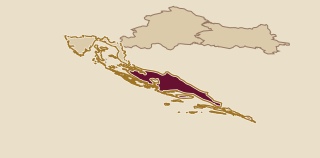
Dalmatia has a long history of winemaking, with trade expanding under Greek and Roman rule. Its vineyards lie on islands, along the coast and inland in Dalmatinska zagora. Northern Dalmatia's wines tend to have more acidity than southern examples. White grapes include Debit, which can give lime-toned flavours, and Maraština. Plavina is an important red variety. The inland vineyards experience more continental conditions than those on the coast. Central and Southern Dalmatia have Mediterranean conditions and make richer reds from Plavac Mali. Wines from this grape vary between Dingač, Postup and the inland fields of Pelješac. White grapes in the south include Pošip, Grk, Dubrovnik Malvasia and Maraština.
6 named areas
Inside the region
Explore the wine-growing areas of Dalmatia.
- 01Dalmatinska zagoraNo producers listed yetDalmatinska zagora is Dalmatia's inland wine area, where wines can show a more continental character than those from the coast.
- 02Dingač1 producerDingač's steep limestone slopes lie above the Adriatic on the Pelješac peninsula. Its Plavac Mali wines can be powerful and tannic, with salty notes. Dingač is a protected Dalmatian wine name.
- 03PonikveNo producers listed yetNear Ston on the Pelješac peninsula, Ponikve covers a wine-growing site in Boljenovići. Its full, balanced wines are linked to Mediterranean conditions, brown soils and terra rossa.
- 04Primorska HrvatskaNo producers listed yetPrimorska Hrvatska is a wine area within Dalmatia, Croatia.
- 05Sjeverna Dalmacija1 producerIn Dalmatia's north, Sjeverna Dalmacija makes wines that are generally fresher and livelier than wines from Southern Dalmatia.
- 06Srednja i Južna DalmacijaNo producers listed yetCentral and Southern Dalmatia has hot, rocky and windy vineyards. Plavac Mali and Pošip make ripe-fruited wines here, with richer styles of Plavac Mali among the reds.
Producer profiles
Producer profiles
Every producer profiled in Dalmatia so far.
- Black Island Winery D.O.OKorčula Island estate making Pošip from 25 family-farmed terraced vineyards in Smokvica village.
- Testament WineryOrganic vineyard wines from Jadrtovac near Šibenik, pairing lees-textured Pošip with barrique-aged Babić.