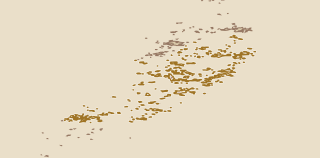
The Central Valley extends from Chacabuco Province in Metropolitan Santiago to Cauquenes and Linares in Maule. Its legal subregions are Maipo, Rapel, Curicó and Maule; Rapel contains the Cachapoal and Colchagua zones. A label may say Valle Central or name a more specific origin within it. More than half of Maipo's 11,000 hectares are planted to Cabernet Sauvignon. Cachapoal and Colchagua grow Cabernet, Carménère, Syrah and Malbec and are associated with full-bodied reds. Carignan and Cabernet Sauvignon are grown in Curicó and Maule. Wine production in Maule dates to the Spanish conquest period, while the French grape Carménère has become established in Chile's central valleys.
1 named area
Inside the region
Explore the wine-growing areas of Central Valley.
Producer profiles
Producer profiles
Every producer profiled in Central Valley so far.
- Bouchon WineryA Bordeaux family four generations deep in Maule, farming granite with old-vine País and dry-farmed Cabernet.
- Casas PatronalesMaule producer with foothill, central and coastal vineyards and a range of red, rosé and white wines.
- Clos des fousClos des Fous is a Chilean producer based in Cauquenes, Maule, with vineyards from Malleco to the Aconcagua Coast and a range spanning Pinot Noir, Cinsault, País, Cabernet Sauvignon, Chardonnay and Riesling.
- Garage Wine Co.Hand-produced wines from old Carignan, País, Cabernet Franc, and Cabernet Sauvignon parcels in Chile's Maule Valley, made by Canadian founder Derek Mossman Knapp with native yeasts, manual punch-down, and basket pressing.
Browse 19 more
- Garage Wine Co. / Vitivinicola Two Winters LtdaOld-vine rescue operation in Maule: Pilar Miranda and Derek Mossman source from small dry-farmed parcels, work in lots of 8 to 22 barrels, and age their top wines through two winters in French oak.
- Hacienda AraucanoBordeaux-rooted estate in the Lolol Valley, Colchagua, growing Carmenère and Pinot Noir in Pacific-cooled granite-schist foothill soils.
- La Despensa WinesColchagua reds from organic Santa Ana Rhône grapes, Andean foothill Cabernet Sauvignon, historic País, and solar powered winemaking.
- Montes WinesChilean producer with vineyards in Zapallar, Apalta and Marchigüe, a gravity handled Apalta cellar, and Carmenère led Purple Angel.
- Moretta WinesSmall Maule Valley producer making old-vine Carignan, Cabernet Sauvignon, and Cinsault from dry-farmed granite soils in Cauquenes.
- Odfjell VineyardsA Chilean family estate linking Maipo reds with Maule’s old-vine, dry-farmed Carignan.
- Quinta de Maipo SpAChilean wine company associated with Valle Central, legally renamed Viña Amelia SpA in January 2026.
- Santa Teresa S.A.An Isla de Maipo producer founded in 1934, with organically certified Santa Inés vineyards and a documented Cabernet Sauvignon–Malbec red shaped by French oak.
- Villaseñor VineyardsVillaseñor Vineyards presents Puelo Patagonia Pinot Noir, a dark rose-coloured wine shaped by fresh red fruit, wild herbs, juiciness and crunchy acidity.
- Viña AltaCimaFamily-owned Lontué winery harvesting by hand and crushing grapes above its fermentation vats without pumps.
- Viña BouchonFour-generation Maule family farming ancient País, Sémillon, and Carignan on dry-farmed granitic estates in Chile's Secano Interior.
- Viña ChocalánChilean estate in Coastal Maipo Valley, founded in 1998 by a family that spent decades manufacturing wine bottles, with a hillside gravity-flow winery and a Sauvignon Blanc vineyard 5 kilometres from the Pacific in San Antonio.
- Viña Concha y ToroViña Amelia is Concha y Toro's Chardonnay and Pinot Noir subsidiary, sourcing both wines from the Quebrada Seca vineyard in Valle del Limarí, 23 kilometres from the Pacific at the northern limit of Chilean viticulture.
- Viña Cono SurColchagua Valley estate known for organic Pinot Noir, a Burgundian winemaking partnership, and a pattern of Chilean firsts in closures and aromatic varietals.
- Viña Don MelchorDon Melchor makes a Cabernet Sauvignon-led red from one estate vineyard in Puente Alto, Maipo Valley, with plots fermented and aged separately before blending.
- Viña San PedroOne of South America's largest wineries, founded in 1865 in the Curicó Valley by two brothers whose lime-and-stone cellar still stands at Molina.
- Viña Santa HelenaViña Santa Helena is a Chilean producer from Valle de Colchagua, founded in 1942, with varietal Carmenère and Cabernet Sauvignon wines.
- Viña y Cava Valle SecretoBoutique Alto Cachapoal estate founded by food-industry entrepreneurs in 2007, farming Cabernet Sauvignon, Carmenère, Syrah, and Malbec in the O'Higgins Andean foothills, with French oak ageing at every tier and a five-variety flagship blend.
- Vinicola PataconFamily-owned bulk producer in Curicó Valley, farming 300 hectares across Chile's Central Valley and bottling four mid-market red blends built around Carmenère, Cabernet Sauvignon, and Syrah.