
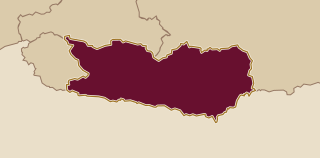
Carinthia lies south of the main Alpine ridge. Vineyards cluster in the south and southeast, with scattered plantings in western mountain valleys. Most occupy slopes at roughly 400 to 750 metres, facing southeast, south or southwest. Medieval church institutions helped spread winegrowing through Kärnten, the German name for Carinthia, before downy mildew later destroyed almost all the vines. Herbert Gartner's planting at Burgstall in the Lavanttal in 1972 began a modern revival. White grapes cover about 80 percent of vineyard area. Sauvignon Blanc leads, followed by varieties including Chardonnay, Pinot Blanc, Pinot Gris, Riesling, Muscateller and Traminer. The whites are often fruity, with fresh acidity. Stainless steel is the usual winemaking vessel, though some producers also use large wooden casks and amphorae. In 2024, Kärnten's first Rieden regulation defined 56 vineyard sites east of Villach. A Riede on a label identifies one of these more specific growing areas.
1 named area
Inside the region
Explore the wine-growing areas of Carinthia.