Who makes it
Kracher’s defining bottles are Beerenauslese and Trockenbeerenauslese, sweet wines made when Botrytis cinerea affects ripe grapes. The estate works with Welschriesling, Chardonnay, Traminer, Scheurebe, Muskat-Ottonel and, on occasion, Zweigelt, so the grape on the label can change both the fruit character and the shape of the sweetness.
The family winery’s modern sweet-wine reputation took shape around Alois Kracher Jr. The 1991 vintage was the first Kracher vintage to receive broad acclaim, following years in which he had committed his work to sweet wine. Today Gerhard Kracher and Yvonne continue with a range that still centres Beerenauslese and Trockenbeerenauslese, while leaving room for Auslese, Eiswein and small quantities of dry white and red wine.
Where it grows
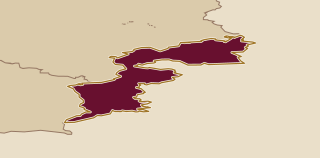
Seewinkel lies beside Lake Neusiedl in Burgenland. Evaporation from the lake, evening fog and the warm Pannonian climate create warm, humid conditions, encouraging botrytis on the fruit. That is the engine of Kracher’s sweet-wine range: the local weather supports the berries used for Beerenauslese and Trockenbeerenauslese rather than merely providing a backdrop to the label.
The central physical feature here is Lake Neusiedl and the weather around it. Evening fog arrives alongside warmth and evaporation, creating the moisture pattern that favours Botrytis cinerea; in the finished wines, that pattern appears as a focus on sweet, botrytis-affected fruit rather than on a named single-vineyard bottling.
How it is made
The cellar
Kracher separates its Trockenbeerenauslese wines into two cellar approaches. Zwischen den Seen matures in large wooden barrels or steel tanks and spends extended time on yeast lees, a method that can bring more texture to sweet wine without putting barrique at the centre of the flavour. Nouvelle Vague matures in barriques with air exchange, so oak vessel and maturation become part of the wine’s broader body and finish.
The distinction matters because both styles begin with botrytis-affected fruit but do not receive the same cellar treatment. The estate’s two names therefore tell you something practical about what follows the harvest: lees contact and large wood or steel for Zwischen den Seen; barriques and air exchange for Nouvelle Vague.
What they make
The range extends from Beerenauslese and Auslese to Eiswein and Trockenbeerenauslese, with a small dry-wine branch beside the sweet wines. Beerenauslese Cuvée, made from Chardonnay and Welschriesling, is the estate’s most important and best-known bottle: a sweet cuvée whose fruit comes from the conditions around Lake Neusiedl.
At the more concentrated end, Trockenbeerenauslese appears in both cellar styles and across several grapes. TBA No. 1 Zweigelt Nouvelle Vague takes the red Zweigelt grape into a sweet, barrique-matured wine, while Grande Cuvée Trockenbeerenauslese Nouvelle Vague places a blended TBA in the same oak-led treatment. The result is a range with sweetness and body as constants, while grape choice and maturation alter the fruit, texture and finish.
Wines to try
First bottle
Beerenauslese Cuvée is the first bottle to seek out. The estate identifies it as its most important and best-known wine, and its Chardonnay-Welschriesling composition places two central Kracher grapes in a botrytis sweet wine from Seewinkel. Expect a sweet, full-bodied palate with fruit at the centre; it introduces the Lake Neusiedl setting before the barrique-led contrast of the Nouvelle Vague TBAs.