
NoleaWorld of Wine

Tejo · Portugal

Producer profile

Scanivinus

Scanivinus is a Portuguese wine company associated with Tejo wines in the GW:s range: a citrus-led white blend, a bottled red Reserva and fruit-forward 3-litre red boxes.

Place
Tejo · Portugal
Known for
Accessible Tejo blends in bottle and 3-litre box formats, spanning Arinto-led white wine and dark-fruited red blends.
Wine context
Cabernet Sauvignon
Editorial basis
World of Wine editorial profile · 8 sources

World of Wine editorial profile · Source list ↓

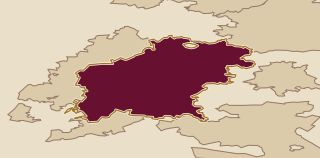
Atlas locationTejo · Portugal

At A Glance

Scanivinus, Lda. is a Portuguese wine company associated with Tejo through the GW:s wines: a white blend in a 3-litre box, a bottled red Reserva, and a 3-litre red box. The range moves from citrus and pear in the white to dark cherry, plum and spice in the reds, using Portuguese grapes alongside Cabernet Sauvignon.

The Producer

Scanivinus is the trading name of Scanivinus, Lda., a Portuguese private limited company registered in Estremoz. Its listed activities combine alcoholic-beverage wholesale with the production of still, fortified and sparkling wines. In the documented GW:s wines, Tejo is the regional origin on the label, while the formats range from a 13.5% bottled red to 3-litre boxes intended for a different rhythm of opening and pouring.

CERTIS awarded Scanivinus certification under Portugal’s National Sustainability Certification Framework for the Wine Sector, known as RNCSSV.

Place

Tejo is a central Portuguese wine region northeast of Lisbon, and it is the origin named for both GW:s Vita and GW:s Reserva. In this range, regional origin arrives through blends rather than a named village or vineyard: Vita combines Arinto, Fernão Pires and Trincadeira das Pratas for citrus, pear and melon fruit, while Reserva combines Aragonez, Cabernet Sauvignon and Castelão for darker fruit, violet and spice.

That distinction matters at the table. The white’s 12% alcohol and citrus-led fruit point toward a lighter-bodied, fresh pour, while the 13.5% Reserva carries more weight, darker fruit and tannic grip. Tejo on these labels is therefore a regional frame for blended wines, not a promise of a single-site expression.

Soil And Site

No named vineyard, soil, slope, exposure, vine age or parcel is documented for the GW:s wines. The useful physical information is instead in the bottles: Vita is a 3-litre Tejo white blend, Reserva is a bottled Tejo red blend, and Låda is a 3-litre red. Without a recorded site, fruit, alcohol, format and structure offer a firmer guide than an imagined ground profile.

Story

That commercial shape is visible in the range itself: one wine is a bottled Reserva, while Vita and Låda use 3-litre box formats. The result is not one uniform wine style, but a compact set of wines designed around white and red blends, different fruit registers and different serving formats.

The red Reserva gives the most detailed view. Aragonez, Cabernet Sauvignon and Castelão meet in a 13.5% Tejo blend described with dark cherry, plum, violet, spice and wild raspberry. A review of the 2022 vintage found vital acidity and supple tannins beneath blackcurrant, dark plum, sour cherry, cedar, coconut, caramel and iron-oxide notes, giving the wine both fruit breadth and a dry, grippy line.

Vineyards And Cellar

The documented grape choices do the explanatory work. In GW:s Vita, Arinto, Fernão Pires and Trincadeira das Pratas bring yellow pear, apple, galiamelon and citrus into a 12% white. Its acidity, creamy texture and dry finish make the pear and melon notes feel broader on the palate rather than sweet.

GW:s Reserva uses Aragonez, Cabernet Sauvignon and Castelão. The blend brings dark cherry and plum fruit together with violet, spice and wild raspberry; in the reviewed 2022, acidity kept the fruit moving while present tannins stayed supple. No fermentation vessel, oak programme or ageing period is documented, so cedar, coconut and caramel belong to that reviewed vintage’s aroma profile rather than a claimed cellar recipe.

Wines

GW:s Vita is the white branch of the documented range: a 3-litre Tejo box at 12% alcohol, built from Arinto, Fernão Pires and Trincadeira das Pratas. Yellow pear, apple, melon and citrus sit over fresh acidity, with creamy texture and a dry finish. It is the range’s lighter-bodied wine, where citrus keeps the ripe fruit from becoming heavy.

GW:s Reserva is the bottled red: a 13.5% Tejo blend of Aragonez, Cabernet Sauvignon and Castelão. Dark cherry, violet, plum, spice and wild raspberry give it a darker, more fragrant register than Vita, while acidity and supple tannin supply shape. The 2022 review adds blackcurrant, sour cherry, cedar and iron-oxide notes, making this the most layered red description in the available range.

GW:s Låda is the other documented red, a 3-litre box at 13.5% alcohol. Its profile centres on dark cherry, herbs, blueberry and forest raspberry. Compared with Reserva’s named three-grape blend and recorded tannic structure, Låda is the more direct fruit-led red in the evidence available.

In The Glass

Pour Vita cold and its first impression is yellow pear, apple, melon and citrus. The palate is dry, with fresh acidity carrying the fruit through a creamy texture; citrus returns at the finish, so the wine reads as refreshing rather than soft or sugary.

Reserva begins with dark cherry, plum, violet, spice and wild raspberry. On the palate, the 2022 review found blackcurrant and sour cherry alongside vital acidity, then supple tannins that add grip without turning the wine coarse. Cedar, coconut, caramel and iron-oxide notes lengthen the aroma spectrum, while the finish stays dry and red-fruited.

Låda keeps the red-fruit direction but shifts the detail toward blueberry, herbs and forest raspberry around dark cherry. At 13.5% alcohol, it has more body than Vita; the supplied notes favour fruit and herb over the fuller structural detail recorded for Reserva.

A Bottle To Understand It

Start with GW:s Reserva. It is a bottled Tejo red made from Aragonez, Cabernet Sauvignon and Castelão, and it has both a current tasting description and a detailed review of the 2022 vintage. Dark cherry, plum, violet, spice and wild raspberry lead into blackcurrant and sour cherry; vital acidity keeps the 13.5% wine active, while supple tannins give the finish dry grip. It places the range’s Portuguese and international grapes in one glass without asking the box formats to explain everything at once.

Anecdote

On 20 May 2025, CERTIS announced that it had awarded Scanivinus certification under Portugal’s National Sustainability Certification Framework for the Wine Sector, RNCSSV. The same announcement named Consulvinus and J. Portugal Ramos Vinhos alongside Scanivinus. ViniPortugal developed the framework, and CERTIS presented the certificate as a seal of trust for sustainability in the wine sector. The announcement records the certificate and the date, but not a named vineyard project, a conversion timetable, or a particular farming or cellar practice behind the award.

Final Word

Scanivinus is most clearly understood through three Tejo wines with distinct jobs: citrus-and-pear Vita for fresh white drinking, fruit-led Låda in a 3-litre red box, and Reserva for dark fruit, acidity and supple tannic grip in bottle.

Sources

Keep following the thread

Where to go next

placeRead the Tejo guideSee Scanivinus in the wider setting of Tejo.mapFind Scanivinus on the mapKeep the producer, its region and nearby places together.learningHow place shapes wineSee how climate, landscape and local choices become part of a wine.