
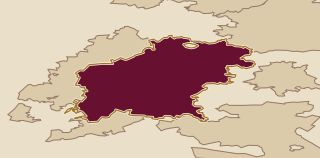
Tejo follows its namesake river through central Portugal. The north bank is more irregular, while broad plains spread across the south. Periodic flooding has left fertile soils on the river plains. The region was called Ribatejo until 2009. Campo, Bairro and Charneca are its three main soil environments, with Serras also recognised by CVRTejo, the regional wine body. Campo has fertile soils deposited by the river; Bairro has clay-limestone soils, and Charneca is hotter and sandier. Fernão Pires, Arinto, Sauvignon Blanc and Chardonnay are among the main white grapes. Touriga Nacional, Trincadeira, Castelão and Aragonez are among the reds. Whites can be aromatic with refreshing acidity, while reds are often full-bodied with a soft texture.
1 named area
Inside the region
Explore the wine-growing areas of Tejo.
Producer profiles
Producer profiles
Every producer profiled in Tejo so far.
- Falua Sociedade de VinhosAlmeirim based Falua makes Tejo wines and Barão do Hospital Loureiro Vinho Verde.
- ODE WineryA revived 1902 cellar in Tejo where Maria Vicente shapes mixed-variety reds and Alicante Bouschet through steel, used oak and clay amphorae.
- Quinta Casal Das FreirasFamily estate near Tomar with four wine ranges, traditional stone presses and a Castelão led 2022 Colheita Tinto.
Browse 2 more
- Quinta da AlornaFamily-owned Tejo estate near Santarém, making dry, river-influenced whites from Verdelho, Sauvignon Blanc and an oak-fermented Alvarinho & Viognier blend.
- ScanivinusScanivinus is a Portuguese wine company associated with Tejo wines in the GW:s range: a citrus-led white blend, a bottled red Reserva and fruit-forward 3-litre red boxes.