
Who makes it
João Póvoa owns Kompassus Vinhos. He is an ophthalmologist by profession and a farmer by passion. Póvoa began producing wine under the Quinta de Baixo name, and the company later adopted Kompassus. It became the first individual reference producer in the municipality of Cantanhede.
Family traditions and minimum intervention guide the viticulture and production. The grapes are harvested entirely by hand, with most coming from old vines. Anselmo Mendes guides the oenology, specialising in fresh Atlantic whites and Alvarinho.
Where it grows
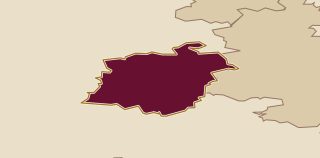
Kompassus Vinhos works in Bairrada, with vineyards located in Cordinhã. The soils are predominantly clay limestone, and the vineyards receive strong sun exposure to the south. Clay holds water while limestone allows drainage, giving the soil two distinct physical properties in the same vineyard.
The producer's native varieties include Baga, Bical, Arinto, Cercial and Maria Gomes. Touriga Nacional, Pinot Noir, Verdelho and Alvarinho are also grown. Baga appears in the red wines, while Arinto and Bical are combined in Reserva Branco 2021.
What they make
Kompassus makes Baga red wines alongside white and sparkling wines. The named Reserva bottles have different grape roles. Kompassus Reserva Baga 2020 is made from 100% Baga. Kompassus Reserva Branco 2021 combines 70% Arinto and 30% Bical.
Reserva Branco 2021 fermented and aged in used 400 litre French oak barrels for eight months. Used oak allows slow oxygen contact and can broaden texture without adding the stronger oak flavour associated with new barrels. The wine brings citrus, apricot and lime aromas, followed by a broad oily texture and a persistent finish.