NoleaWorld of Wine

Vallée du Rhône · France

Producer profile

Domaine Saint Préfert

Châteauneuf-du-Pape domaine with Grenache led reds, a Clairette and Roussanne white, and Colombis aged in wooden conical vats.

Place
Vallée du Rhône · France
Known for
Grenache led Châteauneuf-du-Pape
Wine context
Grenache / Garnacha · Marsanne & Roussanne · Mourvèdre · Syrah / Shiraz
Editorial basis
World of Wine editorial profile · 5 sources

World of Wine editorial profile · Source list ↓

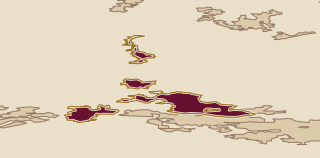
Atlas locationVallée du Rhône · France44.04° N · 4.83° E

At A Glance

Fact
Detail
Current label
Famille Isabel Ferrando
Appellation
Châteauneuf-du-Pape
Red grapes
Grenache, Cinsault, Syrah and Mourvèdre
White grapes
Clairette and Roussanne
Defining practice
Biodynamic management began in 2019 and was certified in 2022
Signature wine
Colombis

The Producer

A former banker, Isabel Ferrando bought Domaine Saint Préfert from the Serre family in 2002. Before the purchase, she learned winemaking at Domaine Raspail-Ay in the Gigondas appellation. The domaine makes Châteauneuf-du-Pape reds led by Grenache, alongside a white from Clairette and Roussanne.

The estate's older name remains attached to earlier bottles, while the current label reads Famille Isabel Ferrando. The range includes blended and named red cuvées, with Colombis among the bottles that carry a distinct parcel name and cellar treatment.

Place

The white wine comes from the Serres lieu-dit, a named place within Châteauneuf-du-Pape, and combines Clairette with Roussanne. The appellation also appears across the red range, from the Classic cuvée to Colombis, Collection Charles Giraud and Réserve Auguste Favier.

This gives the estate two clear forms of Châteauneuf-du-Pape. The white places the Serres site beside its two grapes, while the reds move between a multi grape cuvée and named bottlings.

Story

Isabel Ferrando changed the name on her labels from Domaine Saint Préfert to Famille Isabel Ferrando in 2020. At the same time, she consolidated three cuvées into one central red blend. Earlier bottles retain the Saint Préfert name, while later labels carry the family name and the revised range.

The vineyards also moved toward biodynamic management, which began in 2019 and received formal certification in 2022. Ferrando's ownership is therefore visible in both the farming and the label.

Wines

The red range includes the Classic cuvée, Colombis, Collection Charles Giraud and Réserve Auguste Favier. Classic combines 85% Grenache with Cinsault, Syrah and Mourvèdre at 5% each. Colombis is aged entirely in wooden conical vats for 18 months.

The Châteauneuf-du-Pape Blanc is made from 60% Clairette and 40% Roussanne from the Serres lieu-dit. Current bottles also carry the Famille Isabel Ferrando Châteauneuf-du-Pape Rouge name, reflecting the label change introduced in 2020.

In The Glass

Colombis 2019 brings wild strawberries, cherries, flowery incense, lavender and loamy earth to the nose. The aromas move from red fruit to flowers, herbs and damp earth.

Collection Charles Giraud 2019 shows grilled steak, pepper, black and red plums, red and white cherries, kirsch and wet forest notes. Réserve Auguste Favier 2018 brings flowers, black raspberries, spice, cherries, pepper, herbs and mint.

A Bottle To Understand It

Choose Collection Charles Giraud 2016. It is a named red cuvée with purity of fruit, sensuous velvet textures and expansive layers of fruit through the finish. The bottle gives the range a clear red wine reference without reducing the domaine to its broad Classic blend or its single named Colombis cuvée.

Final Word

Domaine Saint Préfert now appears under the Famille Isabel Ferrando name, with Grenache led reds, named Châteauneuf-du-Pape cuvées and a white built from Clairette and Roussanne. The estate's current farming is biodynamic, and Colombis is raised in wooden conical vats.

Sources

Keep following the thread

Where to go next

placeRead the Vallée du Rhône guideSee Domaine Saint Préfert in the wider setting of Vallée du Rhône.mapFind Domaine Saint Préfert on the mapKeep the producer, its region and nearby places together.learningHow place shapes wineSee how climate, landscape and local choices become part of a wine.