NoleaWorld of Wine

Châteauneuf-du-Pape · Vallée du Rhône · France

Producer profile

Domaine du Pégaü

Châteauneuf-du-Pape domaine led by Laurence Féraud, with whole cluster fermentation in cement vats and da Capo made only in exceptional vintages.

Place
Châteauneuf-du-Pape · Vallée du Rhône · France
Known for
Whole cluster Châteauneuf reds
Wine context
Grenache / Garnacha · Mourvèdre · Syrah / Shiraz
Editorial basis
World of Wine editorial profile · 6 sources

World of Wine editorial profile · Source list ↓

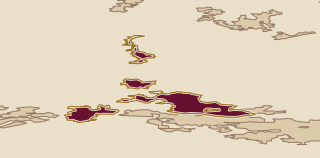
Atlas locationChâteauneuf-du-Pape · Vallée du Rhône · France44.06° N · 4.83° E

At A Glance

Field
Detail
Region
Rhône
Appellation
Châteauneuf-du-Pape
Main grapes
Grenache, Syrah, Mourvèdre and other varieties
Signature wine
Cuvée Réservée
Defining feature
Whole cluster fermentation in cement vats

The Producer

A fourteenth century Provençal wine pitcher gives Domaine du Pégaü its name. The vessel was used during the papal presence in Avignon. Laurence Féraud is the winemaker and proprietor, working with whole clusters in traditional cement vats and twice daily pump overs.

The cellar has no destemmer equipment and no new barrels. Minimal intervention keeps the fermentation method visible in the finished reds, while stems can bring perfume, spice and tannin to the wine.

Place

Domaine du Pégaü is based in the Châteauneuf-du-Pape appellation of the Rhône. The appellation name identifies place, while the wines use several Rhône grape varieties in the same red cuvée.

In January 2012, the operation acquired a single block of 41 hectares in Sorgues along the Rhône. The property was named Château Pegau.

Story

Paul Féraud began independent bottling in 1964, producing his first cuvée under his own name at 2,000 bottles a year. Laurence Féraud studied viticulture and wine in Paris before returning to establish an independent family estate with Paul and Odette in 1987. The domaine began on five hectares.

The early bottling work and Laurence's return mark two stages in the family's move from independent production to a domaine led by its own winemaker and proprietor.

Vineyards And Cellar

The white wine parcels are farmed with 100% biodynamic techniques. The red grapes undergo whole cluster fermentation in traditional cement vats, leaving the stems in contact with the fermenting wine. This can add perfume, spice and tannin, while cement allows fermentation without the flavour of new oak.

Laurence Féraud's cellar uses twice daily pump overs. Pumping fermenting wine over the grape material extracts colour and tannin, and keeps the whole clusters wet during fermentation. The method sits alongside minimal intervention winemaking and the absence of destemmer equipment.

Wines

Cuvée Réservée is composed of 80% Grenache, 6% Syrah, 4% Mourvèdre and 10% other grape varieties. Its estimated ageing window is five to twenty years.

da Capo is a separate cuvée made from grapes more than 100 years of age. Its estimated ageing window is ten to twenty five years. Cuvée Laurence spends four years in 50 hectoliter wooden tuns, known as foudres, and has an estimated ageing window of five to fifteen years.

The range moves from a defined grape blend to cuvées separated by old vine fruit, exceptional vintage selection and extended foudre ageing.

In The Glass

Pégaü's wines are deep, brooding and earthy, with cassis and black fruit alongside truffles, dried flowers and licorice. Bright acidity and intense mineral quality keep the dark ripeness from becoming jammy.

da Capo has a garnet, purple, deep, opaque and dense appearance. Blackcurrant, blackberry, powerful licorice and black pepper rise from the glass. The palate is narrow, straight, powerful and deep, with a very persistent finish and integrated tannins.

Cuvée Laurence shows garnet with tiled highlights. Young bottles bring garrigue, while ageing develops prune, leather, fur and undergrowth. Cinnamon, pepper and grison meat accompany supple tannins and spices of old wood.

A Bottle To Understand It

Choose Cuvée Réservée first. It puts Grenache, Syrah, Mourvèdre and other grape varieties into one Châteauneuf-du-Pape red, with a round, generous and powerful palate held by refined tannins. The cuvée presents Laurence Féraud's whole cluster cellar work in its broadest named blend.

Anecdote

In 1998, Laurence Féraud set aside some barrels instead of blending them into Cuvée Réservée. She wanted to return to tradition and preserve a separate expression. The decision produced da Capo, whose name means back to the top and also refers to the opera of grapes that is Châteauneuf-du-Pape. The cuvée is made only in exceptional vintages. The first da Capo began as Laurence's choice to keep those barrels separate from Cuvée Réservée.

Final Word

Domaine du Pégaü joins Laurence Féraud's whole cluster cellar work with Châteauneuf-du-Pape reds built around Cuvée Réservée, da Capo and Cuvée Laurence.

Sources

Keep following the thread

Where to go next

placeRead the Vallée du Rhône guideSee Domaine du Pégaü in the wider setting of Vallée du Rhône.mapFind Domaine du Pégaü on the mapKeep the producer, its region and nearby places together.learningHow place shapes wineSee how climate, landscape and local choices become part of a wine.