NoleaWorld of Wine

Provence · France

Producer profile

Clos Cibonne

Clos Cibonne is a Le Pradet Provence estate with a 1930 Tibouren planting, organic farming since 2019, and rosé and red cuvées.

Place
Provence · France
Known for
Le Pradet rosé and red cuvées
Editorial basis
World of Wine editorial profile · 5 sources

World of Wine editorial profile · Source list ↓

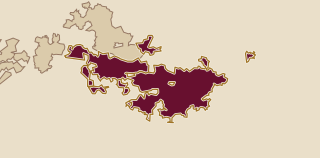
Atlas locationProvence · France43.10° N · 6.04° E

At A Glance

Field
Detail
Region
Provence
Village
Le Pradet
Estate grape choice
Tibouren
Annual production
Around 100,000 bottles each year
Defining feature
15 hectares of vineyards, 800 meters from the coast

The Producer

Tibouren is a very old grape variety that originates on the Mediterranean coast. In 1930, André Roux planted the estate exclusively with Tibouren. Clos Cibonne is the modern family name of this Provence estate, whose property passed to Brigitte Roux, André's granddaughter, and Claude Deforges in 1993.

Olivier Deforges, a fifth generation winemaker, has taken over as both vineyard manager and winemaker. The range includes rosé cuvées such as Cuvée des Vignettes, Cuvée Caroline and Cuvée Spéciale Les Vignettes, alongside red wines including Cuvée Olivier and Cuvée Spéciale Tibouren.

Place

Clos Cibonne is located in Le Pradet in Provence, between Toulon and Hyères. Its rosé and red wines carry the Côtes de Provence appellation. The village identifies the estate's location, while the appellation places the bottles within the wider Provençal category.

Soil And Site

The vineyard sits on schist clay soil, which provides good drainage. Drainage allows excess water to leave the root zone instead of remaining around the vines. The vineyard is also constantly exposed to drying mistral winds. The site therefore combines draining ground with drying air, two physical conditions that affect water movement around the vines and moisture on the foliage.

Story

In 1993, Brigitte Roux and her husband Claude Deforges took over the family property. Olivier Deforges later took over both vineyard management and winemaking as a fifth generation winemaker. The family has held certified organic status since the 2019 vintage.

The succession connects ownership with direct vineyard and cellar work. Olivier's role covers both sides of production, while certified organic farming defines the family's current vineyard status.

Vineyards And Cellar

Fermentation takes place in stainless steel vats on a cold setting, which delays the start. It lasts about ten days, with two pump overs each day. Pumping over moves fermenting liquid across the grape solids, helping extract colour and tannin.

Wine ages in 120 years old, 5,000 litre foudres for one year. Foudres are large wooden vessels, so they allow slow oxygen exchange during ageing with less new wood flavour than a new small barrel.

Wines

The range is divided first by colour. Rosé cuvées include Cuvée des Vignettes, Cuvée Caroline, Clos Cibonne Cuvée Tradition and Cuvée Spéciale Les Vignettes. The red cuvées include Cuvée Spéciale Tibouren and Cuvée Olivier.

Cuvée Caroline has potential for further development, giving the rosé range a bottle with a longer cellar horizon. The red wines provide a separate part of the collection, with Cuvée Olivier linked to barrel ageing and Cuvée Spéciale Tibouren carrying the estate's historic grape name.

In The Glass

Cuvée des Vignettes is very fine and delicate, with tangerine, spices, fine herbs, a faint hint of cream, red cherry and cranberry. The palate has grip and fine acidity.

Cuvée Caroline brings cherry, raspberry and redcurrant, followed by nutty and spicy complexity. Cuvée Spéciale Les Vignettes shows vanilla, quince, toasted walnut and spice, with lily and candied fruit. The finish has tannins that meld perfectly.

Cuvée Olivier moves into intense red berries and prunes, with silky, fine tannins and a velvety texture. The wines carry different fruit and mouthfeel profiles across the rosé and red categories.

A Bottle To Understand It

Choose Cuvée Olivier. It is a red cuvée aged in 300 litre barrels for around a year. Fine grain and light woodiness make its aromatic palette more complex. The bottle joins a named red wine to a specific barrel regime.

Anecdote

In 1793, the Roux family purchased the estate from Jean Baptiste de Cibon. De Cibon had served under the command of Lafayette in the American Revolutionary War against the British. The sale moved the property into the Roux family line.

Final Word

Clos Cibonne's named cuvées divide between rosé and red, with Le Pradet as the village address.

Sources

Keep following the thread

Where to go next

placeRead the Provence guideSee Clos Cibonne in the wider setting of Provence.mapFind Clos Cibonne on the mapKeep the producer, its region and nearby places together.learningHow place shapes wineSee how climate, landscape and local choices become part of a wine.