
At A Glance
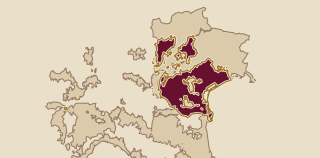
Type: Cooperative winery Country: Italy Region: Veneto Village: Monteforte d'Alpone Appellation: Soave DOC Primary Grape: Garganega Founded: March 1952 Member Growers: 450 Hectares: 1,200 Annual Production: 140,000 hectoliters (4 million+ bottles) Parent Group: Collis Veneto Wine Group (from 2024)
---
The Producer
Cantina di Monteforte is a cooperative winery in Monteforte d'Alpone, a village in the eastern Verona wine country of the Veneto, sitting at the heart of Soave territory. Its 450 member growers farm 1,200 hectares of volcanic basaltic land and together produce over four million bottles annually, all centred on Garganega, the thick-skinned white grape that defines Soave DOC.
The cooperative's scale is working scale, not decorative: 450 farming families would find it nearly impossible to maintain cold-chain infrastructure, quality sorting, or market access independently. Monteforte has provided the shared infrastructure that kept small parcels of volcanic ground viable for seven decades. In November 2024, the cooperative's membership voted to incorporate into Collis Veneto Wine Group, Italy's largest cooperative wine organisation, with Collis taking direct production control from the 2025 harvest. The member farming relationships remained intact; what changed was who ran the cellar.
---
Place
Monteforte d'Alpone lies in the eastern reaches of the Soave production zone, east of Verona. The broader Soave territory includes both volcanic hillside parcels and flatter alluvial land; Monteforte's growers farm specifically on volcanic basaltic soils, dark and dense, with what the growers describe as reddish and silvery reflections in the turned earth.
Volcanic basalt drains well and retains heat, but it also pushes Garganega toward compact, mineral expression rather than the rounder, fruit-forward character found on calcareous or clay-heavy ground. On this soil, the grape typically produces wines with a citrus and almond axis, firm acidity, and a dry, slightly austere finish rather than soft tropical fruit. The appellation label reads Soave DOC; the volcanic address within that appellation is what separates Monteforte's parcel character from cooperative production on the zone's lowland soils.
---
Soil And Site
The basaltic volcanic soils of Monteforte d'Alpone are the cooperative's defining physical fact. They are described as hard, dark-coloured soils with reddish and silvery mineral reflections, formed from ancient volcanic activity rather than the limestone and clay soils that appear across other parts of the Soave zone.
Basalt-derived soils tend toward low fertility, which naturally limits vine vigour and concentrates flavour development in the grape. The mineral character of this ground translates directly into the wines: tighter fruit, more pronounced acid, and a dry, stony quality that distinguishes Monteforte parcels from Soave produced on softer, more fertile land.
---
Story
In March 1952, a group of East Veronese winemakers formed a cooperative with one stated purpose: to sustain the character of their terroir through shared effort. The postwar Italian countryside was full of small farming families with no route to market individually. The cooperative model gave them one.
Over the following seven decades, Cantina di Monteforte grew to 450 members and 1,200 hectares, posting revenues exceeding €17 million in its final full trading year as an independent organisation. By 2024, the cooperative's position in white DOC wine production was substantial enough to attract Italy's largest cooperative wine group.
On November 21, 2024, the membership voted to join Collis Veneto Wine Group. Collis leased a branch of Cantina Sociale di Monteforte and took direct production control starting with the 2025 harvest. The combined Collis entity now spans Valpolicella, Soave, and Padua wine regions, with total revenues exceeding €220 million and 7,200 hectares under cooperative management. The merger positioned Monteforte's 1,200 volcanic hectares as a dedicated premium production hub for Garganega-based white DOC wines within a fully integrated vineyard-to-market group.
What the 1952 founders built as a survival mechanism for East Veronese smallholders became, seventy years later, a strategic anchor for the largest cooperative wine operation in Italy.
---
Vineyards And Cellar
The 1,200 hectares under Monteforte's cooperative umbrella are farmed by 450 member growers working individual family parcels on volcanic basaltic soils. Garganega is the dominant planting throughout, consistent with Soave DOC requirements and with the grape's proven adaptation to this volcanic ground.
Garganega is a late-ripening variety that benefits from the heat retention of dark basaltic soils, which extend the growing season and help the grape reach full phenolic development. The thick skins contribute to wines with enough body and texture to carry the grape's natural acidity without feeling thin. The cooperative's cellar function is to receive, process, and bottle production from across the 1,200 hectares, a task that demands the kind of cold-chain and quality-sorting infrastructure that no individual family farm could justify at this scale.
From the 2025 harvest, cellar direction passed to Collis Veneto Wine Group under the branch lease agreement. The member growers continue to farm their parcels; the processing and production decisions now sit with the Collis technical team.
---
Wines
The cooperative's production runs to 140,000 hectoliters annually, over four million bottles, with output spanning bulk and bottled formats at cooperative scale. The bottled range is built on Garganega and targets white DOC wine production in the Soave zone.
Soave DOC requires a minimum of 70 percent Garganega, with Trebbiano di Soave and other permitted varieties filling the remainder. On Monteforte's volcanic parcels, Garganega typically delivers wines that are dry and pale-straw in colour, with firm acidity, citrus and almond character, and a mineral, lightly stony quality on the palate rather than the broader, more neutral style associated with flat-ground Soave. The cooperative's strategic position, confirmed by the Collis merger framing, is at the premium end of white DOC production rather than the entry-level commodity tier.
Specific cuvée names and bottling tiers are not available from confirmed sources. What the sources confirm is the grape, the appellation, the soil type, and the direction of quality ambition within cooperative Soave production.
---
In The Glass
Garganega from volcanic basaltic soils in Monteforte d'Alpone opens with lemon and bitter almond, sometimes a dry floral note. The mid-palate is clean rather than generous: the volcanic ground keeps yields and richness in check, so the wine does not fill out with the ripe peach or melon character that warmer, flatter Soave land can produce.
The acidity is one of the defining features. Garganega's natural high acid, amplified by the lean mineral soil, holds the wine upright through the mid-palate and gives a clean, dry finish with a faint chalky edge. There is texture from the thick skins, enough to feel present without weight. The wine finishes on citrus peel and stone rather than on fruit, which is the volcanic signature.
At cooperative volumes, the style is consistent rather than complex, but the volcanic address gives these wines more cut and definition than Soave produced in the flat eastern plains of the DOC zone.
---
A Bottle To Understand It
A Soave DOC white from Cantina di Monteforte is the correct starting point. It is Garganega on volcanic basaltic ground, dry, pale, and mineral-edged, with lemon, bitter almond, and a firm acid line that keeps the finish clean and direct. It is not a rich or oak-influenced wine. It is a wine of the soil rather than the cellar, and the basalt speaks clearly: tighter, more austere, and more defined than the broader category of cooperative Soave would suggest. Open it with white fish, fried seafood, or young cheeses, and the acidity does its best work.
---
Anecdote
In March 1952, a group of winemakers in Monteforte d'Alpone did something that seemed practical at the time and turned out to be consequential over the following seven decades. They formed a cooperative and named it Cantina Sociale di Monteforte d'Alpone, with the stated aim of sustaining the character of their volcanic terroir through shared effort. Individual farmers in postwar eastern Verona had little leverage: one family's parcel of basaltic hillside could not support a bottling line, a refrigerated truck, or a commercial buyer relationship. Together, 450 of them could. The cooperative grew, posted revenues above €17 million, and in November 2024, the membership voted to join Collis Veneto Wine Group, the largest cooperative wine organisation in Italy. What began as a practical solution for East Veronese smallholders became the volcanic anchor of a €220 million wine group. The dark basaltic ground that those 1952 founders wanted to preserve is now the strategic heart of Collis's premium white DOC ambitions.
---
Final Word
Cantina di Monteforte is a cooperative winery shaped by its volcanic address. The basaltic soils of Monteforte d'Alpone give Garganega a mineral austerity and acid-driven clarity that separates these wines from broader Soave production. The cooperative scale, 450 growers and 1,200 hectares, is the mechanism that kept those volcanic parcels productive and market-connected for over seventy years. The 2024 merger into Collis Veneto carries that mechanism forward under integrated national cooperative management. The wines remain white, dry, and Garganega-centred. The volcanic ground has not changed.
---
Sources
- winenews.it/en/wine-and-mergers-collis-veneto-wine-group-incorporates-social-winery-of-monteforte-dalpone_575852
- www.vinetur.com/en/2025112593678/collis-veneto-merger-creates-italian-wine-giant-with-euro220-million-revenue-and-7200-hectares-of-vineyards.html
- www.collisgroup.it/en/homepage
- barsottiwines.com/portfolioitaly/cantina-di-monteforte-veneto-italy