
NoleaWorld of Wine

Rheinhessen · Germany

Producer profile

Bergkloster Winery

Westhofen family winery making white wines from limestone vineyards, with Cuvée Weiss shaped by skin contact, oak ageing and no filtration.

Place
Rheinhessen · Germany
Known for
Low intervention white wines from limestone
Wine context
Pinot Grigio / Pinot Gris · Riesling · Sauvignon Blanc
Editorial basis
World of Wine editorial profile · 3 sources

World of Wine editorial profile · Source list ↓

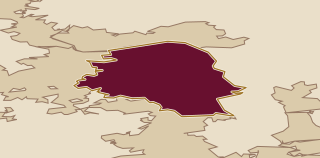
Atlas locationRheinhessen · Germany49.70° N · 8.24° E

At A Glance

Field
Detail
Region
Rheinhessen, Germany
Village
Westhofen
Vineyard area
7.7 hectares
Named wine
Cuvée Weiss
Defining feature
Limestone vineyards and low intervention winemaking

The Producer

In 2018, Jason Groebe moved Bergkloster into fully natural winemaking. He removed filtration and fining agents and stopped adding sulfites. Bergkloster is a family winery, with Groebe representing the fifth generation of winemakers. Organic work began in 2006.

Place

Westhofen is Bergkloster's home village in Rheinhessen, Germany. The vineyards are limestone based. Porous limestone lets water pass through while retaining some moisture, so roots can access water without prolonged saturation. That balance can help white grapes retain freshness during ripening. No slope, altitude or named parcel is attached to the vineyard description.

Wines

Bergkloster's white range includes Cuvée Weiss and Lebendig Frisch 2025. Cuvée Weiss is a blend of six grape varieties. No grape composition or cellar method is specified for Lebendig Frisch 2025.

Cuvée Weiss 2022 uses Huxelrebe, Bacchus, Pinot Gris, Weissburgunder, Sauvignon Blanc and a small amount of Riesling. Bacchus and Huxelrebe were whole bunch crushed and fermented on their skins individually. Whole bunch crushing keeps stems and berries together at the start of fermentation, while skin contact leaves grape solids in the fermenting must and can add aromatic depth and phenolic texture. Pinot Gris, Weissburgunder, Sauvignon Blanc and Riesling were pressed directly, reducing their contact with skins and stems.

Fermentation and ageing took place in oak barrels from 1200 L to 4500 L, with a smaller stainless steel portion. Large oak barrels generally allow slow oxygen exchange with less overt oak flavour than small barrels. After nine months, the lots were blended and bottled without filtration or any additions. The finished wine carries juicy pear, rhubarb and a hint of elderflower, followed by electric acidity and a long, crunchy finish.

Final Word

Bergkloster is a Westhofen family winery where limestone vineyards meet low intervention white winemaking. Cuvée Weiss joins skin fermentation, direct pressing and large oak ageing in one blend, then leaves the cellar without filtration or additions.

Sources

Keep following the thread

Where to go next

placeRead the Rheinhessen guideSee Bergkloster Winery in the wider setting of Rheinhessen.mapFind Bergkloster Winery on the mapKeep the producer, its region and nearby places together.learningHow place shapes wineSee how climate, landscape and local choices become part of a wine.