
NoleaWorld of Wine

Uruguay · Region section

Riveras del Uruguay

Riveras del Uruguay follows the Uruguay River through Artigas, Paysandu and Salto. Hot, humid conditions, wide day-night temperature shifts and changing soils distinguish its wines, from Paysandu's calcareous ground to Salto's free-draining old riverbed soils and softer Tannat from the Dayman basin.

Place
Riveras del Uruguay, Uruguay
Producers
0
Editorial basis
World of Wine regional guide
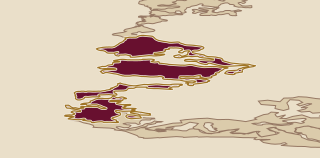
Atlas locationRiveras del Uruguay · Uruguay33.97° S · 58.26° W

Producer coverage

No producers listed yet

We do not yet list a producer in Riveras del Uruguay. The region guide, map and nearby wine places remain open to explore.

Riveras del Uruguay runs along the Uruguay River through Artigas, Paysandu and Salto, at 50 to 60 metres above sea level. This is hot, humid wine country, with wide day-night temperature shifts linked to the river. Deep soils developed over sandstone vary across the region.

Paysandu has fertile, calcareous soils suited to Tannat, Cabernet Sauvignon and Syrah, and wines with rich flavours. In Salto, silty and sandy soils sit above a well-drained gravel layer. The Dayman basin produces softer, rounder Tannat, with temperatures that can move from 40 degrees during the day to 20 at night. Producers have renewed their interest in Salto's old riverbed soils, which drain freely in the damp climate. Artigas is slightly warmer and wetter than Salto, with wines noted for intense flavours and aromas. Pascual Harriague introduced Tannat to Salto around 1870.

Inside the region

1 named area

Each guide keeps its place within Riveras del Uruguay clear, with a direct route back to the map.

  1. 01Riveras del UruguayNo producers listed yetRiveras del Uruguay sits within Riveras del Uruguay, Uruguay.

Keep following the thread

Where to go next

mapSee Riveras del Uruguay in the AtlasKeep the surrounding places in view as you move closer.placeContinue to Riveras del UruguayRiveras del Uruguay is one of the named areas within Riveras del Uruguay.learningHow place shapes wineSee how climate, landscape and local choices become part of a wine.