
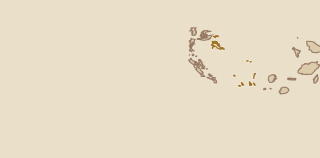
Mountain & Southwest brings together several inland wine areas of the United States. Colorado's vineyards range from roughly 4,500 to more than 7,000 feet. The frost-free season is short, and temperatures can fall by 25 to 30°F between day and night as grapes ripen. Warmer, sunnier Grand Valley grows Syrah, Viognier, Bordeaux grape varieties and Tempranillo. Cooler West Elks has a shorter season and grows Riesling, Pinot Gris and Pinot Noir. In Idaho, parts of Snake River Valley and Lewis-Clark Valley can ripen late-maturing red grapes. New Mexico growers work with European varieties and hybrids. Arizona has three American Viticultural Areas, or AVAs; Willcox is its leading grape-producing area. Maui is also included in this collection. MauiWine makes sparkling grape wine from vines grown on the island's largest volcano.
5 named areas
Inside the region
Explore the wine-growing areas of Mountain & Southwest.
- 01ArizonaNo producers listed yetArizona's three AVAs are Willcox, Verde Valley and Sonoita. Willcox leads the state in grape production, and growers work with almost 80 varieties.
- 02ColoradoNo producers listed yetColorado's vineyards sit at high elevations with short frost-free seasons and marked day-to-night temperature swings. Its warmer Grand Valley and cooler West Elks AVAs favour different grape choices.
- 03HawaiiNo producers listed yetHawaii includes the listed appellation of Ulupalakua. On Maui, MauiWine makes sparkling grape wine from vines grown on the island's largest volcano.
- 04IdahoNo producers listed yetIdaho includes Snake River Valley, Lewis-Clark Valley and Eagle Foothills. Microclimates in the two valleys can ripen late-maturing red grapes, while Viognier can be lush and soft.
- 05New MexicoNo producers listed yetNew Mexico's AVAs are Middle Rio Grande Valley, Mimbres Valley and Mesilla Valley. High-altitude vineyards and a mix of European varieties, hybrids and newer influences mean there is no single regional style.