
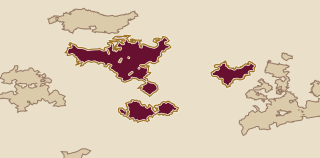
Navarra sits beside Rioja within Rioja & Ebro, Spain. Garnacha, Tempranillo and international grapes appear in wines ranging from fresh rosé to fuller mountain reds. Its appellations are Navarra, Pago Arínzano, Pago Otazu and Prado Irache.
Continue through the region
Elsewhere in Rioja & Ebro
- Cariñena10 producersCariñena is warm Aragón Garnacha country, where old vines and dry conditions give the reds concentration.
- Rioja76 producersA Rioja label may tell you where the grapes grew, how long the wine aged, or both. Tempranillo leads, but Garnacha, Graciano, Mazuelo, Maturana Tinta and the white grape Viura all belong here too.
Producers in Navarra
Producer profiles
- Bodega de SarriaLarge estate producer in Navarra's Valdizarbe sub-region, making traditional Garnacha rosado and a Cabernet Sauvignon-led Reserva aged three years before release.
- Bodega Marques de MontecierzoOrganic family winery in southern Navarra, housed in a 19th-century flour mill that once served as a Civil War prison, making reds from Garnacha and Merlot alongside a Guía Peñín-awarded vermouth.
- Bodega OtazuNavarra estate with a Vino de Pago designation, Cabernet Sauvignon and Chardonnay wines, late harvests, and heritage vine recovery.
- Bodegas Gran Feudo SLRed and white wine producer in Cintruénigo, Navarra, operating continuously from a winery built in 1872 on the site of a stone quarry.
Browse 4 more
- ChiviteNavarra producer Chivite pairs Colección 125 with varietal Chardonnay, Syrah and Grenache from Finca Legardeta.
- Compañia Vitivinícola Tandem S.A.Lácar producer making Ars Nova, a Tempranillo, Cabernet Sauvignon and Merlot red matured in concrete and French oak.
- J. Chivite Family EstatesEleven-generation Navarra estate with a notarised 1647 deed, exporting since 1860 and farming 103 hectares at 450 metres in the Tierra Estella hills.
- Viña Zorzal WinesGarnacha estate in Corella, southern Navarra, where three brothers dismantled their father's two-million-bottle factory and rebuilt it around old limestone bush vines, spontaneous fermentation, and the specific freshness of the Fitero foothills.