
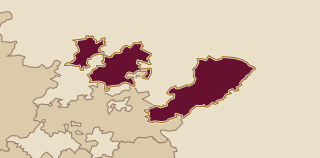
Trás-os-Montes means “behind the mountains”. This northeastern Portuguese region, near Spain, is bordered by the Marão and Alvão mountains and the Douro River. Summers are hot, winters cold, and day and night temperatures differ considerably. Soils are mainly poor granite, with some schist. Red wine accounts for most production. Touriga Nacional, Touriga Franca, Tinta Roriz and Trincadeira are among the red grapes. Their wines are often fruity and relatively high in alcohol, with noticeable acidity. Whites can be floral and fruity, with moderate acidity. The DOC, or protected wine designation, has three subregions. Chaves is generally lower, wetter and more humid. Valpaços is warmer and drier, and its wines tend to be riper. Planalto Mirandês lies on the Serra do Mogadouro plateau, with schist soils, low humidity and marked temperature variation. Wine production here dates back to Roman and pre-Roman times. Since 2006, Transmontano has covered the wider region, while DOC Trás-os-Montes applies only to selected areas.
1 named area
Inside the region
Explore the wine-growing areas of Trás-os-Montes.