
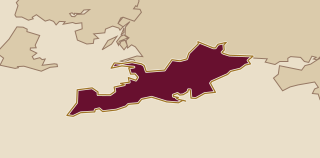
Península de Setúbal has hot, dry summers and mild, rainy winters, with high humidity. Its vineyards extend around the Tejo and Sado river systems. Arrábida is cooler and closer to the Atlantic, with limestone and clay-limestone soils in place of the plains' deep fine sands. Palmela and Setúbal are protected designations of origin; Península de Setúbal is the broader geographical indication. Setúbal is associated with the fortified wines Moscatel de Setúbal and Moscatel Roxo, made with added grape spirit. Moscatel Graúdo is used mainly in fortified wines. Palmela reds must contain at least 67% Castelão, also known as Periquita. Young wines can have cherry, gooseberry and raspberry aromas. Arinto and Fernão Pires are the region's two dominant white grapes.
2 named areas
Inside the region
Explore the wine-growing areas of Península de Setúbal.
- 01PalmelaNo producers listed yetPalmela is a Castelão-led red-wine area within Península de Setúbal. Its still reds are aromatic and structured, with young wines showing cherry, gooseberry and raspberry aromas.
- 02Setúbal3 producersSetúbal is the Moscatel-focused wine area within Península de Setúbal. Its designation is reserved for Moscatel de Setúbal and Moscatel Roxo wines.
Producer profiles
Producer profiles
Every producer profiled in Península de Setúbal so far.
- Bacalhôa Vinhos de PortugalA Portuguese wine producer rooted in the Península de Setúbal, making fortified Moscatel de Setúbal from north-facing Arrábida limestone vineyards alongside still wines across seven Portuguese regions.
- José Maria da FonsecaFamily wine company in Azeitão since 1834, known for Periquita red and the fortified Moscatel de Setúbal.