
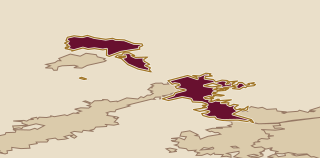
Mittelrhein means Middle Rhine. One of Germany's smallest winegrowing regions, it follows about 120 kilometres of the river. Many vineyards climb steep terraces that require considerable manual work; the valley sides have been terraced for vines for more than 1,000 years. Riesling is the leading grape, alongside Pinot-family varieties, Müller-Thurgau and Kerner. Soils include slate and weathered greywacke, a type of sandstone. The VDP growers' association describes the region as one of Germany's warmest, with vineyard temperatures above 25 degrees Celsius on as many as 50 days a year. Castles and palaces stand above the river and its terraces. The Upper Middle Rhine Valley became a UNESCO World Heritage site in 2002, in recognition of this cultural landscape. Maintaining the traditional steep vineyards remains demanding and costly.
1 named area
Inside the region
Explore the wine-growing areas of Mittelrhein.