NoleaWorld of Wine
Menu

Hessische Bergstraße

Hessische Bergstraße is a small wine region in Germany's Hesse, divided between Starkenburg near Darmstadt and Umstadt. Almond blossom marks its early spring. Riesling is the most widely planted grape, alongside Müller-Thurgau, Silvaner and Roter Riesling, a red-skinned grape that makes white wine.

Place
Hessische Bergstraße, Germany
Explore next
Hessische Bergstraße
Producer profiles
1
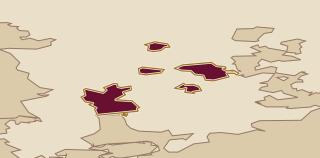
Atlas locationHessische Bergstraße · Germany49.87° N · 8.96° EOpen in Atlas

Hessische Bergstraße has 440 hectares of vines and 23 individual vineyard sites across two separate areas: Starkenburg near Darmstadt and Umstadt. Spring arrives a few days ahead of many surrounding places, with almond blossom marking the season. Riesling accounts for almost 60 percent of the vineyard area. Ruländer, Müller-Thurgau and Grüner Silvaner are also grown. In Umstadt, Müller-Thurgau makes light wines, while the local Rieslings and Silvaners are somewhat fuller. Riesling from Bensheim is known for its pronounced acidity. Roter Riesling has red-tinged skins but makes white wine, with apple and pear flavours and relatively low acidity. The region has more than 15 hectares of this grape.

1 named area

Inside the region

Explore the wine-growing areas of Hessische Bergstraße.

  1. 01Hessische Bergstraße1 producerHessische Bergstraße, Germany.

Producer profiles

Producer profiles

Every producer profiled in Hessische Bergstraße so far.

  • Weingut Schloss SchönbergA young Bensheim estate pairing Hessische Bergstraße granite and loess with Spätburgunder, Riesling, Pinot Gris, Pinot Blanc and Silvaner.
Sources for this guide1 source

Sources for this guide are listed below. Featured producers are a selection, not a ranking.

  • World of Wine Atlas and learning records

Where to go next

mapSee Hessische Bergstraße in the AtlasSee Hessische Bergstraße and its wine-growing areas on the map.placeContinue to Hessische BergstraßeHessische Bergstraße is one of Hessische Bergstraße's wine-growing areas.learningHow place shapes wineSee how climate, landscape and local choices become part of a wine.