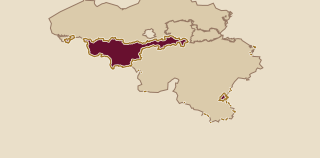
Wallonia's cool, humid climate allows grapes to ripen slowly and retain acidity. Vineyards include river-bank sites, walled plots and south-facing slopes. Crémant de Wallonie is a protected designation covering the whole region. White and rosé sparkling wines are made by the traditional method, with a second fermentation in bottle. Chardonnay, Pinot Noir, Pinot Meunier and Pinot Blanc are the principal permitted grapes. Other Walloon wine designations include Côtes de Sambre et Meuse, Vin mousseux de qualité de Wallonie and Vin de pays de jardin. Winegrowing returned to Wallonia in the early 1960s after a long decline. Charles Legot was one of the figures behind that revival.
1 named area
Inside the region
Explore the wine-growing areas of Wallonie (sparkling).