At A Glance
Wynns Coonawarra Estate makes Cabernet Sauvignon in Coonawarra, South Australia. Its vineyard history begins in 1891, while the Wynn family name entered the story when Samuel Wynn and his son David bought the winery in 1951.
The useful bottles to know are Black Label Cabernet Sauvignon 2023 and John Riddoch Cabernet Sauvignon 2022. Both are Cabernet-led wines, but each is selected and released on its own terms.
The Producer
Wynns grew from the vineyards planted by Scottish pioneer John Riddoch in 1891, beside the triple-gabled winery then called Chateau Comaum. The building and its vineyards gave the estate a physical home in Coonawarra; the wines made there now turn that setting into Cabernet Sauvignon bottles such as Black Label and John Riddoch.
Samuel Wynn and David Wynn bought the winery in 1951. Their purchase joined the family name to an existing vineyard property, and David later commissioned the woodcut of the winery façade that remains part of Wynns’ label imagery.
Place
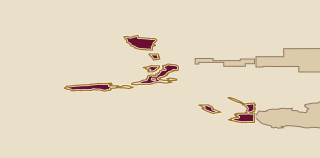
Coonawarra sits in South Australia, where Wynns works with a cool climate and conditions that support a long ripening season. For Cabernet Sauvignon, slower ripening matters: fruit can develop while acidity and tannin remain part of the wine’s shape, rather than being lost to heat.
This is why the estate’s named wines are Cabernet Sauvignon rather than a collection of unrelated labels. The regional conditions provide a common frame, while separate fruit selection allows Black Label and John Riddoch to occupy different places in the range.
Soil And Site
The ground beneath Wynns’ Cabernet is Coonawarra terra rossa: the red soil for which the region is known. Combined with the cool climate, it is part of the estate’s ripening environment, so the wines can carry fruit, acidity and tannin together rather than relying on body alone.
Wynns also works at a scale large enough to make site separation consequential. By 1981 it had 440 hectares under vine and was Coonawarra’s largest grower; a broad vineyard base creates more fruit choices when a wine is assembled or held apart for a particular bottling.
Story
The estate began with Riddoch’s 1891 plantings and Chateau Comaum winery, then moved into a new chapter with the Wynn family’s 1951 acquisition. The winery did not begin as a modern Cabernet label: its later wines came from a historic vineyard property whose name, building and land were already established.
Growth followed. By 1981, Wynns had reached 440 hectares under vine. In 1998, Sue Hodder became senior winemaker, and in 2002 the estate began rejuvenation projects across 300 hectares. Reworking vines on that scale affects the fruit available for Cabernet: vineyard renewal becomes part of how the estate maintains its material over time.
Vineyards And Cellar
Wynns’ vineyard work is paired with a cellar choice designed to preserve differences between sites. The estate installed open fermenters so small parcels of single-vineyard fruit could ferment separately, rather than disappearing into one early blend.
That separation changes the decisions available after fermentation. Cabernet parcels can be assessed individually for fruit character, tannin, acidity and texture before they are directed toward a named wine. The 300-hectare rejuvenation programme matters in the same practical way: it is vineyard work aimed at the fruit that eventually enters those fermenters.
Wines
Black Label Cabernet Sauvignon 2023 is a principal named Wynns Cabernet release with its own documented fruit-selection policy, élevage and drinking window. It is a youthful Cabernet built around fruit, tannin, acidity and oak-derived development, with enough structure for cellaring rather than only immediate softness.
John Riddoch Cabernet Sauvignon 2022 is not Black Label in a different wrapper. It has separate selection criteria, composition and release details, and the professional tasting material focuses on its aroma, tannin, structure and ageing capacity. Together, the two wines show the estate’s range as a choice between distinct Cabernet selections, not simply different labels from the same vat.
The estate’s wine overview also reserves its flagship release policy for exceptional years. That approach places vintage conditions alongside vineyard selection: a top release depends on the fruit meeting the estate’s stated threshold, while the other named Cabernet still has its own defined role.
In The Glass
Black Label 2023 is the more youthful expression in the supplied tasting material. Cabernet fruit leads, with acidity keeping the palate active and tannin bringing grip through the middle and finish. Its élevage adds oak to the wine’s structure, so the finish is shaped by fruit, tannin and time in cellar rather than by sweetness.
John Riddoch 2022 is described through aroma, structure, tannin and ageing potential. The result is a Cabernet whose perfume arrives before a firmer palate: fruit is carried by tannin and body, while the finish is built to hold rather than fade quickly. The difference is not a generic claim that one wine is “better”; it is the consequence of separate fruit selection and a separate bottling decision.
A Bottle To Understand It
Start with Wynns Black Label Cabernet Sauvignon 2023. It is a named Coonawarra Cabernet with documented fruit selection, élevage and drinking window, so it brings the region’s cool-climate ripening together with the estate’s cellar work in one bottle. Expect Cabernet fruit, acidity, tannin, oak and a youthful, firm texture, with a finish that suggests time will change the wine’s shape.
Black Label comes first because it lets the drinker meet Wynns through a specific vintage and a clearly defined Cabernet release. John Riddoch can then be approached as the separately selected, more limited wine, rather than as a substitute for Black Label.
Anecdote
After Samuel Wynn and David Wynn bought the winery in 1951, David commissioned Melbourne artist Richard Beck to make a woodcut of the winery façade. Beck worked from the triple-gabled Chateau Comaum building that had stood among the vineyards since 1891. The commission turned the building into an image for the estate: the woodcut showed the façade in black lines and became the visual mark used by Wynns. A bottle of Cabernet could therefore carry a picture of the winery where the estate’s early history had begun, rather than a newly invented emblem. The same woodcut continues to appear on Wynns labels.
Final Word
Wynns is easiest to understand through Coonawarra Cabernet: terra rossa soil and a cool ripening climate, fruit held apart in open fermenters, then two named wines selected for different roles. Black Label 2023 puts those choices in a bottle with youthful tannin, acidity and oak; John Riddoch 2022 takes the same grape into a separately selected, age-worthy register.
Sources
- www.wynns.com.au/en-au/discover/our-heritage/timeline.html
- www.wynns.com.au/en-au/discover/our-region.html
- www.wynns.com.au/en-au/discover/our-wine
- coonawarra.org/wineries/wynns-coonawarra-estate
- www.wynns.com.au/en-us/black-label-cabernet-sauvignon-2023-8118880.html
- www.wynns.com.au/en-au/john-riddoch-cabernet-sauvignon-2022-gift-box-8122213.html
- winepilot.com/wynns-john-riddoch-cabernet-sauvignon-2022-2
- winepilot.com/wynns-the-original-black-label-cabernet-sauvignon-2023
- wine-pages.com/tasting-notes/wynns-black-label-cabernet-sauvignon-2023