Who makes it
Alexander Gysler works from Großer Spitzenberg 8 in Alzey-Weinheim, on a property built in 1750. His bottles carry a family estate-bottling tradition begun by his father, Gernot, in 1969, while the present range is shaped by Alexander’s organic farming and Demeter certification. Sandstein Riesling, Kammerton, Klangwerk and the Vin Vivant wines show the same estate through different picking, grape and cellar choices.
Gernot Gysler began bottling wine from the family property in 1969. Alexander, who had first earned an engineering degree, succeeded his father in the late 1990s and redirected the vineyard work: the whole estate has been certified organic since 2004, with Demeter certification and inspection from 2007. The change reaches the bottle through dry whites, Pinot Brut and Vin Vivant wines made without filtration or sulphur addition, rather than through a separate conventional line.
Where it grows
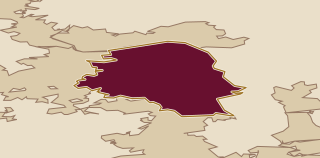
The vineyards lie in western Rheinhessen, around Alzey, where a slightly cooler climate and constant winds support freshness in dry wines. In Gysler’s Rieslings, that setting helps keep citrus and fruit lively rather than broad; Sandstein is described as fresh and round, while the old-vine Weinheimer Kammerton has more body and juice. Place appears on the labels through the progression from estate Riesling to Weinheimer Riesling and then Klangwerk from vum Helle.
The range uses site names rather than a single undifferentiated Riesling. Kammerton comes from old vines in Weinheim, and Klangwerk comes from vum Helle, while Sandstein is assembled from a first pass through every Gysler Riesling parcel, including fruit from vum Helle. This picking structure keeps Sandstein fruit-led and approachable, while the named-vineyard Klangwerk carries more power and juice.
How it is made
The cellar
Gysler’s vineyard work is organic across the estate and Demeter-certified, so the farming framework begins in the vines rather than with cellar corrections. The wines are also vegan, and the estate states that it avoids cellar treatment products. For the Vin Vivant Rieslings, no filtration and no sulphur addition leave a different texture and aromatic profile from the dry Riesling range; the 2016 Riesling Natur was unfiltered, unpumped and not bottled until September 2018.
What they make
The dry range starts with Sandstein Riesling: fruity, fresh, round and harmonious. Kammerton adds old-vine Weinheimer fruit, a juicy palate and firmer body, while Klangwerk from vum Helle brings more power without leaving the dry Riesling frame. These three bottles show increasing concentration and site definition rather than three versions of the same wine.
Beyond Riesling, Sternenglanz Weißburgunder is juicy with grip and discreet citrus at the finish; Feldstärke Grauburgunder is lively and refreshing with more Pinot weight; and Sonnentau Scheurebe combines fruit, spice and freshness. Funkenflug, a dry Spätburgunder rosé, has fine fruit, fuller body and a noticeable tannin frame. Pinot Brut is a hand-riddled Blanc de Noir with fine mousse and a full-bodied feel. Pet Nat and the Vin Vivant wines take the range toward naturally sparkling or unfiltered bottles.
Wines to try
First bottle
Start with Sandstein Riesling trocken, particularly the 2024 when available. It is dry Riesling made from the first picking pass through Gysler’s Riesling parcels, including fruit from vum Helle, so it gathers the estate’s vineyard area into one bottle rather than isolating one site. Expect fruity citrus character, fresh acidity, a round texture and a harmonious dry finish. It comes before Kammerton and Klangwerk because its lighter structure makes the later old-vine and named-site Rieslings easier to read.