Who makes it
Eva Fricke founded her estate after working in established German cellars, and its scale still begins with Riesling rather than a broad mix of grapes. The reported 17-hectare estate is 98 percent Riesling, which lets the range compare the Rheingau through regional, village and single-vineyard bottles instead of changing grape variety at each step. Pinot Noir remains a small but distinct counterpoint in the dry rosé.
Fricke was born in Bremen to two doctors, with no family route into wine. At 17 she worked at wineries in the Nahe and South Africa before studying viticulture and oenology at Geisenheim University. Back in Germany from 2002, she worked at J.B. Becker and Weingut Josef Leitz, moving from vineyard management to technical operations. That practical path led to a first Rheingau vintage in 2006 and, from 2011, full-time work on wines under her own name.
Where it grows
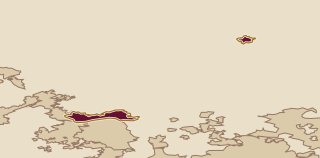
Fricke farms in the upper Rheingau around Kiedrich and Walluf, then further west in Lorch. That spread matters in the glass: the regional Rheingau Riesling can combine fruit from contrasting ground, while village and single-site wines narrow the focus to particular places and exposures. In Lorch, steep old vineyards are central to the estate’s named-site work, where Riesling is shaped by a more stony setting.
Around Kiedrich and Walluf, sandy loess and loam mix with clay, quartzite and riverbed sediments. The 2024 Rheingau Riesling draws its apple and peach character from this regional combination, then closes dry with citrus and mineral notes. Lorch’s Krone, Seligmacher and Schlossberg parcels sit on slate and quartzite; those soils are associated with mineral, saline wines, making them suited to the more concentrated single-vineyard level.
How it is made
The cellar
The estate has avoided herbicides and pesticides since 2006, adopted ecological viticulture from 2011 and gained organic certification in July 2016. About 80 percent of the fruit is harvested by hand, allowing work to follow individual vineyards rather than treating every Riesling parcel alike. In the cellar, vineyard and vintage determine the approach; stainless-steel tanks and seven to eight months on lees preserve fruit and acidity while adding texture instead of oak flavour.
Lorch also required physical recovery. Fricke identified old, steep parcels that larger estates had left behind and worked to re-cultivate them, including Krone, Seligmacher and Schlossberg. Their low yields and slate-and-quartzite ground feed the estate’s single-vineyard wines, where fruit concentration and density are higher than in the regional level.
What they make
The range has three clear levels. Regional wines bring together Rheingau fruit and show the house style in a wider frame; the dry 2024 Rheingau Riesling is the useful example, with apple, peach, lemon, citrus peel and pear over an acid-led palate. Village wines narrow the origin and show differing sites and exposures. Single-vineyard wines carry their vineyard names and place the greatest fruit concentration and density at the centre of the bottle.
The small Pinot Noir branch works differently. The 2025 Pinot Noir Rosé is 100 percent Spätburgunder and dry, with ripe strawberry, redcurrant and cherry rather than Riesling’s citrus-and-apple profile. Its slender body, cool freshness, fine saline note and spicy aromatic finish make it a separate summer-facing wine, not a softer version of the estate Rieslings.
Wines to try
First bottle
Start with Eva Fricke Rheingau Riesling 2024. It is entirely Riesling, dry and fermented in steel, while its regional blend brings together the estate’s contrasting Rheingau ground before the range moves into village and named-vineyard detail. Expect apple, peach, pear and citrus peel, a full but acid-led palate, mineral salinity and a dry finish. It shows the estate’s core grape, cellar method and regional range in one bottle.