
NoleaWorld of Wine

Levante · Spain

Producer profile

Viñedos Y Bodegas Xenysel

Old-vine Monastrell estate in Jumilla's Hoya de Torres Valley, farming 70 hectares of ungrafted Pie Franco vines over 60 years old under full ecological practices.

Place
Spain
Known for
Ungrafted Pie Franco Monastrell from calcareous Jumilla soils where phylloxera never took hold.
Wine context
Syrah / Shiraz
Editorial basis
World of Wine editorial profile · 6 sources

World of Wine editorial profile · Source list ↓

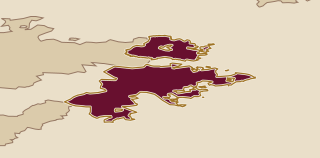
Atlas locationLevante · Spain38.59° N · 1.27° W

At A Glance

The Producer

Seventy hectares of vine that were never grafted. In most of Europe that is impossible; in Jumilla's Hoya de Torres Valley, it is simply what the calcareous ground made possible. Viñedos y Bodegas Xenysel farms those parcels, along with 130 hectares more, in the landlocked upland where Monastrell has been growing in this specific calcareous soil long enough that some of it survived the phylloxera plague intact.

José María Martínez Verdú founded the bodega in 2006, naming it after his three daughters: Xenia, Nydia, and Selene compressed into a single invented word. He comes from the fifth generation of a family that has worked these soils, but the winery itself was new when he started it, an act of will rather than inheritance. Today the estate produces roughly 400,000 bottles a year, around 80 percent of which leaves Spain.

Place

Jumilla is a DO appellation in the Murcia region of southeast Spain, landlocked and elevated. The Hoya de Torres Valley, where Xenysel's vineyards sit, lies between the Sierra de La Cingla and the Sierra de Los Gavilanes at 800 to 900 metres above sea level. That altitude softens what would otherwise be punishing Mediterranean heat, keeping acidities higher and nights cool enough to slow ripening. On the label, Jumilla DO identifies an appellation built around Monastrell, a thick-skinned grape that produces concentrated, dark-fruited reds in this climate. The calcareous soils that define the valley floor are the reason ungrafted vines are here at all.

Soil And Site

Calcareous soil, which is chalk-rich and alkaline, drains quickly and reflects heat upward while staying relatively cool beneath the surface. During the late nineteenth-century phylloxera outbreak, the louse that devastated European vineyards could not penetrate deeply enough through calcareous ground to attack the roots. Most wine regions had no choice but to graft their Vitis vinifera vines onto American rootstock immune to the pest. In the Hoya de Torres Valley the soil did the work instead, and Monastrell vines in those parcels were never interrupted. The 70 hectares of Pie Franco at Xenysel, averaging over 60 years of age, are a direct continuation of that survival. Ungrafted vines tend to root more deeply and yield lower volumes of more concentrated fruit as they age.

Story

Five generations of the Martínez Verdú family have worked in viticulture, but those generations farmed grapes without running their own bodega. When José María Martínez Verdú decided to change that in 2006, he was choosing to build something new from what the family had inherited: a deep familiarity with these calcareous hillside parcels, access to old ungrafted Monastrell vines, and a commitment to farming without chemicals. The winery he built combined modern winemaking equipment with traditional oak ageing and full ecological certification. The name he gave it was personal enough to be unrepeatable: Xenysel, assembled from the first syllables of his daughters' names and placed on every bottle. The founding was recent, but the vine age behind the range was not.

Vineyards And Cellar

All grapes are picked by hand. Ecological farming covers the full 200 hectares, which means no synthetic pesticides, herbicides, or fertilisers in the vine rows. The ungrafted Pie Franco parcels, over 60 years old on average, produce lower yields than younger grafted vines and deliver more concentrated, darker fruit as a consequence of deep root systems and age-driven vine stress.

In the cellar, the approach divides clearly by wine. The Pie Franco bottling goes into the bottle without any oak contact, keeping the old-vine Monastrell character direct and unmediated. Rango follows a different track: destemmed grapes ferment in stainless steel tanks for 15 days at a maximum of 26 degrees Celsius, then move to new French and American oak barrels for malolactic fermentation and ageing. The two woods contribute different spice registers, French oak adding tighter grain and darker toast, American oak a broader, more aromatic warmth.

Wines

The range pivots on two distinct expressions of Monastrell. Pie Franco is the estate's most direct statement: 100 percent Monastrell from ungrafted parcels, no oak, bottled to show what the old vines and calcareous ground produce on their own. The colour is intense red cherry, the nose is strong and complex, and the palate carries ripe, mature fruit without the overlay of barrel spice or tannin softening.

Rango is the oak-aged tier, blending Monastrell with Syrah. After fermentation in stainless steel, it spends time in new French and American oak. The resulting wine has an intense violet colour, ripe fruit on the nose, and a palate that opens with dark currants and berries before picking up cinnamon and clove from the wood. The Syrah adds aromatic lift and length to the denser Monastrell base, and the dual-oak ageing builds a layered spice character across the finish.

The estate also produces Calzas, a crianza bottling at 15.5 percent ABV, Xenys 12 aged 12 months in barrel, Xenys Blanco, and a rosé.

In The Glass

Across the range, Monastrell sets the dominant tone: deep colour, ripe dark fruit, and a full body that the high-altitude calcareous terroir pulls toward concentration rather than flabbiness. In the Pie Franco, that character arrives uninterrupted. The nose rises with clean red cherry and ripe, complex fruit, and the palate is direct and firm, the tannins from old-vine Monastrell skin providing grip without harshness. There is no oak to mediate, so the finish is fruit-led and relatively dry. In Rango, the blending and barrel work shift the register: the violet hue deepens, currants and dark berries move to the front of the palate, and the oak introduces cinnamon and clove on the finish. The Syrah fraction lightens the mouthfeel slightly and extends the aromatic trail, making Rango the wider, more complex drink of the two, with the old-vine Pie Franco offering a more singular and place-focused character.

A Bottle To Understand It

Pie Franco is the wine to open first. It is 100 percent Monastrell from ungrafted vines averaging over 60 years of age, bottled without oak. The colour is an intense red cherry. The nose is strong and layered with ripe, mature dark fruit. The palate is firm and concentrated, the tannins genuine but not aggressive, the finish dry and fruit-forward. This is a bottle that exists nowhere else in exactly this form: old-vine ungrafted Monastrell from soil that survived phylloxera, farmed ecologically and bottled without wood. Start here before moving to Rango.

Anecdote

When José María Martínez Verdú founded the bodega in 2006, he had the vineyards and the family history but no name for what he was building. He came from five generations of people who had worked Jumilla's calcareous hillsides, but the winery was new, something he was creating rather than inheriting. He named it Xenysel: the opening syllables of his three daughters' names, Xenia, Nydia, and Selene, folded into a single invented word. It was a private compression, the kind of name only one person could have arrived at. That word now appears on every bottle the estate produces, on the labels of wines made from some of the oldest ungrafted Monastrell in Spain, in a valley where the ground itself kept those vines alive when nearly everything else in Europe was being pulled and replanted.

Final Word

Xenysel is a young bodega farming old vines in a place that did not need to reinvent itself after phylloxera. The ungrafted Pie Franco parcels are the most direct argument for why this estate is worth knowing: vine material that survived intact, farmed ecologically, expressed without oak in the Pie Franco bottling and with oak and Syrah in Rango. The Jumilla appellation is underknown outside Spain; Xenysel is one reason to pay attention to it.

Sources

Keep following the thread

Where to go next

mapFind Viñedos Y Bodegas Xenysel on the mapKeep the producer, its region and nearby places together.learningHow place shapes wineSee how climate, landscape and local choices become part of a wine.