
NoleaWorld of Wine

Marche · Italy

Producer profile

Umani Ronchi

Marche and Abruzzo producer whose aged Verdicchio and Montepulciano have earned sustained critical recognition, including Gambero Rosso Winery of the Year 2024.

Place
Marche · Italy
Known for
Verdicchio dei Castelli di Jesi, especially long-aged releases including Vecchie Vigne Superiore and the Historical bottling; Montepulciano d'Abruzzo; Pelago red blend.
Wine context
Montepulciano · Verdicchio
Editorial basis
World of Wine editorial profile · 7 sources

World of Wine editorial profile · Source list ↓

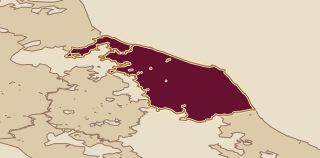
Atlas locationMarche · Italy43.52° N · 13.53° E

At A Glance

Producer: Umani Ronchi Region: Marche and Abruzzo, central Italy Grapes: Verdicchio, Montepulciano d'Abruzzo, Trebbiano d'Abruzzo Founded: 1957 Farming: Certified organic (Abruzzo vineyards)

The Producer

Umani Ronchi makes a persuasive case that Verdicchio is a serious ageing grape. The estate, based in Cupramontana in the Marche hills of central Italy, has been working that argument for decades, and in 2024 Gambero Rosso named it Winery of the Year. That recognition arrived off the back of a long run of Tre Bicchieri awards for a single wine, Vecchie Vigne Verdicchio, and a five-year-aged Historical release that the guide described as a meticulous and fascinating masterpiece in the evolving abilities of Verdicchio.

The estate was founded in 1957 by Gino Umani Ronchi in Cupramontana, then acquired in 1968 by Roberto Bianchi and his son-in-law Massimo Bernetti, who pushed it toward international export. The Bernetti family still runs it. The operation now spans two regions, Marche and Abruzzo, producing white wine from Verdicchio in Marche and red wine from Montepulciano in Abruzzo, with Pelago, a Bordeaux-influenced red blend, sitting across both.

Place

Cupramontana sits in the hilly interior of Marche, a few kilometres south of the Esino river, within the Verdicchio dei Castelli di Jesi appellation zone. The Castelli di Jesi DOC and its Classico Superiore tier cover a large arc of hillside vineyards between the Adriatic coast and the Apennines. Altitude, aspect and the moderating influence of sea air from the east give Verdicchio its characteristic freshness and high natural acidity, both of which make the grape unusual among Italian whites and give it a capacity to age that the appellation has only recently begun to exploit at scale.

The Abruzzo operation is separate: vineyards on the other side of the Apennine ridge, where the climate is more continental, and the main grape is Montepulciano d'Abruzzo, a full-bodied red variety that thrives in the region's warm summers and well-drained soils.

Soil And Site

The Castelli di Jesi hills are predominantly clay and limestone, with the calcareous component contributing to the mineral, saline edge that appears in the best Verdicchio. The Abruzzo vineyards benefit from altitude and temperature variation between day and night, which preserves acidity in the Montepulciano fruit and extends the flavour development window before harvest.

Story

When Roberto Bianchi and Massimo Bernetti acquired the estate in 1968, Verdicchio was mostly sold in the cheap amphorae-shaped bottle.

The long payoff came through Verdicchio. Over time the estate built a tiered range, from everyday Castelli di Jesi bottlings through to Vecchie Vigne, a single-vineyard Superiore, and eventually a long-aged Historical release. Vecchie Vigne won White Wine of the Year at Gambero Rosso in 2009, then kept collecting Tre Bicchieri awards for years afterward. That kind of sustained recognition shifted the conversation: Umani Ronchi was no longer being read as a volume producer with occasional critical moments, but as an estate whose top Verdicchio could improve for five years or more after harvest.

The Abruzzo chapter followed its own logic. Organic conversion began there in 2001, with the first certifications arriving the same year. The decision was partly market-driven: certified organic wines found their readiest buyers in Sweden, Denmark and Norway, Nordic markets with strong appetite for sustainably farmed Italian wine.

Vineyards And Cellar

The Abruzzo vineyards operate under certified organic farming, meaning no synthetic herbicides, pesticides or fertilisers in the vineyard. This tends to produce fruit with cleaner definition and more distinct varietal character in Montepulciano, a grape that can turn heavy and overripe without careful canopy management.

In the cellar, Montipagano, the estate's mid-tier Montepulciano d'Abruzzo, ferments in stainless steel tanks at 26 to 28°C for 10 to 12 days, followed by malolactic fermentation. A portion of the wine then goes through a short period in oak barrels before bottling. The steel fermentation preserves fruit weight and colour; the partial oak pass adds body without turning the wine heavy.

For Verdicchio, the ageing approach varies by tier. The Historical release spends five years in the cellar before release, developing texture and depth while the grape's acidity holds the wine upright.

Wines

The range covers two regions and several tiers. Verdicchio dei Castelli di Jesi is the core white work. Entry-level bottlings are fresh, light-bodied and aromatic, with broom, citrus peel and a saline, herb-edged finish that is characteristic of the grape. Vecchie Vigne, the flagship single-vineyard Superiore, adds density and age-worthiness: deeper citrus, more grip, longer finish. The Historical 2018 release, aged five years before going to market, moves into richer territory, with a textured mid-palate, evolved fruit, and the kind of mineral intensity that comes from extended time on its own lees.

The Conero red, Campo San Giorgio, is a Conero Riserva DOCG from Marche, built for ageing and scored 92 points by Wine Spectator in 2018. Pelago, the Bordeaux-influenced blend, won the International Wine Challenge in London in 1994.

From Abruzzo: Montipagano is a structured, fruit-forward Montepulciano d'Abruzzo with dark fruit, firm body and moderate tannin, the partial oak refining adding a light warmth to the finish. Podere is the more accessible red, full-bodied but with slightly softer tannins and a dry, direct finish.

In The Glass

Verdicchio at the entry level opens with aromatic herbs, white blossom and fresh citrus, then moves into a mouthfeel that is light-bodied but genuinely saline, with the finish pulling toward bitter almond, a signature character of the grape. Acidity is high and persistent; it lifts rather than sharpens, and it carries the wine through a clean, dry exit.

At the Vecchie Vigne tier, the aroma deepens toward preserved lemon and stone fruit, and the texture picks up more weight without losing that saline edge. The finish extends, with more mineral grip and a faint beeswax note that appears in older Verdicchio from good vintages.

The Historical 2018, after five years in the cellar, has evolved into something that reads more like white Burgundy than typical Marche Verdicchio: rich, textured, with a concentrated mid-palate and a long mineral finish. The acidity is still there, framing everything, but the fruit has filled out around it.

Montipagano brings dark cherry, plum and a faint herbal note typical of Montepulciano, with the steel fermentation keeping the fruit vivid and the oak pass adding just enough roundness at the edges. The tannins are firm but not drying. Podere is rounder and more immediately approachable, with more open dark fruit and a dry, flavourful close.

A Bottle To Understand It

Vecchie Vigne Verdicchio dei Castelli di Jesi Classico Superiore is where Umani Ronchi makes its clearest argument. It is a single-vineyard Verdicchio from older vines in the Castelli di Jesi zone, vinified for depth rather than early drinking. In the glass it gives preserved lemon, fresh herbs and a saline mineral edge, with enough body and acidity to make the finish feel long and focused. Eight Tre Bicchieri awards from Gambero Rosso since 2009 is the track record. It is a white wine from a region and grape that most buyers underestimate, and drinking it corrects that.

Anecdote

In 2009 the annual Gambero Rosso guide named Vecchie Vigne the White Wine of the Year in Italy. It was a single Verdicchio from the Marche hills, a grape and a region that most of the wine world still filed under inexpensive and uncomplicated. The award drew attention. What happened afterward was more interesting: the wine came back with Tre Bicchieri again the following year, and the year after that, and kept returning until it had collected eight awards across nearly two decades. Each one required that the wine hold up in blind tasting against the full Italian white field. That kind of run does not come from one good vintage or a well-timed submission. Vecchie Vigne kept earning it, and each successive award made it harder to read Verdicchio as a category incapable of consistency or depth.

Final Word

Umani Ronchi produces Verdicchio and Montepulciano d'Abruzzo. The everyday wines are clean and genuinely characterful, the aged releases are unusual in the best way, and the Montepulciano from Abruzzo fills out the range with honest, well-made red wine. The Gambero Rosso Winery of the Year 2024 is the most recent marker in a long arc of consistent critical recognition.

Sources

Keep following the thread

Where to go next

placeRead the Marche guideSee Umani Ronchi in the wider setting of Marche.mapFind Umani Ronchi on the mapKeep the producer, its region and nearby places together.learningUnderstand VerdicchioRead the quick library guide to Verdicchio, which is listed with this producer.