
NoleaWorld of Wine

Tokaj · Hungary

Producer profile

Tokaj-Hétszőlő

A Tokaj estate founded in 1502 when the Garai family consolidated seven outstanding vineyard parcels on Mount Tokaj, now farming 55 certified organic hectares under French ownership, producing Furmint and Hárslevelű across styles from Late Harvest to 6 Puttonyos Aszú.

Place
Tokaj · Hungary
Known for
Tokaj Aszú from Furmint
Wine context
Furmint · Tokaji
Editorial basis
World of Wine editorial profile · 7 sources

World of Wine editorial profile · Source list ↓

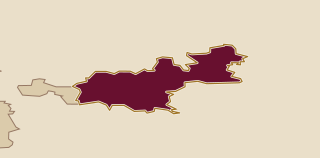
Atlas locationTokaj · Hungary48.12° N · 21.41° E

At A Glance

The Producer

In 1502, the Garai family surveyed the slopes of Mount Tokaj and made a deliberate selection: seven specific parcels, consolidated into a single estate. They named it after that act. Hétszőlő means seven vineyards in Hungarian, and the estate has carried that number through Habsburg seizure, imperial ownership, nationalization, and private sale. It is one of the longest-documented wine properties in the Tokaj region.

The estate now farms 55 hectares of vineyard on Mount Tokaj's slopes, certified organic since 2015. Technical director Gergely Makai leads the winemaking. His stated position is that organic farming protects vine vitality and produces better fruit, now and in the future. The two primary grapes are Furmint and Hárslevelű, and the wines run from a Hárslevelű-led Late Harvest to the estate's flagship 6 Puttonyos Aszú.

Place

Tokaj sits in northeastern Hungary at the confluence of the Bodrog and Tisza rivers. The region's position matters because of how the rivers behave in autumn: morning mists rise from the water, afternoon sun burns them off, and the cycle of humidity and warmth creates ideal conditions for Botrytis cinerea, the noble rot that concentrates sugars in the grape skins and makes Aszú possible. Without that fungal infection, there are no aszú berries, and without aszú berries, the style that made this corner of Hungary famous does not exist.

Mount Tokaj rises at the heart of the appellation. Hétszőlő's 55 hectares lie on its slopes, and the elevation, aspect, and climate of those parcels determine the ripeness, acidity, and degree of botrytis that reach the cellar each harvest. The resulting bottles carry a legally defined label: Tokaji, the Hungarianized form that identifies the wine's regional origin and production rules.

Soil And Site

Mount Tokaj's volcanic origins underlie the soil character of the estate's parcels. The combination of rhyolitic tuff and clay holds moisture through dry periods and drains freely when the autumn rains come. Loess deposits on the slopes add a softer layer that influences how the vines root and how the wines express mineral character in the glass. These soils are not replicated in the broader Hungarian wine landscape, which is one reason Tokaj's Aszú wines developed their own legal category centuries before most European wine law existed.

Story

The Garai family's 1502 estate passed through several centuries of Hungarian noble ownership before 1711 changed its character entirely. That year, after the Rákóczi independence uprising against Habsburg rule failed, the imperial crown took the estate as a Royal Imperial Estate. For nearly two centuries, one of Hungary's oldest documented wine properties operated as a possession of the Austro-Hungarian Empire. The cellar produced wine for imperial courts, and the estate's output carried a different kind of authority.

Nationalization under communist rule ended that chapter. The estate passed into state hands along with most of Hungary's wine industry in the twentieth century. When privatization came after 1989, Hétszőlő re-entered the market. In 2009, Michel Reybier acquired it through his Domaines Reybier portfolio, the same group that holds Cos d'Estourcel in Saint-Estèphe. A Bordeaux investor taking on a Tokaj estate was, at the time, a signal that the region's post-communist recovery had found serious outside capital.

Organic certification followed in 2015. The estate now farms its original parcels without synthetic intervention, a commitment that Makai connects directly to the quality of fruit the cellar receives each harvest.

Vineyards And Cellar

Furmint dominates the estate's plantings. Its thin skin and high natural acidity make it more vulnerable to botrytis than almost any other grape, which is the point: infection concentrates sugars dramatically without collapsing the fruit's acid line. Botrytised berries shrivel and intensify, and these are hand-harvested individually, berry by berry, rather than by bunch. The selection is slow, labor-heavy, and dependent on the pace at which the fungus moves through the vineyard each autumn.

Hárslevelű, whose name translates as linden leaf, provides the aromatic base for the Late Harvest. Lower acidity than Furmint, rounder and more fragrant, it shows melon and elderflower rather than the driven stone fruit of the Aszú program.

Szamorodni takes a different path. Where Aszú requires berry selection, Szamorodni is harvested as whole bunches, taking botrytised and healthy grapes together. The ratio between the two shifts by vintage. The 2020 Szamorodni used fully botrytised Furmint, fermented and then aged for one year in oak barrels. That time in wood adds weight and a secondary layer of complexity that the lighter styles do not carry.

Wines

The range follows the Tokaj style hierarchy from lightest to richest.

The Late Harvest is Hárslevelű-led, the most accessible entry into Hétszőlő's sweet wine production. Lighter on the sweetness scale than either Szamorodni or Aszú, it opens with melon and elderflower, and the grape's natural aromatics give it a lifted, fragrant quality. The finish stays refreshingly crisp rather than heavy, which makes it the easiest bottle to approach without background in the region.

The Szamorodni steps up in weight and complexity. Made from Furmint when botrytis enters the harvest, the blend of ripe and infected grapes produces a wine that sits between the Late Harvest's lightness and the full concentration of Aszú. Oak ageing of one year builds a rounder body and adds a warm, slightly spiced character beneath the fruit.

The 6 Puttonyos Aszú is the estate's most demanding production. Six puttonyos designates the maximum concentration level on the traditional Tokaj scale, meaning the proportion of aszú paste added to base wine is at the richest end permitted. The 2017 vintage drew 95 points from Decanter. The palate shows white peach and mock orange, fine acidity on the finish, and a texture described as silky and supple, youthful in character with a purity that suggests long development ahead.

In The Glass

The Late Harvest opens with elderflower and ripe melon, both immediate on the nose. In the mouth, the sweetness is present but light, and the acidity keeps the wine moving rather than sitting still on the palate. Hárslevelű's natural roundness softens the finish without making it heavy.

The Szamorodni is denser. Botrytis concentration shows in the color and in the way the wine coats the mouth, and a year in oak barrels gives it a warmth that the Late Harvest does not carry. The finish is longer and more complex, with a slight resinous quality from the oak contact laying beneath concentrated apricot and dried fruit.

The 6 Puttonyos Aszú asks more of the glass. White peach and mock orange rise from it, and in the mouth the concentration is immediate: rich, dense, layered. What prevents the sweetness from reading as excessive is the acid line underneath, firm enough to give the wine its form. The finish extends and stays clean, silky rather than cloying, with enough grip to suggest it will develop in bottle for years.

A Bottle To Understand It

The 6 Puttonyos Aszú is made from Furmint and has a silky texture. It draws together everything the estate does: hand-selection of botrytised Furmint berries from organically farmed parcels on Mount Tokaj, concentration through noble rot, and the Tokaj style that has defined the region's international reputation for centuries. The 2017 vintage scored 95 points from Decanter and was described as silky, supple, and youthful, with white peach, mock orange, and a fine acidity on the finish that carries the sweetness without letting it settle. Start here to understand what Furmint becomes when the harvest conditions are right and the cellar does not rush the process.

Anecdote

In 1502, the Garai family walked the slopes of Mount Tokaj and identified the seven parcels they considered the finest ground on the hill. They drew those seven plots into a single estate and named it after the count: Hétszőlő, seven vineyards. The name was not a brand choice or a label conceit. It was a record of a land decision, written into the estate's name at the moment of founding. What followed was five centuries of ownership changes: Hungarian nobility, Habsburg emperors, communist state, French investor. Each chapter imposed different intentions on the same ground. The name never changed. Every bottle from the estate today still carries that original number, a reference to a sixteenth-century judgment about which parcels on Mount Tokaj were worth farming with the most care.

Final Word

Hétszőlő is a Tokaj estate with an unusually legible history: the founding logic is written into the name, the imperial chapter is documented, and the modern organic commitment is dated and explained. The wines follow the region's traditional hierarchy from fragrant Late Harvest through complex Szamorodni to the concentrated 6 Puttonyos Aszú. The 2017 Aszú at 95 Decanter points confirms the cellar is producing at the level the estate's history suggests it should.

Sources

Keep following the thread

Where to go next

placeRead the Tokaj guideSee Tokaj-Hétszőlő in the wider setting of Tokaj.mapFind Tokaj-Hétszőlő on the mapKeep the producer, its region and nearby places together.learningUnderstand FurmintRead the quick library guide to Furmint, which is listed with this producer.