
At A Glance
Estate: Tenuta delle Terre Nere Location: Etna DOC, northern Sicily (primary holdings in Castiglione di Sicilia and Randazzo) Grapes: Nerello Mascalese (red), Carricante and Catarratto (white) Vineyards: Approximately 45 hectares across 30 plots and nine contrade Elevation: 600 to 1,000 metres above sea level Vine age: Predominantly 50 to 100 years old; sub-hectare of ungrafted pre-phylloxera vines over 140 years old in Calderara Sottana Farming: Organic First harvest: 2002
The Producer
Something changes when you bottle each named sub-zone separately rather than blending the volcano flat. From the 2002 harvest, Tenuta delle Terre Nere has done exactly that: nine contrade, nine distinct wine addresses, no blending across sites. The estate farms roughly 45 hectares across 30 individual plots on Etna's northern, eastern and southern flanks, all of it at altitude, most of it on old vines.
The holdings are spread across two kinds of Etna geography. Seven contrade sit on the northern flank, in the municipalities of Castiglione di Sicilia and Randazzo. One contrada, Salice, faces east. One, Montalto in Biancavilla, faces south. Each bottle in the single-contrada range carries its cru name on the label rather than a proprietary title, which means the range functions as a map of the volcano's different exposures and soils.
The vines are old. Seven recently planted hectares aside, the estate's vineyards are between 50 and 100 years old. Less than one hectare in Calderara Sottana is over 140 years old and ungrafted, a survival that belongs in its own section.
Place
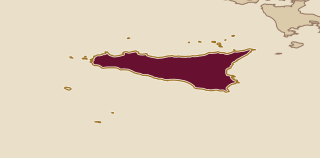
Etna is a live volcano in northeastern Sicily, and its vineyards occupy a narrow band of altitude that runs from roughly 400 metres up to beyond 1,000 metres. Tenuta delle Terre Nere's parcels sit in the upper half of that range, from 600 to 1,000 metres, where summer temperatures swing by up to 30 degrees between day and night.
That gap matters in the glass. The warm Sicilian days push ripeness into Nerello Mascalese, but the cold nights slow the process and hold acidity in the fruit. The result in the bottle is something that reads less like a southern Italian red and more like a high-altitude mountain wine: aromatic, firm-edged, with a mineral dryness that comes from the volcanic basalt soils rather than from winemaking intervention.
Etna DOC labels carry both the estate name and the contrada, so the label tells you which face of the volcano the wine came from. North, east and south exposures produce different ripening patterns and different fruit profiles, which is why the estate bottles them separately rather than unifying them into a house style.
Soil And Site
Etna's soils are volcanic basalt and ash, with a sandy upper layer in many parcels. That sandy volcanic soil is the reason certain old vines survived phylloxera: the root louse cannot move easily through loose volcanic sand, and the epidemic that remade European viticulture from the 1860s onward bypassed isolated Etna parcels entirely.
The contrade on the northern side, where the estate's primary holdings are concentrated, sit in a cooler, shadier aspect than the southern face. Castiglione di Sicilia and Randazzo, the two north-side municipalities, give wines with tighter fruit and firmer acidity compared to the warmer southern exposure at Montalto in Biancavilla.
Story
At its first harvest in 2002, Tenuta delle Terre Nere began vinifying and bottling grapes from its contrade separately. Careful vineyard management supports a non-invasive approach in the cellar. Don Peppino tended the Calderara Sottana parcel, which contains less than one hectare of ungrafted vines over 140 years old and is called La Vigna di Don Peppino in tribute to him.
At the time, Etna was not on the international wine map in any serious commercial sense. The choice to name sub-zones on labels and build a range around them was a bet that the volcano's different aspects and soils would show in the glass clearly enough to justify the complexity. Over two decades of separate harvests and separate bottlings, the bet has held.
Organic practice, sustainability and respect for traditional and modern knowledge have guided the estate since its inception.
Vineyards And Cellar
Vine age is the central vineyard fact. Old vines produce fewer grapes, and the 50 to 100-year-old plants across most of the estate naturally limit yield without green harvesting. Smaller crops mean more concentrated fruit per vine, which in Nerello Mascalese at altitude translates to deeper colour than the grape typically shows, more aromatic intensity, and enough fruit weight to support firm acidity without thinness.
The ungrafted Calderara Sottana parcel, less than one hectare of vines over 140 years old, operates at an even lower yield. The grapes from this plot are bottled separately as La Vigna di Don Peppino.
In the cellar, the estate's stated approach is non-invasive: careful viticulture does the work, and the winery follows rather than corrects. Specific vessels and fermentation protocols are not publicly detailed, but the philosophy is legible in the wines: the fruit reads as vineyard-derived rather than cellar-constructed.
Wines
The range divides into two levels. At the base is a Rosato from Nerello Mascalese, made across the estate rather than tied to a single contrada. Above it, the single-contrada reds and whites each carry the cru name.
North-side reds include Calderara Sottana, Santo Spirito and San Lorenzo, from vineyards in Castiglione di Sicilia and Randazzo. Each contrada produces Nerello Mascalese at altitude on volcanic soils, but the exposures vary: Santo Spirito sits at a different elevation and aspect from San Lorenzo, and the wines carry those differences in texture and aromatic weight. San Lorenzo shows a denser, textured mid-palate compared to the other north-side crus.
Calderara Sottana also produces the estate's most singular red: La Vigna di Don Peppino, from the ungrafted pre-phylloxera vines. From less than one hectare of 140-year-old roots, this bottling carries the concentration of extreme vine age and the volcanic intensity of the contrada's basalt soils.
Whites are made from Carricante and Catarratto and bottled by contrada: Calderara Sottana Bianco, Santo Spirito Bianco and a white Salice from the east-facing parcel all appear in recent vintages. Nerello Mascalese from the eastern contrada Salice and the southern Montalto in Biancavilla round out the range with different ripening profiles from their respective aspects.
The Rosato, pale and dry, comes from Nerello Mascalese across the estate's holdings. It is lighter in colour and texture than the contrada reds, with the grape's natural aromatic lift expressed without the weight of extended skin contact.
In The Glass
Nerello Mascalese at Etna altitude rises from the glass with red cherry and dried rose, undercut by a flinty, ash-edged mineral note that does not come from the oak but from the volcanic soil. In the mouth, the acidity is firm and present from the first sip, driven by the 30-degree day-night swing that keeps the grape from ripening too quickly. The tannins are fine-grained rather than coarse, a signature of old-vine Nerello Mascalese on basalt, and they give the wine a linear, food-friendly grip without blocking the fruit.
Across the single-contrada reds, the family character is consistent: pale garnet in colour, translucent, with that volcanic mineral thread running through every cru. The differences show in weight and texture. San Lorenzo shows silken textures and concentrated ripe red-berry fruit. Santo Spirito sits lighter and more aromatic. La Vigna di Don Peppino adds another register: older vines producing smaller fruit with more concentrated aromatic compounds and a finish that stays mineral and dry rather than trailing into warmth.
The whites from Carricante show firm acidity and a citrus-salted quality that reflects the altitude and the volcanic soil. Catarratto adds texture and body when blended. The Rosato is pale-coloured and dry, with the red fruit lift of Nerello Mascalese and a clean finish that reads as genuinely Sicilian without the heat that lower-altitude rosés carry.
A Bottle To Understand It
Start with the Calderara Sottana Nerello Mascalese. This is the north-side contrada that holds both the estate's oldest vines and the La Vigna di Don Peppino parcel, and the standard Calderara Sottana bottling gives the clearest introduction to what altitude and old-vine Nerello Mascalese produce together. Pale garnet in the glass, with lifted red cherry and volcanic ash on the nose, firm acidity in the mouth, and a dry finish with fine tannin and mineral length. It is not a heavy wine. It reads more like a serious northern Italian red than a Sicilian one, and that contrast is the whole point of farming Nerello Mascalese at 600 to 1,000 metres. Once you have that reference, the step up to San Lorenzo or La Vigna di Don Peppino makes immediate sense.
Anecdote
Less than one hectare of vines in Contrada Calderara Sottana survived the phylloxera epidemic on their own roots. The louse that dismantled European viticulture from the 1860s onward could not establish itself in the loose volcanic sand of that particular Etna parcel, and the plants were simply never pulled and replaced. By the time Tenuta delle Terre Nere took ownership, those vines were already well past a century old and still ungrafted, a combination almost nowhere else in Italy. The estate named the plot La Vigna di Don Peppino in tribute to the farmer who had tended it before them. Don Peppino left no winery, no label and no public record beyond the vineyard he kept alive. His name is now on a bottle of Nerello Mascalese from roots older than any wine region Etna belongs to today.
Final Word
In 2002, Tenuta delle Terre Nere began vinifying and bottling Etna's named sub-zones separately. The range now covers the volcano's north, east and south faces, made from vines that were old before the estate existed. The wines are pale, acidic and mineral in a way that reads nothing like the Sicilian reds most buyers expect, and that contrast is what makes them worth seeking out.