
Who makes it
Montalbera farms more than 100 hectares in the hills around Castagnole Monferrato and accounts, by its own reckoning, for 60% of the entire Ruché di Castagnole Monferrato DOCG by volume. That is not a boast about scale. It is a statement about what this estate chose to do when Ruché was still an obscure footnote in Piemontese viticulture.
Enrico Riccardo Morando founded the estate in 1983 and committed it almost entirely to an aromatic red grape that most of the wine world had never heard of. The DOCG covers one village in Asti and a handful of surrounding communes. Today his grandson Franco Morando runs the operation as CEO and General Manager, with winemaker Daniel Morellato overseeing production. Three Morando generations have farmed this ground, and the range they have built is built around one grape and three ascending levels of complexity.
Where it grows
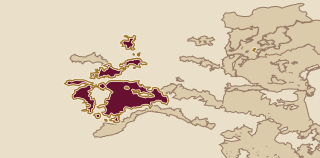
Castagnole Monferrato sits in the Asti province of Piemonte, in the Monferrato hills that run between the Tanaro and Po rivers. This is not Barolo country. The soils are different, the altitude is more moderate, and the grape is different. Ruché di Castagnole Monferrato DOCG is one of Piemonte's smaller appellations, geographically concentrated around its home village, and it produces an aromatic red wine from the Ruché grape. The DOCG requires at least 90% Ruché, with the remainder usually Barbera or Brachetto.
The Monferrato hills give Ruché a climate with warm summers and good diurnal range. At the higher parcels used for Il Fondatore, elevations exceed 300 metres and the soils are loamy and well drained, which keeps the roots working rather than sitting in moisture. Cooler nights at altitude slow ripening enough to hold the grape's aromatic character without losing fruit concentration. The Langhe vineyards that complete Montalbera's land holdings sit alongside its Monferrato vineyards.
How it is made
The cellar
Montalbera ferments its musts in modern stainless-steel tanks. For La Tradizione and Laccento, the wine stays in steel through maturation, which preserves the grape's primary aromatic character: violet, rose petal, bitter cherry, and dried spice come through without oak overlay. Laccento then ages horizontally in bottle under controlled temperature before release, which rounds the texture without changing the aromatic profile that the split harvest created.
Il Fondatore Riserva takes the oak route. The grapes from the highest parcels are fermented and then transferred to casks for ageing, where the additional time and wood contact adds a secondary layer of dried fruit, tobacco, and grip to the Ruché base. The Guyot training and the no-de-leafing approach in these parcels slow ripening enough to deliver concentration without excessive alcohol.
What they make
The three-bottle range is built as a progression through Ruché, from the most direct expression of the grape to the most developed.
La Tradizione is the estate's entry-level and widest-distribution Ruché. It is varietal Ruché fermented and matured entirely in stainless steel, releasing the grape's natural aromatics without modification. Expect violet and rose petal on the nose, a core of bitter cherry and red plum, soft to medium tannin, and a finish with dried spice. The 2023 vintage received a professional tasting note from Wine Enthusiast. This is the bottle that most directly states what Ruché is as a grape.
Wines to try
First bottle
La Tradizione is the first bottle. It is steel-matured Ruché with nothing intervening between the grape and the glass: violet and rose aromatics, bitter cherry fruit, soft tannin, and a finish with dried spice and enough acidity to keep the wine feeling alive. It is widely available, honestly priced, and gives a clear account of what Ruché di Castagnole Monferrato tastes like at its most direct. Start here and the step up to Laccento makes immediate sense in the glass.