Who makes it
Bàrbara Mesquida Mora began Mesquida Mora after eight years managing her family’s Porreres winery, from 2004 to 2012. The new estate started with vineyards inherited from her mother, so its bottles carry family-grown fruit into a separate cellar project. That distinction matters in the glass: Sincronia, Trispol and Sòtil are Mesquida Mora wines, shaped around Bàrbara’s own range and farming choices.
Mesquida Mora began in 2012, but its vineyards were not newly planted for the occasion. Bàrbara left the winery founded by her great-grandfather in 1945 and took forward historic plots inherited from her mother. The consequence is a project with an older vineyard base and a newer label: family material became the starting point for Sincronia and the later red pair of Trispol and Sòtil, rather than remaining inside the earlier family operation.
Where it grows
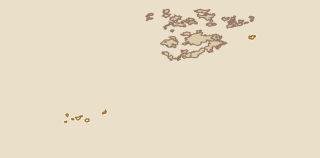
Porreres lies in Mallorca’s interior, while Mesquida Mora works vineyards in southern and eastern parts of the island. The DO Plà i Llevant designation places wines within the island’s eastern and central wine area; VdlT Mallorca permits a broader island designation. On a label, those names explain geography rather than a climb through village and cru levels: the important detail is that the wines assemble Mallorcan fruit from several sites.
The estate reports 20 hectares across seven plots, and a regional profile describes vines from five to 53 years old. Calcareous clay, limestone and iron-rich red clay known locally as cal vermell divide that small holding into different physical settings. Instead of treating Mallorca as one uniform source of fruit, the range can draw white Prensal and Giró Blanc, and red Callet, Mantonegro and Gorgollasa, from sites with different ground beneath them.
How it is made
The cellar
The seven plots are certified organic and biodynamic by the Balearic Ecological Agriculture Council and Demeter. Bàrbara has also planted more than 100 fruit trees among the vines as part of regenerative work intended to increase biodiversity and rebuild the soil. Those decisions keep the vineyard, rather than a standard recipe, at the centre of the wines.
The useful distinction is not a claim that every bottle follows one method. Sincronia Negre is the younger red expression; Trispol is the more structured red bottle, made for a longer arc after release.
What they make
Sincronia is the youthful introduction to Mesquida Mora, with Sincronia Negre as its red blend. It is the range’s immediate, fruit-and-tannin expression: a red wine built around fresh drinking rather than the cellar trajectory attached to Trispol. That makes it the practical place to meet the estate’s Mallorcan red grapes and its multi-plot approach.
Above it sit Trispol and Sòtil, complementary red wines whose names mean “floor” and “roof.” Trispol’s documented structure and bottle-development role separate it from Sincronia: expect more weight and firmer tannin as the wine opens over time, rather than simply more oak or a darker colour. Sòtil completes the pair, giving the upper red range two named bottles rather than one catch-all reserve wine.
Wines to try
First bottle
Start with Sincronia Negre. It is the younger red blend in a range rooted in Callet, Mantonegro and other Mallorcan varieties, grown across Mesquida Mora’s seven plots. Its role keeps the first encounter concrete: red fruit, body and tannin in a wine made with recorded fermentation and élevage, without asking for the patience that Trispol’s longer development invites. It introduces the project’s fruit source and red-wine direction in one bottle.