Who makes it
Véronique and Aimé Guibert found a farmhouse and abandoned mill in the Gassac Valley in 1970 while seeking a family home in Hérault. Bordeaux geographer Henri Enjalbert assessed the site in 1971 and identified glacial sandstone comparable to soils in the Côte d’Or.
The second Guibert generation began assuming control during the 2000s. Samuel, Roman, Gaël and Basile Guibert now manage the property. Gaël is responsible for the vines, while Samuel directs winemaking.
Where it grows
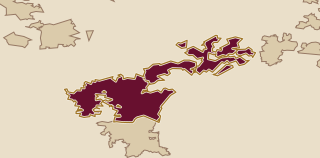
The estate identifies 40 hectares of deep, well-drained soil rich in mineral oxides and poor in humus and plant matter. The Upper Gassac Valley has a cool microclimate corresponding to conditions at roughly 500 metres, with nighttime cold air descending from the Larzac plateau. North-facing slopes reduce summer sunshine, and flowering and the red-grape harvest occur about three weeks later than the Languedoc average.
In 1972, the Guiberts planted 17,500 uncloned Cabernet Sauvignon vines on American rootstock, using material originating in Bordeaux and Lot-et-Garonne properties. Cabernet Sauvignon dominates the vineyard, with 20% planted to other varieties used in its blend. Reported yields are 35 to 40 hectolitres per hectare.
What they make
Harvesting is manual, with an initial bunch selection in the vineyard. The red wine uses destemmed grapes, a three-week maceration and several pump-overs. Two cold-water springs beneath the vat room’s stone floor provide natural cooling, while alcoholic fermentation proceeds over eight to ten days.
Mas de Daumas Gassac Rouge 2023 opens with mocha, cassis and cocoa, followed by harmonious fruit and fine tannins. Its finish is velvety, powerful and smooth. From three to seven years, crisp fruit and tannins remain prominent; between seven and fourteen years, the fruit recedes and complexity emerges.