NoleaWorld of Wine

Villié-Morgon · Beaujolais · France

Producer profile

Marcel Lapierre

Marcel Lapierre is a Villié-Morgon domaine founded in 1909, centred on Gamay Noir à Jus Blanc from Morgon and known for organic farming, whole-cluster carbonic maceration and two sulfur versions of one cuvée.

Place
Villié-Morgon · Beaujolais · France
Known for
Morgon Gamay made in one cuvée, with one version without sulfur and one with a minimal dose at bottling.
Wine context
Gamay
Editorial basis
World of Wine editorial profile · 5 sources

World of Wine editorial profile · Source list ↓

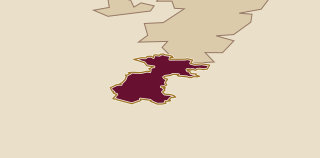
Atlas locationVillié-Morgon · Beaujolais · France46.16° N · 4.69° E

At A Glance

Marcel Lapierre is a Beaujolais domaine in Villié-Morgon, founded in 1909 and centred on 18 hectares of Gamay Noir à Jus Blanc. Most of the vines sit in the Morgon appellation, with several plots in Beaujolais. The domaine makes one cuvée in two versions, one without sulfur and one with a very small dose at bottling.

The Producer

Marcel Lapierre took over the family domaine in 1973. Eight years later, his work with Jules Chauvet changed the way the estate farmed and vinified: the vineyard moved to organic cultivation and biodynamic methods, while fermentation proceeded without SO2 or selected yeasts. The grape variety stayed Gamay, but the cellar stopped masking its material with additions.

That choice still defines the domaine. Whole clusters, carbonic maceration, wooden vats and ageing in oak between three and thirteen years old give the wines a clear link between Beaujolais fruit and the Lapierre cellar. After Marcel died in 2010, Mathieu and Camille continued the work with their mother Marie.

Place

Villié-Morgon is the village address, while Morgon is the appellation printed on the central wines. Gamay Noir à Jus Blanc is the grape. Those names perform different jobs on the label: the village locates the domaine, the appellation identifies the regulated wine origin, and Gamay names the fruit behind the wine.

The estate also farms several plots within the wider Beaujolais appellation. Its range therefore begins with one grape and one domaine, then separates bottles through place and the cellar decision made at bottling. The principal wine remains Morgon, not a broad collection of unrelated cuvées.

Soil And Site

The domaine covers 18 hectares, primarily in Morgon, and has cultivated its vineyard organically since 1981. Farming gives particular attention to soil microbiology, with only minimal copper and sulfur additions to the soil. The agricultural work supports a cellar where nothing is added to the grape juice during vinification, keeping the fruit from the Morgon parcels at the centre of the wine.

Story

The estate began in 1909, but Marcel Lapierre’s 1973 takeover opened the chapter that shaped its present wines. In 1981, Jules Chauvet helped him remove SO2 and selected yeasts from fermentation and adopt biodynamic methods. Marcel’s decisions placed whole-cluster Beaujolais vinification and unadorned grape juice at the heart of the domaine’s work.

His approach influenced younger Beaujolais winemakers, including Jean Foillard and Georges Descombes. When Marcel died in 2010, Mathieu and Camille took over with Marie. The family kept the one-cuvée format and its two bottling versions, carrying the original cellar decision into the current range.

Vineyards And Cellar

Organic cultivation and biodynamic methods are paired with careful attention to the living soil. Minimal copper and sulfur treatments reduce the additions made in the vineyard, while the grape variety remains Gamay Noir à Jus Blanc across the Morgon-centred holdings. The vineyard choices lead into a wine style built from whole clusters and ripe red fruit.

In the cellar, whole-cluster carbonic maceration takes place in wooden vats. The wines then age in oak between three and thirteen years old, and no additions enter the grape juice during vinification. SO2 is absent during fermentation, while a minimal amount may be used at bottling when preservation or transport calls for it. The two versions of the cuvée make that final choice visible on the label.

Wines

The range is deliberately narrow: one cuvée, offered in two sulfur versions. One bottle contains no added sulfur, while the other receives a very small dose at bottling. The distinction belongs to the cellar, not to a different grape, blend or appellation. Both versions are Morgon-centred wines from Gamay, with the sulfur decision affecting how the bottle is prepared for its journey.

The named 2022 Morgon Cuvée N carries a broad Beaujolais register: dried flowers, moss, orange pith and red berry fruit. Other Morgon notes bring raspberry, wild strawberry, Morello cherry, violet, subtle earthiness and a slight touch of liquorice. These details place the cuvée in a fragrant, fresh red-fruit idiom, with the appellation and grape doing the main work.

In The Glass

The wine rises from the glass with violet and dried flowers before red fruit takes over. Raspberry, wild strawberry and Morello cherry give the aroma its fresh centre, while moss and subtle earth add a darker, woodland edge. Orange pith brings a bitter-citrus lift to the fruit.

On the palate, the red fruit stays lively and direct, with cherry and raspberry carrying the middle of the wine. Whole-cluster carbonic maceration supports the floral and fruit-led profile, while the light liquorice note adds a savoury turn. The finish draws out orange pith, earth and violet, leaving a clean, scented impression instead of a heavy one.

A Bottle To Understand It

Start with the 2022 Morgon Cuvée N. It is a named bottle from the domaine’s central appellation, made from its core grape, Gamay Noir à Jus Blanc, and it carries the clearest supplied taste register: dried flowers, moss, orange pith and red berry fruit. The bottle brings the place, grape and cellar method into one glass, with the floral lift and fresh fruit showing how Lapierre’s whole-cluster Morgon is meant to speak.

Anecdote

In 1981, Marcel Lapierre began working with Jules Chauvet, a researcher, oenologist and négociant whose ideas changed the direction of the domaine. Chauvet’s influence led Marcel to remove SO2 and selected yeasts from fermentation and to cultivate the vineyard using biodynamic methods. The vineyard has been farmed organically from the same year. In the cellar, Marcel kept the rule practical: nothing was added to the grape juice during vinification. The domaine later kept one cuvée while bottling it in two versions, one without sulfur and one with a very small dose. Marcel’s work influenced a generation of Beaujolais winemakers, including Jean Foillard and Georges Descombes.

Final Word

Marcel Lapierre joins Morgon, Gamay and whole-cluster carbonic maceration in a single, tightly focused range. The vineyard is farmed with minimal additions, the grape juice receives nothing during fermentation, and the bottling choice is made visible through two versions of one cuvée. The 2022 Morgon Cuvée N shows that approach through flowers, red fruit, moss and orange pith.

Sources

Keep following the thread

Where to go next

placeRead the Beaujolais guideSee Marcel Lapierre in the wider setting of Beaujolais.mapFind Marcel Lapierre on the mapKeep the producer, its region and nearby places together.learningUnderstand GamayRead the quick library guide to Gamay, which is listed with this producer.