NoleaWorld of Wine

Loire · France

Producer profile

Le Fief Noir

Le Fief Noir is a 30-hectare estate in Saint-Lambert du Lattay, at the heart of Anjou Noir, founded by oenologists Dominique Sirot and Alexis Soulas in 2014. Chenin Blanc, Pineau d'Aunis and organic, hand-harvested fruit are shaped through indigenous fermentation and neutral-vessel ageing.

Place
Loire · France
Known for
Fresh, fruit-forward Anjou Noir wines built around dark schist, varietal character, hand harvesting and neutral-vessel cellar work.
Wine context
Chenin Blanc
Editorial basis
World of Wine editorial profile · 7 sources

World of Wine editorial profile · Source list ↓

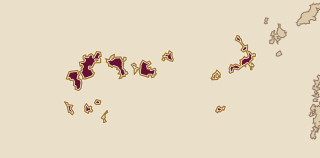
Atlas locationLoire · France47.30° N · 0.63° W

At A Glance

Le Fief Noir is a 30-hectare Loire estate at Saint-Lambert du Lattay, in the Maine-et-Loire department and at the heart of Anjou Noir. Founded by oenologists Dominique Sirot and Alexis Soulas in 2014, it makes white, orange and red wines from grapes including Chenin Blanc and Pineau d'Aunis. Dark schist, organic farming, hand harvesting and neutral-vessel ageing shape the range.

The Producer

Le Fief Noir began with two oenologists taking back a 30-hectare estate in Saint-Lambert du Lattay. Dominique Sirot and Alexis Soulas founded it in 2014, when it was still known as Domaine des Chesnaies, then renamed it Le Fief Noir in 2017. The bottles move across Chenin Blanc whites and orange wines, Pineau d'Aunis reds and other documented red wines, with fruit and mineral freshness kept in view through restrained cellar work.

The estate's scale gives the pair room to work across different grapes and wine styles, while the cellar keeps the range connected. Indigenous fermentation, temperature-controlled tanks and neutral ageing preserve the fruit, acidity and aromatic character of each bottle.

Place

Saint-Lambert du Lattay sits in Anjou Noir, a Loire district marked by dark schist. That geology appears in the estate's name and in the way its wines are described: fresh, rocky and mineral rather than heavy or oak-led. The address places the bottles in Anjou Noir without requiring an unsupported appellation claim, while the grape on each label sets the style, from Chenin Blanc's white and orange expressions to Pineau d'Aunis in red.

Soil And Site

Schist is metamorphic rock formed when clay, mudstone or other sedimentary material is subjected to prolonged pressure and heat. In Anjou Noir, the dark rock provides the physical setting for deep-rooted vines and the rocky mineral impression associated with the wines.

The documented sites show how that setting changes from bottle to bottle. Bonnes Blanches comes from a north-facing exposure. Contact uses 40-year-old Chenin Blanc vines in local clay-loam over black schist. Révolution combines mature vines and younger plantings in schist and sandy loam, giving Pineau d'Aunis a different soil frame from the Chenin orange wine.

Story

Le Fief Noir's estate arc runs from vineyard work to a bottle with little added flavour from the cellar. The founders' approach joins certified organic farming and hand harvesting to indigenous fermentation, then moves the wines into stoneware, clay amphorae or older oak. Each choice keeps the grape and rocky setting in the foreground. A white can retain skin and lees contact, an orange wine can carry savoury fruit and acidity, and a red can keep its crushed-berry lift without a strong oak imprint.

The name changed in 2017, but the estate's story is carried most clearly by the working sequence: dark schist in the vineyard, careful picking at harvest, flavourless vessels in the cellar and fresh, fruit-forward wine in the glass.

Vineyards And Cellar

Certified organic farming sets the vineyard method, and hand harvesting protects the grapes as they come into the cellar. Light filtration removes bugs and large particles, while fermentation relies on indigenous yeasts in temperature-controlled steel or concrete tanks. Those vessels control the ferment without adding a strong flavour of their own.

Ageing continues in neutral materials, including stoneware or clay amphorae and older oak barrels. Bonnes Blanches spends 12 months on lees in stoneware amphorae and is bottled unfined. The combination of skin contact, lees time and neutral clay gives the white a more textural route than a short, direct fermentation in new oak.

Wines

The range is organised by colour, grape and cellar treatment. Bonnes Blanches is a white from a north-facing exposure, with 12 hours of skin maceration before pressing, natural fermentation and extended lees ageing in stoneware amphora. Its place in the range is a white that carries contact with skins and lees without fining.

Contact is the Chenin Blanc orange wine. It comes from 40-year-old vines and brings savoury and salty notes, lush stone fruit and strong acidic balance. Whole-cluster maceration and amphora ageing give it a distinct position among the estate's whites.

Révolution is a very limited Pineau d'Aunis red, made from mature vines blended with younger plantings in schist and sandy loam. Peppercorns and gentle fruit define its documented profile, while natural fermentation and six months in clay amphora keep the wine in the estate's fresh, fruit-led register.

The wider reds are described through juicy drinkability, crushed berries, floral aromatics and a refreshing impression of rocky earth. Across the range, the bottle role follows the combination of grape, soil and cellar treatment rather than an unsupported hierarchy of vineyard names.

In The Glass

The reds open with crushed berries and floral aromas, with Pineau d'Aunis adding a peppercorn note. On the palate, juicy fruit and a soft, flowing shape keep the wines refreshing, while the rocky setting leaves a mineral impression through the finish. Indigenous fermentation and neutral vessels leave the fruit and varietal character clear.

The white and orange wines move toward savoury detail and acidity. Chenin Blanc brings lush stone fruit, while skin contact adds a salty, savoury register and lees ageing adds breadth. The finish stays lifted because the wines are built around freshness rather than sweetness or new-oak flavour.

A Bottle To Understand It

Start with Contact, the 100 percent Chenin Blanc orange wine from 40-year-old vines planted in clay-loam over black schist. Whole berry clusters macerate for two weeks before the wine spends six months in amphora. In the glass, it carries lush stone fruit beside savoury and salty flavours, with firm acidic balance keeping the palate fresh.

Contact brings together Le Fief Noir's central choices in one bottle: Anjou Noir soil, a named grape, hand-worked fruit, extended skin contact and neutral clay ageing. It gives the range a clear first taste through texture, acidity and flavour, without hiding the Chenin Blanc beneath oak.

Anecdote

In 2014, oenologists Dominique Sirot and Alexis Soulas took back the estate at Saint-Lambert du Lattay in Maine-et-Loire. The property was still called Domaine des Chesnaies and covered 30 hectares in the Anjou Noir landscape. Three years later, in 2017, they renamed it Le Fief Noir. The new name paid homage to the terroir of Anjou Noir, where dark schist gives the district its defining geological image. The change placed that geology on the label, while the address and vineyard area remained at Saint-Lambert du Lattay. From then on, the bottles carried the name Le Fief Noir.

Final Word

Le Fief Noir gives Anjou Noir a clear three-colour reading: Chenin Blanc through white and orange wine, Pineau d'Aunis through a limited red, and a wider red range marked by berries, flowers and rocky freshness. Contact is the most direct first bottle because its grape, soil, maceration and amphora ageing can all be felt in the glass.

Sources

Keep following the thread

Where to go next

placeRead the Loire guideSee Le Fief Noir in the wider setting of Loire.mapFind Le Fief Noir on the mapKeep the producer, its region and nearby places together.learningUnderstand Chenin BlancRead the quick library guide to Chenin Blanc, which is listed with this producer.