NoleaWorld of Wine

Loire · France

Producer profile

Domaine Arnaud Lambert

Domaine Arnaud Lambert makes Chenin Blanc and Cabernet Franc around Saumur, with Brézé bringing lifted, mineral whites and lighter reds, and clay-heavy Saint-Cyr giving Cabernet Franc more weight and tannin.

Place
Loire · France
Known for
Site-led Chenin Blanc and Cabernet Franc from Brézé and Saint-Cyr, shaped by organic farming begun in 2009, biodynamic methods adopted in 2018, sulfite-free ageing until bottling, and gentle Cabernet Franc extraction.
Wine context
Cabernet Franc · Chenin Blanc
Editorial basis
World of Wine editorial profile · 5 sources

World of Wine editorial profile · Source list ↓

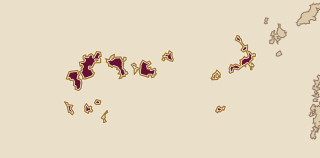
Atlas locationLoire · France47.17° N · 0.10° W

At A Glance

Domaine Arnaud Lambert works with Chenin Blanc and Cabernet Franc around Saumur, with Brézé and Saint-Cyr providing the clearest contrast. Brézé brings porous tuffeau limestone, sand, and clay to wines with lifted aromas, mineral character, and lighter Cabernet Franc. Heavy clay in Saint-Cyr gives the red wines more weight, power, and tannin.

The Producer

Yves Lambert founded the domaine in 1996 at the age of 47, after changing careers and returning to his roots around Saumur. His son Arnaud joined him in 2005, continuing the family work with Chenin Blanc and Cabernet Franc. The domaine now reads through its vineyards as much as through its family name, with Brézé and Saint-Cyr offering different expressions of the same Loire grapes.

The central choice is to keep the wines free from unnecessary weight. Cabernet Franc is handled with less physical extraction than it was in the domaine's earlier cellar work, while Chenin Blanc is allowed to retain acidity, texture, and mineral character. The bottles are direct, site-led wines with fruit, tannin, and freshness left clearly visible.

Place

The domaine is rooted around Saumur, where Brézé and Saint-Cyr give the range its main geographical shape. Château de Brézé is a UNESCO World Heritage site and a historic reference in French fine wine. Its tuffeau limestone is the same porous, chalky stone used in much of the Loire's Renaissance architecture, linking the vineyard to the pale underground and built landscapes of the region.

Brézé Cabernet Franc can feel closer to a red-tinged white wine than to a heavily extracted red, with lighter weight and moderate tannin. Saint-Cyr Cabernet Franc moves in the opposite direction because heavy clay covers almost all its vineyards, giving the wine more force and a firmer tannin presence. Place changes the grape's behaviour in the bottle.

Soil And Site

Tuffeau limestone gives Brézé its porous chalky base, while sand and clay in the Chenin Blanc vineyards contribute higher-toned aromas and polished mineral character. The wine carries freshness from its acidity, but its texture is not thin. Brézé Chenin can feel rounded and tactile while remaining bright.

Saint-Cyr's heavy clay holds a different physical weight in the red wines. Cabernet Franc from these parcels carries more body, power, and tannin than the lighter Brézé version. The contrast is easy to taste because the grape remains Cabernet Franc while the soil and site change the pressure of the wine across the palate.

Story

The domaine began with a return. In 1996, Yves Lambert left one career behind at 47 and came back to Saumur to establish the estate. Arnaud joined him nine years later, turning a personal restart into a second-generation project. In 2009, the work widened again: organic viticulture began and the domaine took on eight Brézé plots planted with Chenin Blanc and Cabernet Franc.

Biodynamic methods followed in 2018, with the stated aim of understanding the wider ecological systems around the vines and appreciating the character of each terroir more closely. The timeline moves from family change to vineyard change, then into a cellar that handles Cabernet Franc with a lighter hand.

Vineyards And Cellar

Organic viticulture began in 2009, the same year the domaine acquired its eight Brézé plots. Biodynamic methods were adopted in 2018. These farming decisions place the vineyard at the centre of the wine, with Brézé's sand, clay, and tuffeau linked to lifted Chenin aromas and lighter red Cabernet Franc, while Saint-Cyr's clay brings greater weight and tannin.

During vinification and ageing, the wines remain sulfite-free until bottling. The stated aim is to preserve subtle seasonal characteristics before the wine is protected for release. Cabernet Franc extraction also changed between 2010 and 2012, moving from three pump-overs or punch-downs each day to approximately three across the whole vinification. Less movement through the fermenting grapes gives the reds less extracted weight and leaves the vineyard more apparent.

Wines

The white-wine thread is Chenin Blanc from Brézé. Its mixture of sand and clay gives high-toned aromas and a polished mineral impression. Clos David Chenin Blanc 2018 adds honey and golden delicious apple on the nose, then chamomile, green apple, and underripe quince across a medium-plus palate. High acidity keeps the wine bright, while its round, viscous texture gives it breadth and a dry, lingering finish.

The Cabernet Franc range is organised by place. Brézé reds have lighter weight, moderate tannin, and white-wine nuances alongside red fruit character, reflecting the hill's historic association with white wine. Saint-Cyr reds are heavier and more powerful, with clay supplying a firmer tannin frame. Saumur and Saumur-Champigny Cabernet Francs are made as contemporary interpretations, with gentle freshness and proper extraction.

In The Glass

Brézé Chenin Blanc rises first with lifted fruit and floral notes, then gathers weight through a rounded, tactile middle. Sand and clay contribute the higher-toned aromatic register and polished mineral feel, while high acidity keeps the palate moving toward a dry finish. The wine does not finish sweet or soft; its brightness remains after the texture has broadened.

Cabernet Franc changes direction with the site. Brézé brings a lighter red profile, moderate tannin, and the faint impression of white-wine freshness. Saint-Cyr arrives with darker weight through the middle of the palate, more power, and firmer tannin from heavy clay. Saumur and Saumur-Champigny sit between those site readings, carrying gentle freshness with extraction that does not overwhelm the fruit.

A Bottle To Understand It

Clos David Chenin Blanc 2018 is the first bottle to open. Honey and golden delicious apple lead into chamomile, green apple, and underripe quince, with medium-plus body, high acidity, and a round, viscous mouthfeel. Its dry finish lingers without losing brightness. The bottle brings Brézé's lifted aromatic character, mineral feel, and Chenin Blanc acidity into one clear glass, making the domaine's white-wine work immediately tangible.

Anecdote

Between 2010 and 2012, Arnaud Lambert changed the way Cabernet Franc moved through the cellar. The previous method used three pump-overs or punch-downs every day during vinification, bringing repeated physical contact between the fermenting wine and its skins. Arnaud reduced that work to perhaps three operations across the entire process. The change was large enough to alter the feel of the red wines, reducing extracted weight and allowing the vineyard differences between Brézé and Saint-Cyr to remain visible. From then on, the cellar schedule for Cabernet Franc was counted in a handful of operations, not a daily routine.

Final Word

Domaine Arnaud Lambert gives Saumur's Chenin Blanc and Cabernet Franc a clear physical geography. Brézé brings lifted Chenin, polished mineral character, and lighter red Cabernet Franc, while Saint-Cyr's heavy clay brings more weight and tannin. Clos David Chenin Blanc 2018 is the most direct starting point, with acidity, texture, fruit, and a dry finish all present in one bottle.

Sources

Keep following the thread

Where to go next

placeRead the Loire guideSee Domaine Arnaud Lambert in the wider setting of Loire.mapFind Domaine Arnaud Lambert on the mapKeep the producer, its region and nearby places together.learningUnderstand Chenin BlancRead the quick library guide to Chenin Blanc, which is listed with this producer.