NoleaWorld of Wine

Chinon town · Loire · France

Producer profile

Couly-Dutheil

Loire domaine working Cabernet Franc and Chenin Blanc, with stainless steel central to the cellar and Clos de l'Olive under Touraine.

Place
Chinon town · Loire · France
Known for
Cabernet Franc and stainless steel
Wine context
Cabernet Franc · Chenin Blanc
Editorial basis
World of Wine editorial profile · 4 sources

World of Wine editorial profile · Source list ↓

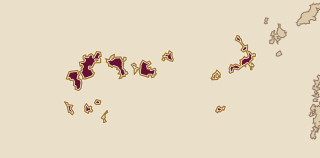
Atlas locationChinon town · Loire · France47.17° N · 0.25° E

At A Glance

Field
Detail
Region
Loire
Home base
Chinon town
Vineyard area
Approximately 130 hectares
Main grapes
Cabernet Franc and Chenin Blanc
Signature bottle
Clos de l'Olive, red Touraine wine
Cellar direction
Stainless steel fermentation and ageing, with Crescendo as the oak exception

The Producer

Couly-Dutheil works in Chinon town, within the Loire, with Cabernet Franc and Chenin Blanc across multiple Loire appellations. Its cellar uses temperature controlled stainless steel for fermentation and ageing. The red side includes Clos de l'Olive, while Crescendo is the exception to the oak free direction.

The domaine's scale supports both grape varieties without reducing the range to a single wine. Cabernet Franc supplies the red work, Chenin Blanc the white, and the cellar keeps the main wines away from oak influence.

Place

Chinon town is the home base, while Clos de l'Olive carries Touraine on the label. Touraine is the registered appellation for this red wine, so its label name is distinct from the producer's Chinon location.

The wider holdings extend across multiple Loire appellations. One domaine can therefore work with more than one place name while keeping Cabernet Franc and Chenin Blanc at the centre of its production.

Story

In 2003, Arnaud Couly eliminated oak ageing for most wines, leaving Crescendo as the exception. The change shifted the cellar toward stainless steel fermentation and ageing. Stainless steel adds no oak flavour, allowing the fruit and place to remain free from wood influence.

Crescendo kept a separate cellar path. Its oak treatment became a named part of the range, while the rest of the wines followed the stainless steel direction.

Vineyards And Cellar

In 1989, Couly-Dutheil installed Chinon's first stainless steel, temperature controlled fermentation tanks. Ageing in stainless steel typically lasts 18 to 24 months, varying by vintage.

Clos de l'Olive contains vines up to 115 years old. Temperature control moderates fermentation, while stainless steel does not add oak flavour during ageing. The cellar method is therefore a physical choice involving vessel, temperature and time.

Wines

Cabernet Franc and Chenin Blanc are the two named grape varieties in the range. Clos de l'Olive is a red Touraine wine, while the estate also produces Chenin Blanc from its broader Loire holdings.

Crescendo sits apart as the label that receives oak ageing, while most other wines follow the stainless steel regime. The range moves between red and white grapes and between a largely wood free cellar and one deliberate oak cuvée.

In The Glass

Clos de l'Olive has a dark, intense, shiny ruby and purple robe. The nose combines tobacco leaf, smoke, herbal notes, light cassis and mineral character with black olive, forest floor, cherry, plum, spice and earth.

On the palate it is juicy, dark and olivey, with a silky yet substantial body, velvety tannins, refined texture and a generous core of fruit. The wine is concentrated without losing its smooth feel, and the mineral and earthy notes remain alongside the fruit.

A Bottle To Understand It

Choose Clos de l'Olive. It is the red Touraine wine made from Cabernet Franc, so the appellation and grape are explicit on one label.

The estate also produces Chenin Blanc, while Crescendo is the oak aged exception. Clos de l'Olive therefore presents the red side of a range built around stainless steel fermentation and ageing.

Anecdote

Arnaud Couly makes Crescendo by dividing the wine into three equal volumes. One third ages in new oak barrels, another in once used oak barrels, and the final third in stainless steel tanks. He then blends the three portions. New oak contributes more wood flavour, once used barrels contribute less, and stainless steel contributes none, so one cuvée combines three ageing effects in measured proportions. Crescendo remains the named exception to Couly-Dutheil's decision to eliminate oak ageing for most wines.

Final Word

Couly-Dutheil brings Cabernet Franc and Chenin Blanc together in a Loire domaine based in Chinon, with stainless steel as its main fermentation and ageing vessel. Clos de l'Olive carries the red Touraine designation, and Crescendo keeps oak in the range as a defined exception.

Sources

Keep following the thread

Where to go next

placeRead the Loire guideSee Couly-Dutheil in the wider setting of Loire.mapFind Couly-Dutheil on the mapKeep the producer, its region and nearby places together.learningUnderstand Cabernet FrancRead the quick library guide to Cabernet Franc, which is listed with this producer.