Who makes it
At Château de Fesles, selective harvesting determines how Chenin Blanc is used across the range. Some Chenin Blanc plantings go into Crémant, Coteau du Layon and Anjou Blanc instead of all the grapes being vinified as Bonnezeaux. The estate also grows Cabernet Franc and Grolleau.
The Helfrich family has owned Château de Fesles since 2008 and continues to work toward optimizing the terroir. Since the 2022 vintage, all Château de Fesles wines have been certified organic.
Where it grows
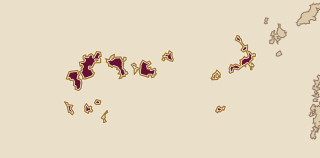
Château de Fesles holds parcels on La Montagne, Beauregard and Fesles, the three principal Bonnezeaux hillsides. They face south and southwest, giving the vines strong sunlight that can help Chenin Blanc reach the ripeness needed for sweet wine. Fruit picked at lower ripeness can retain the acidity used in dry styles.
Bonnezeaux soils consist of St Georges sandstone schist from the Upper Ordovician to Lower Devonian periods, with veins of quartz and phtanite. Fractured schist drains readily and warms in sunlight, helping Chenin Blanc ripen while retaining acidity for both sweet and dry wines.
What they make
Château de Fesles Bonnezeaux is the estate's sweet Chenin Blanc. The grapes are harvested exclusively by hand through multiple successive tries, selecting only overripe grapes, with or without noble rot. Noble rot shrivels grapes and concentrates sugar. Bonnezeaux requires at least 51 g/L residual sugar in the finished wine, with a minimum must weight of 238 g/L at harvest.
The dry Chenin wines include Château de Fesles La Chapelle Chenin Sec Vieilles Vignes 2022 and Château de Fesles Chenin Sec La Chapelle. Crémant, Coteau du Layon and Anjou Blanc use other portions of the Chenin Blanc plantings.