Who makes it
The Carthusian Monastery of Scala Dei was founded in 1194, and the producer dates the monks’ first wines to 1263. After the monks left in 1835, five families acquired the monastery and its lands, then founded Sociedad Agrícola La Unión in 1844.
Cellers Scala Dei was refounded in 1974 and released what it calls the first modern Priorat wines. Ricard Rofes is both winery head and winemaker. Scala Dei also helped reintroduce stem fermentation and ageing in large foudres rather than 225 litre Bordeaux barrels to Priorat. Stem fermentation keeps whole bunch stems with the grapes and can add spice and tannin. Large foudres provide a larger ageing vessel than a small Bordeaux barrel.
Where it grows
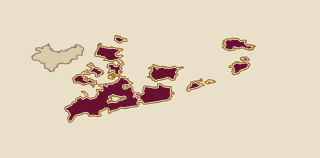
Escaladei is the town given in the winery’s address, Rambla Cartoixa, s/n, postcode 43379. The bottles carry Priorat as the wine name. In 1878, the first bottles of Priorat wine left this winery for the Universal Exhibition in Paris and won a gold medal. Wine is still aged in the monks’ seventeenth century cellar.
What they make
The range includes Scala Dei Prior, Cartoixa and Masdeu. Cartoixa 2021 brings crushed berry, plum, raspberry and gentle earthy nuance, with a smooth texture and lingering dark fruit on the finish. Each vineyard lot ferments separately, and no external product is added during fermentation.