
NoleaWorld of Wine

Sicily · Italy

Producer profile

Cantina Colosi

Family winery on Salina, a volcanic Aeolian island, farming 10 hectares between Capo Faro and Porri. Aromatic whites carry the island's signature of citrus, prickly pear, rosemary, and exotic fruit. The Grillo Acacia spends four months in acacia barrels, adding vanilla roundedness to the grape's native texture.

Place
Sicily · Italy
Known for
Volcanic island whites, IGP Aeolian wines, acacia-aged Grillo
Editorial basis
World of Wine editorial profile · 2 sources

World of Wine editorial profile · Source list ↓

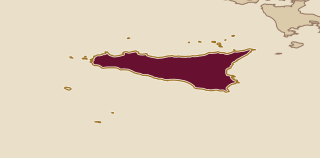
Atlas locationSicily · Italy38.21° N · 15.31° E

At A Glance

The Producer

Cantina Colosi farms 10 hectares of vines on Salina, a volcanic island in the Aeolian archipelago off the northeast tip of Sicily. Three generations of the family have all carried the name Pietro. The second-generation Pietro formalized winery operations in 1987, but the family's connection to Salina viticulture predates that by at least a decade. The first-generation Pietro worked alongside Carlo Hauner in the 1970s, when Hauner was developing Salina's Malvasia dessert wine into a wine of international standing. Colosi's white wines carry the island's consistent aromatic signature: citrus, prickly pear, exotic fruit, rosemary, and the mineral lift of volcanic soil.

Place

Salina rises from the Tyrrhenian Sea as part of the Aeolian chain, a volcanic arc formed by the same geological activity that produced Stromboli and Etna. The island's soils are volcanic in origin, free-draining and low in organic matter, which pushes vines to work harder for water and concentrate aromatic compounds. Sea winds from the Tyrrhenian cross the island throughout the growing season, keeping temperatures moderate and slowing ripening. White wines show ripe fruit, exotic fruit, and the typical sensations of Mediterranean scrub. The IGP Aeolian Islands designation applies across Colosi's island range, permitting blending flexibility across the varieties suited to this volcanic microclimate.

The estate's two zones, Capo Faro in the north and Porri in the west, sit on different aspects of the island. Both share the volcanic subsoil and the salt-tinged air that shapes the aromatic character of the wines. Colosi also operates a secondary production facility in Giammoro in the Messina province on the Sicilian mainland, but the wines with the estate's distinct island character come from the Salina vineyards.

Soil And Site

Salina's soils are volcanic ash and lava derivatives, dark-coloured and mineral-rich, with limited topsoil depth on the steeper slopes. Vines in this environment produce modest yields and grapes with concentrated skins. The volcanic mineral content moves into the wine as an aromatic baseline, a kind of saline herbal note distinct from the fruit-forward weight of wines grown on clay or alluvial soils on the Sicilian mainland. Salt carried inland from the surrounding sea adds a further aromatic layer to the scrub-herb character of fruit grown at altitude on the island's flanks.

Story

The first-generation Pietro Colosi worked with Carlo Hauner on Salina in the 1970s. Hauner, a painter who had come to Salina from Milan and stayed, was doing the work of pulling the island's ancient Malvasia vines back into serious production. The collaboration placed Pietro inside that formative effort. By the time the second-generation Pietro opened Cantina Colosi as a formal winery in 1987, the ambition was clear: make wines that carried Salina's volcanic island character as the central value rather than a secondary detail.

The range built since 1987 follows that logic. Rather than styling wines toward a mainland Sicilian template, Colosi works with the aromatic intensity that Salina's volcanic soil and Mediterranean scrub flora naturally produce. The Grillo Acacia cuvee is the one significant cellar departure from this approach, placing 100% Grillo in acacia barrels for four months to add vanilla and textural roundedness. It is a decision that reframes rather than suppresses the grape's native aromatic character.

Vineyards And Cellar

The 10 hectares between Capo Faro and Porri are the estate's core growing ground. Volcanic island farming concentrates aromatics in the fruit: the low-fertility soils, the drainage, and the wind exposure all push toward aromatic density rather than simple fruit weight. Harvested grapes from these parcels show the island's characteristic scrub and citrus profile at ripeness levels moderate by Sicilian mainland standards.

In the cellar, most of the range is vinified to preserve aromatic freshness. The Grillo Acacia is the exception: four months in acacia wood adds vanilla-inflected roundedness and fills out the mid-palate. Acacia is softer in grain and tannin than French or American oak, contributing aromatic complexity rather than wood flavour. The contact gives the wine texture without obscuring the Grillo grape's natural character.

Wines

Three confirmed white wines define the range:

Salina Bianco IGP is the baseline island white. Ripe fruit and exotic fruit carry the nose, with Mediterranean scrub and citrus underneath. It is direct and aromatic, built for the warmth and salinity of the island's table.

Secca del Capo is a Mediterranean white with fuller aromatic complexity: exotic fruit, prickly pear, citrus, and rosemary on the nose, with softness in the mouth balanced by acidity that keeps the finish from going flat. The aromatic layering is more pronounced here than in the Salina Bianco, and the balance of softness against acidity makes it the more composed bottle across a meal.

Grillo Acacia is 100% Grillo, the Sicilian white grape used historically for Marsala and increasingly bottled dry. Four months in acacia barrels change the register: vanilla lifts the nose alongside the grape's natural fruit, and the barrel contact rounds out the mid-palate texture. Four months in acacia barrels give it an elegant vanilla aroma and pleasant roundedness.

In The Glass

The Salina Bianco IGP opens with ripe stone fruit and tropical notes, followed by Mediterranean scrub: dried rosemary, wild herbs, a faint saline mineral lift from the volcanic soil. It is medium-bodied, with acidity that keeps the fruit from feeling heavy, and a clean finish that echoes the herb and citrus of the nose.

Secca del Capo builds on those aromatic foundations with prickly pear, exotic fruit, and citrus that are more concentrated and layered. In the mouth it is soft without being broad, with acidity providing the spine that holds the fruit together through a longer finish.

Grillo Acacia moves differently. The acacia barrel contact lays a vanilla note over the grape's natural texture and brings a roundedness to the palate that the other two whites do not have. The fruit recedes slightly behind the aromatic complexity of the barrel, and the finish carries vanilla and ripe citrus together. It is the wine in the range that benefits most from food, particularly rich seafood or aged cheese.

A Bottle To Understand It

Start with Secca del Capo. It captures what Salina volcanic growing does to aromatic white wine without the intervention of barrel ageing: prickly pear, exotic fruit, citrus, and rosemary on the nose, soft fruit in the mouth, and enough acidity to keep the finish alive. The aromatic intensity is real and Mediterranean without being heavy. One glass of Secca del Capo is enough to understand why island-grown whites from volcanic soils produce a different aromatic register than any mainland Sicilian white, and why that register matters as a wine style worth seeking out.

Anecdote

In the 1970s, the first-generation Pietro Colosi was working alongside Carlo Hauner. Hauner was a Milanese painter who had arrived on Salina, fallen into the island's old Malvasia vines, and decided to take them seriously. The work was slow: reviving neglected parcels, establishing relationships with growers, developing a dessert wine in a place the international wine trade had not yet looked at. Pietro was part of that ground-level effort. When the second-generation Pietro opened Cantina Colosi in 1987, the island had already begun to acquire the recognition Hauner had worked toward. The family did not arrive at Salina viticulture from outside. They had been part of building it.

Final Word

Cantina Colosi makes white wines from one of Italy's most geographically distinct growing environments: a volcanic island in the Tyrrhenian Sea where the soils, the wind, and the Mediterranean flora give the grapes an aromatic character no mainland cellar can replicate. The three white wines in the confirmed range move from the direct island freshness of Salina Bianco IGP through the layered complexity of Secca del Capo to the barrel-touched texture of Grillo Acacia. The family has been on this island, in some form, since before the modern winery existed. The wines carry that specific place without translation.

Sources

Keep following the thread

Where to go next

placeRead the Sicily guideSee Cantina Colosi in the wider setting of Sicily.mapFind Cantina Colosi on the mapKeep the producer, its region and nearby places together.learningHow place shapes wineSee how climate, landscape and local choices become part of a wine.