
At A Glance
- **Location**
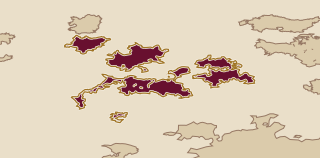
- Gumiel de Mercado, Burgos, Castilla y León
- **Appellation**
- Ribera del Duero DO
- **Grape**
- 100% Tinto Fino (Tempranillo)
- **Style**
- Red wine only
- **Founded**
- 1984
- **Listed wine**
- Valduero 12 Años
The Producer
Gregorio García Álvarez founded Bodegas Valduero in 1984 in the village of Gumiel de Mercado, in the province of Burgos, two years after Ribera del Duero received its DO. At that moment, fewer than a dozen estates in the region were bottling under their own label. Most growers were selling to bulk merchants. Valduero was one of the first to do otherwise.
The estate sits in the upper Duero valley, within the Ribera del Duero DO, the appellation that runs east to west across the Castilian meseta and produces almost exclusively red wine from Tinto Fino, the local name for Tempranillo. Valduero holds roughly 200 hectares of vineyard and produces around 600,000 bottles annually. The range is built entirely on one grape, and the defining choices are vine age and time.
Place
Ribera del Duero is high, cold and dry by the standards of Spanish wine country. The plateau sits above 700 metres, the winters are severe, and summer days are warm but the nights drop sharply, preserving the acidity that keeps Tinto Fino structured through long ageing. The Duero river valley organises the landscape: north and south-facing slopes, alluvial flats, and older parcels on higher ground. Gumiel de Mercado sits in the western part of the DO, in Burgos province, where the denomination begins.
Those conditions explain why the wines here age the way they do. Long, cold winters slow dormancy and push the vine to work harder in summer. The thermal gap between day and night during growing season keeps fruit concentrated but keeps acidity intact. In the glass, this translates to wines that carry depth of fruit alongside the structural grip to hold it for years.
Soil And Site
The vines at Valduero are gobelet-trained, meaning head-pruned as low bushes rather than trellised along wires. This is an older, labour-intensive system that limits yield by design and exposes the fruit more evenly to sun and air. The oldest parcels, those supplying the 12 Años, are over 90 years old. The Una Cepa vineyards are 50 years old. Neither is irrigated. Neither receives chemical fertilisation. The ground feeds the vine, and the vine returns what the ground allows.
Because vine age and farming method are the confirmed site facts, specific soil types and elevation figures are not stated here.
Story
When Ribera del Duero became a DO in 1982, the appellation had almost no independent bottlers. The valley had produced wine for centuries, but it had done so largely anonymously, supplying the bulk trade rather than building label identities. Valguero was among the small number of producers who saw the DO as an argument worth making in bottle, not just in barrel.
Gregor García Álvarez made a choice that shaped everything after: one grape, farmed slowly, aged long. That logic produced the Una Cepa project, a wine whose name means one vine and whose farming reflects that claim exactly: gobelet vines, no irrigation, no chemicals, yields low enough that each plant contributes only what it can naturally give. Then it produced the 12 Años, a wine where the arithmetic of ageing becomes the label itself. Four years in wood, eight years in bottle. The wine that reaches the shelf has been in the cellar for twelve years.
That commitment to time is unusual in any wine region. In Ribera del Duero, where younger producers often compete on fruit and freshness, it is a deliberate position.
Vineyards And Cellar
The Una Cepa vines are 50 years old, gobelet-trained, unirrigated, and farmed without chemical inputs. Yield is held to 2,000 kg per hectare. Fermentation takes place in 500-litre oak barrels with no mechanical intervention: no pumping over by machine, no automated temperature control beyond what the cellar environment provides. The wine spends 18 months in oak and more than a year in bottle before release.
Una Cepa Premium takes the same approach further. Yield drops to 1,000 kg per hectare, roughly a third of what a commercially optimised Ribera del Duero block might return. Fermentation is again in 500-litre barrels, entirely by hand. The wine sees three years in oak across four barrels and three years in bottle, reaching 14% alcohol from fruit concentrated by that extreme reduction in yield.
The 12 Años vines are over 90 years old and yield approximately 1,500 kg per hectare. The wine is aged for 48 months in oak barrels sourced from six different origins: French, American, and other woods in proportions that are blended across the ageing period rather than separated into lots. After four years in wood, the wine spends eight more years in bottle before Valduero releases it.
Wines
The confirmed range at Valduero centres on three bottles, all 100% Tinto Fino.
Una Cepa is the entry point into the estate's artisanal argument: dark red in colour, it opens with black fruit and fruit compote, delivers a firm, palate-filling body, and closes with a long, structured finish. The tannins are present but integrated, held in place by the density of fruit that comes from 50-year-old vines at low yield.
Una Cepa Premium pushes the same logic harder. With yields halved to 1,000 kg per hectare and three years in oak rather than 18 months, the wine shows more concentration on the palate and a velvety texture that comes from extended barrel contact and the reduction in volume. The aromatic profile runs through the same black fruit and compote register as Una Cepa, but the mouthfeel is denser and the finish longer.
Valduero 12 Años is a different wine in character: darker in colour with brick tones at the rim from twelve years of ageing, its nose runs through mint, leather, tobacco and soft cedar rather than primary fruit. On the palate it is silky and velvety, the tannins having fully resolved over eight years in bottle, and the finish is long-lasting. Where the Una Cepa wines show the power of old vines and low yields, the 12 Años shows what time does to that material.
In The Glass
Una Cepa opens with ripe black fruit and fruit compote, the nose still primary and generous from 50-year-old vines at relatively compressed yield. On the palate, the wine fills the mouth and holds: firm tannins that are already well-integrated, with a finish that runs long rather than short. It is not a light wine. The body comes from the vineyard, not from oak treatment.
Una Cepa Premium sits a register higher in concentration. The same aromatic framework, but the palate is denser and the texture more velvety, a direct consequence of 1,000 kg per hectare into 500-litre barrels and three years of contact.
Valduero 12 Años is built on a different aromatic plane altogether. Twelve years from harvest has moved the primary fruit into leather, tobacco, mint and cedar. The colour carries brick at the rim. In the mouth, the tannins are silky and fully resolved, the mouthfeel smooth and rounded, and the finish persists well after the wine is gone. This is what extended ageing in six different oak types, followed by eight years in bottle, does to Tinto Fino from 90-year-old vines.
A Bottle To Understand It
Valduero 12 Años is the bottle. It is 100% Tinto Fino from vines over 90 years old, aged 48 months in oak from six different origins and then eight years in bottle before release. The colour is dark red with brick tones. The nose is composed and tertiary: mint, leather, tobacco, cedar. On the palate the tannins are completely smooth, the body silky, the finish long and persistent. There is no rough edge left because twelve years have removed them all. Valduero 12 Años is the clearest single answer to the question of what this estate does and why it matters that it started in 1984.
Anecdote
The Valduero 12 Años was not named for a vintage. It was named for the time between harvest and release: four years in oak and eight years in bottle, twelve in total. When Valduero committed to that programme, the commercial logic ran against them. Capital tied up in wine for twelve years is capital that cannot be used elsewhere, and most of the Ribera del Duero market in those early DO years wanted fruit and freshness, not patience. Valduero held the wine anyway. The 90-year-old vines that supply it yield roughly 1,500 kg per hectare, the oak ageing rotates through barrels of six different origins over 48 months, and the bottle ageing takes what remains and rounds it completely. What leaves the cellar is a wine that has resolved everything: tannins that once gripped now roll silky across the palate, primary fruit that once announced itself now speaks in mint, leather and cedar. The twelve years are in the glass.
Final Word
Valduero is a founding-generation Ribera del Duero estate that made its name by doing less and waiting longer. One grape, old vines, no irrigation, manual cellars, and Valduero 12 Años, which spends twelve years in production before it reaches a shelf. The 12 Años is the argument in a glass.