
At A Glance
- **Location**
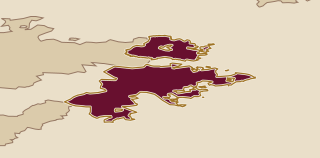
- Jumilla, D.O. Jumilla, Murcia, Spain
- **Founded**
- 1921
- **Principal grape**
- Monastrell
- **Vineyards**
- 900 metres altitude, dry-farmed, stony soils
- **Range**
- Delampa Monastrell, Éxodo Roble, Delampa 50 Años
- **Visitors**
- 40,000+ since opening to the public
The Producer
Bodegas Delampa works Monastrell at the upper edge of what Jumilla can do with altitude. The vineyards sit at 900 metres on a dry inland plateau in Murcia, dry-farmed on stony, nutrient-poor soils that push the vines deep and concentrate what little water falls. Three wines carry that fruit from vine to bottle: an unoaked entry-level Monastrell built on fresh red and black fruit, a six-month roble crianza called Éxodo that layers spice and roasted coffee into riper black fruit, and a 12-month wood-aged flagship called Delampa 50 Años that lengthens and savours everything the grape produces at this altitude.
The house has been family-owned across three generations since Julián Santos Martínez founded it in 1921. The stone bodega facade, which Julián built by hand in 1923, still stands at the winery entrance.
Place
Jumilla is a landlocked D.O. in the Murcia region of southeastern Spain. It sits on a high inland plateau, far from any coastal moderating influence, where summer heat is intense and rainfall is scarce. Monastrell is the dominant red grape throughout the appellation because the variety is thick-skinned, drought-tolerant, and capable of producing deeply coloured, densely fruited wines under these conditions.
Delampa's vineyards at 900 metres sit above the Jumilla valley floor. The altitude shaves summer temperatures enough to preserve the acidity and aromatic lift that lower-lying Monastrell vineyards lose to heat. In the glass, that difference reads as freshness against ripe fruit weight, the cherry and raspberry aromatics of the entry-level Monastrell sitting lighter than the dark fruit density typical of hotter-farmed examples from the same appellation.
Soil And Site
The soils are stony and nutrient-poor. Nutrient-poor ground limits vine vigour and pushes root systems deeper in search of water and minerals. Dry-farming compounds that effect: with no irrigation, the vines produce smaller crops of concentrated grapes rather than diluted, high-volume fruit. Stony soils drain quickly and warm in the morning sun, which advances ripening in the short Jumilla growing season. Together, the altitude, the stones, and the absence of irrigation explain why Monastrell from this site carries both concentration and the fruit clarity visible in Delampa's entry-level wine.
Story
Julián Santos Martínez arrived in Jumilla in 1921 with, as the family's own account puts it, little more than a dream and a handful of grapes. Within two years he had established a bodega and was building its stone facade by hand. That facade, constructed in 1923, still marks the winery entrance today.
Three generations of the family have farmed and made wine here since Julián's founding. The range itself carries that continuity: the 50 Años flagship takes its name from the producer's heritage arc. The winery has also opened its doors to visitors, welcoming more than 40,000 people since public access began, so Delampa is the most visited winery in Jumilla.
Vineyards And Cellar
Dry-farming at 900 metres means the vines carry a naturally low crop load. Without supplemental water, each plant produces fewer grapes, and those grapes arrive at harvest with tighter skins and more concentrated pulp. The stony soils drain fast and reflect heat onto the canopy, advancing ripening without cooking the fruit.
In the cellar, the three tiers of the range reflect three distinct decisions about oak contact. The entry-level Monastrell sees no wood, which keeps the cherry, raspberry, and blackberry aromatics vivid and direct. Éxodo Roble spends six months in a combination of American and French oak barrels before bottle-ageing, which softens the tannins and draws out layers of roasted coffee and nutmeg alongside the ripe black fruit. The 50 Años flagship extends oak contact to 12 months, integrating wood and fruit into a longer, more savorous whole.
Wines
Delampa Monastrell is the entry tier, unoaked, built around fresh aromatics of cherry, raspberry, and blackberry. Red and black fruit sit at the centre of the nose; the palate is enveloping and direct, with no oak character to interrupt the grape. It is a clear statement of what Monastrell produces at this altitude when nothing is added in the cellar.
Éxodo Roble is the mid-tier crianza, aged six months in American and French oak. The aromatic profile builds on the fruit base with roasted coffee, nutmeg, and a layered spice note. The tannins are described as approachable rather than grippy, and the finish is persistent. The combination of American and French oak gives the wine breadth without heaviness.
Delampa 50 Años is the flagship, aged 12 months in wood. Ripe fruit and oak integrate more fully than in the Éxodo, and the finish extends into a long, savory close. The name references the generational span of the house.
White wines are produced but variety and style details are not confirmed.
In The Glass
Starting with the Monastrell: the nose is fresh, with cherry first, then raspberry and ripe blackberry rising behind it. The fruit is vivid without being heavy, a direct effect of the altitude moderating what would otherwise be baked Mediterranean fruit from a hot-year Jumilla site. The palate is enveloping and soft.
Moving up to the Éxodo Roble, the same red and black fruit base deepens. Roasted coffee and nutmeg sit over a riper black fruit core, and the six months of barrel contact rounds the tannins to something approachable without reducing grip entirely. The finish carries on past the fruit, drawing out the spice note.
The 50 Años takes that development further. At 12 months in wood, the boundary between oak and fruit dissolves and it is a long, enveloping wine with a savory close rather than a fruit-led one. The altitude-driven acidity threads through all three levels, keeping each wine from feeling flat despite Jumilla's warm-plateau character.
A Bottle To Understand It
Start with the Delampa Monastrell. It is unoaked Monastrell from dry-farmed vines at 900 metres, which means nothing in the cellar interrupts what the vineyard does. The nose delivers cherry, raspberry, and blackberry directly; the palate is soft and enveloping. No wood, no correction, no additional weight from oak tannin. If you want to know what Jumilla Monastrell at altitude tastes like before any cellar decisions are layered on top, this is the wine to open first.
Anecdote
In 1921, Julián Santos Martínez came to Jumilla with, by the family's own telling, little more than a dream and a handful of grapes. He founded the bodega that year. Two years later, in 1923, he set about building the stone facade of the winery with his own hands, placing each stone himself. There was no contractor, no construction crew on record. Julián built the wall that now faces every visitor who arrives at the estate. More than 40,000 people have walked past that facade since Delampa opened to the public, and the stones Julián laid over a century ago are still the first thing they see.
Final Word
Bodegas Delampa is a family-owned Jumilla producer with a straightforward proposition: Monastrell grown at altitude on stony, dry-farmed ground, bottled across three tiers that move from fresh, unoaked fruit through roble crianza to a 12-month oak-aged flagship. The founding story is concrete and physical, the grape choice reflects Jumilla's strengths, and the entry-level Monastrell offers a direct read on what the vineyard produces. The stone bodega facade Julián Santos built by hand in 1923 is still standing.