
NoleaWorld of Wine

Levante · Spain

Producer profile

Bodega Asensio Carcelén

Organic Jumilla winery growing Monastrell on dry-land hand-harvested bush vines, four generations of the Carcelén family farming the same chalky plateau.

Place
Spain
Known for
Single-variety organic Monastrell from hand-harvested dry-land bush vines in Jumilla DO
Wine context
Grenache / Garnacha · Syrah / Shiraz
Editorial basis
World of Wine editorial profile · 2 sources

World of Wine editorial profile · Source list ↓

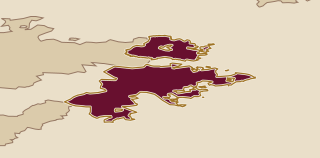
Atlas locationLevante · Spain38.41° N · 1.39° W

At A Glance

Appellation: Jumilla DO Region: Murcia, southeastern Spain Grape focus: Monastrell (90% of production) Other varieties: Syrah, Garnacha Tinta Farming: Organic (certified 2011); 95% dry-land bush vines, hand-harvested Generation: Four-generation family winery Key bottle: 100 x 100 Monastrell

The Producer

Bodega Asensio Carcelén makes wine in Jumilla, an appellation in Murcia in southeastern Spain, and it does so almost exclusively from one grape. Monastrell accounts for 90% of production. The remaining 10% is split evenly between Syrah and Garnacha Tinta. This is not indecision about what to plant; it is a declaration about where the family believes Jumilla's character lives.

Four generations of the Carcelén family have farmed here. The current operation is led by Juan Carcelén Gilar. The winery obtained full organic certification by the end of 2011, making it one of the earlier commitments to certified organic viticulture in the appellation. That date counts: organic conversion in a hot, semi-arid growing region requires consistent investment in soil health and canopy management at precisely the moment when irrigation-fed conventional farming was expanding elsewhere in Murcia.

Place

Jumilla is a landlocked appellation in Murcia, roughly 80 kilometres northwest of the Mediterranean coast, sitting on a high plateau where the altitude moderates what would otherwise be extreme summer heat. Vines grow at between 600 and 900 metres above sea level. The combination of thin, chalky soils, low rainfall, and intense sun produces the conditions Monastrell has adapted to over centuries: deep-rooted bush vines that reach moisture without irrigation, concentrated fruit from small berries, and alcohol levels that routinely push into the mid-to-high teens.

The Jumilla DO label on a bottle means the wine was grown in this plateau interior, away from the Atlantic and Mediterranean moderating influences that shape cooler Spanish appellations. The label consequence is direct: expect ripe, dark fruit and body rather than freshness and delicacy. Monastrell from Jumilla is built for warmth.

Soil And Site

The soils across Jumilla's plateau are predominantly calcareous, with chalk and limestone substrates that drain freely and limit vine vigour. This natural stress pushes Monastrell roots deep and keeps yields low without irrigation. Bush vine training, the traditional gobelet form used across this region, keeps the canopy low and creates a microclimate of shade around the grape clusters, slowing overripening during peak summer heat.

Asensio Carcelén farms 95% of its vineyards without irrigation, relying entirely on the modest annual rainfall typical of this semi-arid interior. The organic certification added to this farming discipline: no synthetic herbicides or pesticides, which in a dry climate means the soil biology must be maintained through other means, including cover crops and mechanical soil work between the vines.

Story

The Carcelén family has been in Jumilla across four generations, and the winery's recent arc follows a recognisable trajectory in Spanish wine: from bulk production to estate-bottling to certified organic farming.

The industrial turn came with D. Juan Carcelén Herrero, who introduced bottling operations at the winery, shifting production away from selling wine in bulk to other houses and beginning to put the family's name on the label. That shift from bulk supplier to estate producer changed who owned the winemaking decisions and who bore the reputational consequence of each vintage. Once a label exists, every bottle becomes an argument for the place and the grape.

The organic commitment formalised in 2011 extended that argument. Growing Monastrell on dry-land bush vines without synthetic inputs in a semi-arid climate is not the path of least resistance; it is a farming position that accepts lower yields and higher management complexity in exchange for fruit that carries the character of the land rather than the chemistry of the cellar.

Vineyards And Cellar

The vineyards are 95% dry-land, meaning no supplemental irrigation beyond natural rainfall. Bush vines pruned in the traditional gobelet manner sit low to the ground, concentrating heat from the chalk soil and shading their own fruit. Hand-harvesting is standard across the estate. In a hot climate with thick-skinned grapes like Monastrell, harvest timing and the care of the picking crew directly affect the tannin quality and fruit freshness of the finished wine.

Organic farming since 2011 covers the vineyard management practices: no synthetic inputs, certified under Spanish organic standards. The cellar detail for individual cuvées is not documented with enough specificity to describe here.

Wines

The range centres on Monastrell. The grape accounts for nine bottles out of every ten that leave the winery, with Syrah and Garnacha Tinta sharing the remaining production in equal parts.

The 100 x 100 Monastrell is a single-variety red grown and made under the Jumilla DO. The 2018 vintage is 100% Monastrell, carries organic certification, and comes in at 15% alcohol. That figure is typical for ripe Monastrell from Jumilla's plateau: the grape's thick skins and the appellation's intense summer sun drive sugar accumulation before the harvest window closes.

Secondary cuvées and additional range tiers are not documented with enough detail to describe.

In The Glass

Monastrell from Jumilla at 15% is a warm-climate red with a recognisable profile: dark fruit on the nose, plum and blackberry rather than red cherry, with the density that comes from concentrated berries grown under intense sun on chalky, low-fertility soils. The bush vine training and dry-land farming restrict yield, which pushes flavour concentration further.

The tannins in Monastrell tend toward firm and grainy rather than silky, particularly when grown without irrigation: the grape's thick skins contribute grip that needs either time in bottle or a substantial dish to sit against. Acidity in Jumilla Monastrell is moderate; the warmth of the plateau does not produce the sharp, high-acid profile of cooler appellations, so the wine leans on tannin and body for its frame rather than on freshness.

At 15%, the 100 x 100 sits at the fuller end of the spectrum. The alcohol is present but integrated when the fruit concentration is high enough to carry it.

A Bottle To Understand It

Start with the 100 x 100 Monastrell. It is 100% Monastrell from the Jumilla DO, grown on dry-land organic bush vines and harvested by hand. The 2018 vintage at 15% alcohol is a concentrated, full-bodied red that shows what the Carcelén family is committing to: one grape, one appellation, one farming method. The name states the approach plainly. Dark fruit, firm tannin, and the density of a warm-climate grape grown without irrigation on chalky soil. Serve it with lamb, aged cheese, or a slow-cooked meat dish that can meet the wine's weight.

Anecdote

At some point in the Carcelén family's history, the decision was made to stop selling wine in bulk and start putting it in bottles under their own name. That shift fell to D. Juan Carcelén Herrero, who installed bottling equipment at the winery and moved production toward estate labelling. Until that moment, the wine the family grew left the property in other people's containers and ended up on other people's labels. After it, every bottle carried the Carcelén name. The generational detail that stays is this: a family that had farmed Jumilla across multiple generations chose, at a specific moment, to become the face of what they were growing rather than the supplier behind someone else's. The fourth generation, Juan Carcelén Gilar, is still making that argument in the vineyard today.

Final Word

Asensio Carcelén is a Jumilla winery with a clear position: Monastrell, organic dry-land farming, hand-harvested bush vines, and a label that carries the family name. The 100 x 100 is where that position is most legible. It is a warm, concentrated red from one of Spain's most committed Monastrell appellations, made by a family that converted to organic farming early and has continued in that direction since.

Sources

Keep following the thread

Where to go next

mapFind Bodega Asensio Carcelén on the mapKeep the producer, its region and nearby places together.learningHow place shapes wineSee how climate, landscape and local choices become part of a wine.