
NoleaWorld of Wine

Lombardia · Italy

Producer profile

Azienda Agricola Massussi Luigi

Artisan Franciacorta estate at 400 metres, farming 1.5 hectares since the early nineteenth century and producing vintage-dated sparkling wines with indigenous yeasts and zero dosage.

Place
Italy
Known for
Vintage-dated Franciacorta DOCG sparkling wines from a single high-elevation plot, produced with indigenous yeasts, minimal dosage, and extended Millesimati lees aging.
Wine context
Champagne · Chardonnay
Editorial basis
World of Wine editorial profile · 3 sources

World of Wine editorial profile · Source list ↓

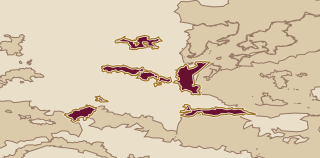
Atlas locationLombardia · Italy45.66° N · 10.07° E

At A Glance

Appellation: Franciacorta DOCG Region: Lombardy, Italy Elevation: 400 metres Vineyard: 1.5 hectares Annual production: approximately 15,000 bottles across six labels Grapes: Pinot Nero, Chardonnay, Pinot Bianco Style: Franciacorta DOCG sparkling wines (Millesimati); still wines Farming: Indigenous yeasts, no artificial cellar interventions, minimal sugar addition Heritage: Vines documented from the early nineteenth century; sparkling production from 1985

The Producer

Massussi Luigi farms 1.5 hectares at 400 metres above sea level in Franciacorta, the DOCG sparkling-wine denomination in eastern Lombardy. At that elevation, the estate sits higher than almost any other producer in the appellation. The plot is small and the philosophy is simple: indigenous yeasts, no artificial cellar work, almost no added sugar, and extended time on lees before the wine goes out.

The family name on the label carries more than two centuries of viticultural history on the same land. Contemporary commercial production, focused entirely on sparkling Franciacorta, began in 1985, launched by Giuseppina Ruggeri, Vittorio Massussi, and Agostino. That was a decade before Franciacorta received its DOCG in 1995, placing Massussi among the founding generation of producers who built the appellation's modern technical character.

The scale is genuinely artisan: six labels, roughly 15,000 bottles a year, and a single plot. The estate also produces olive oil under a brand registered on Italy's Special Register of Historic Trademarks of National Interest since 2015, a designation that confirms documented continuity across the property's agricultural history.

Place

Franciacorta occupies a glacially shaped basin south of Lake Iseo in the province of Brescia. The lake moderates temperature, reducing frost risk in spring and slowing heat accumulation in summer, and the morainic soils left by the retreating glacier carry good drainage.

At 400 metres, Massussi's vineyard sits above most of the appellation. Higher elevation means cooler nights, a longer growing season, and grapes that reach harvest with firmer acidity than fruit from lower ground. That acidity is not incidental: it determines how long a sparkling wine can spend on lees without losing freshness, and it shapes the way the finished wine feels on the palate. The Millesimati wines aged here for 40 months or more carry the acidity of the altitude rather than relying on dosage or blending to create balance.

Soil And Site

Franciacorta's soils are morainic in character, a mix of gravel, clay, and sand deposited by glacial retreat. The drainage keeps vine roots working downward, reducing the risk of over-cropping and concentrating the vine's energy into fewer grapes. At Massussi's elevation, the diurnal temperature range between warm afternoons and cool nights encourages aromatic development in the grapes and slows the accumulation of sugar, keeping natural acidity high through to harvest.

Story

The Massussi property appears in historical land registers with vines noted from the early 1800s. For much of that period the estate produced red wine, farming the land under the name of Luigi Massussi. That name held across generations until 1985, when three family members, Giuseppina Ruggeri, Vittorio Massussi, and Agostino, made the decision to change direction entirely and begin producing Franciacorta sparkling wine.

The shift was not cosmetic. Moving from red table wine to vintage-dated sparkling wine meant adopting secondary fermentation in bottle, extended lees aging, and the discipline of working with only what a single small plot produces each year. The family did not expand the vineyard to industrialise the new production; they kept it at artisan scale and built the range around the Millesimati approach, which holds wines on lees for a minimum of 40 months before disgorgement.

In 1985, Franciacorta had a quality designation but not yet its DOCG. The handful of producers working at that stage shaped how the denomination would eventually present itself: as Italy's most formally structured sparkling-wine appellation, with rules modelled closely on Champagne. Massussi's longevity in that context is a matter of staying put and staying small while the appellation grew around them.

Vineyards And Cellar

The 1.5-hectare plot is planted to Pinot Nero, Chardonnay, and Pinot Bianco, the three grapes permitted under the Franciacorta DOCG. At 400 metres, the vines ripen slowly. Indigenous yeasts drive the primary fermentation, without commercially selected strains that would accelerate or homogenise the process. Sugar addition is kept to the minimum required, and no artificial interventions are introduced in the cellar.

The Millesimati wines, vintage-dated and single-harvest, spend at least 40 months on lees after the secondary fermentation in bottle. Lees aging develops breadth, a toasty or biscuity depth, and a creamy mousse while the acidity of the elevated site keeps the wine from softening into heaviness.

Wines

The range runs to six labels, combining sparkling Millesimati bottles and still wines. The sparkling wines are all Franciacorta DOCG and all vintage-dated, meaning each bottle is tied to a single harvest rather than blended across years.

The Brut Nature Rosé Riserva anchors the range. Blended from 65% Pinot Nero, 20% Chardonnay, and 15% Pinot Bianco, it is produced with zero dosage, no sugar added after disgorgement, so the final sweetness level is essentially nothing. The Pinot Nero majority drives the red-fruit character and gives the wine its colour and grip. The Chardonnay adds a citrus and floral dimension, and the Pinot Bianco brings texture and a slightly fuller mid-palate. At 40 or more months on lees, the wine develops a biscuit and brioche depth alongside the fruit, with a firm acidity underpinning the whole.

The still wines in the range offer a counterpoint to the sparkling programme, showing the estate's agricultural breadth across the same grapes and site.

In The Glass

Across the Massussi range, the altitude shows most clearly in the acidity. Where lower-elevation Franciacorta can feel rounder and more immediately approachable, these wines carry a tighter line through the mid-palate. The mousse is fine and persistent, the product of extended lees contact rather than aggressive carbonation.

The Brut Nature Rosé Riserva opens with red cherry, dried strawberry, and a faint floral lift from the Chardonnay and Pinot Bianco components. In the mouth, the Pinot Nero majority asserts itself: the wine is dry, with firm acidity and a slight grip at the finish. After 40 or more months on lees, there is a clear biscuit and almond-paste depth running beneath the fruit. The zero dosage means nothing softens that acidity at the end; the finish is clean, dry, and mineral, with a length that reflects both the site and the lees time. The still wines from the same plot carry the altitude's aromatic freshness and a leaner frame than you find at warmer Franciacorta addresses.

A Bottle To Understand It

Start with the Brut Nature Rosé Riserva. It is 65% Pinot Nero, 20% Chardonnay, and 15% Pinot Bianco, vintage-dated, aged for at least 40 months on lees, and bottled with no dosage. That combination makes it the clearest expression of what the estate does: a cool elevated site, indigenous yeasts, extended lees time, and no sweetness added to cushion the result. The wine arrives with red-cherry fruit, a biscuity depth from the lees, and a dry, mineral finish that reflects the altitude as much as the grapes. Nothing about it is accommodating in the commercial sense. It is a direct record of a single harvest on 1.5 hectares at 400 metres, and it tastes like it.

Anecdote

The land registers that document the Massussi property have carried the word "vines" since the early 1800s. For most of that history, the family grew red wine, and the name on the bottles was Luigi Massussi. Then in 1985, Giuseppina Ruggeri, Vittorio Massussi, and Agostino decided to stop making red wine altogether and convert the estate to Franciacorta sparkling wine production. Franciacorta did not yet have its DOCG; the appellation was still assembling its technical rules. The family committed to secondary fermentation in bottle, vintage dating, and lees aging on a plot that most producers would have considered too small and too high to make the economics work. The olive oil continued alongside, a practice old enough that the brand received formal registration on Italy's Special Register of Historic Trademarks of National Interest in 2015, confirming documented continuity across the property's agricultural history. The vines planted in 1985 now produce the Brut Nature Rosé Riserva that spends more than three years on lees before it leaves the cellar.

Final Word

Massussi Luigi makes a small quantity of wine from a single plot at Franciacorta's upper edge. The minimal-intervention approach, indigenous yeasts, and extended Millesimati aging give the wines a specificity that larger blended houses cannot replicate at this price and scale. The Brut Nature Rosé Riserva is the place to start: dry, mineral, red-fruited, and shaped by altitude and time rather than by dosage or formula.

Sources

Keep following the thread

Where to go next

mapFind Azienda Agricola Massussi Luigi on the mapKeep the producer, its region and nearby places together.learningHow place shapes wineSee how climate, landscape and local choices become part of a wine.