
At A Glance
- **Country:** Italy
- **Region:** Veneto
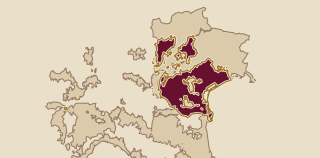
- **Zones:** Soave Classico (white wines); Colli Berici (red wines)
- **Village / Base:** San Bonifacio, province of Verona
- **Grapes:** Garganega, Sauvignon Blanc (whites); Carmenère, Cabernet Sauvignon (reds)
- **Signature Bottles:** Vulcaia Fumé (Sauvignon Blanc, Soave Classico); Bradisismo (Carmenère-led red, Colli Berici)
- **Holdings:** Approximately thirty hectares across two zones
- **Generations:** Three
The Producer
If you pick up a bottle of Vulcaia Fumé and a bottle of Bradisismo, you are holding two entirely different Italian wine zones in your hands, though both carry the same name. Inama farms volcanic hillside parcels east of Verona in the Soave Classico zone for its whites, and limestone-clay slopes south of Vicenza in the Colli Berici for its reds. One estate, two soils, two grapes, two appellations.
Giuseppe Inama began buying parcels on Monte Foscarino in the late 1950s, before the estate had a commercial label. His son Stefano formalized production in 1991, moving from glass demijohns filled for family use to labeled bottles sold through proper channels. The third generation, three brothers named Matteo, Alessio, and Luca, arrived between 2018 and 2020, each carrying formation gathered elsewhere: Matteo from the UK wine trade, Alessio from international consultancy, Luca from Bordeaux estates. They did not arrive to coast. They divided every vineyard into micro-plots, mapped subsoil composition across the estate, and tracked how vine behavior shifted from parcel to parcel.
Stefano Inama put his philosophy in a question rather than a slogan: how many people can grow a healthy vine and produce a drinkable wine without adding anything to it? That question is the frame for everything the estate does in vineyard and cellar.
Place
Soave Classico is a hillside subzone within the larger Soave DOC, east of Verona, built on volcanic basalt that dates to ancient flows through the Veneto hills. The Classico designation was created to separate the original hill vineyards from the high-yield plains production that expanded during the 1970s and 1980s. Monte Foscarino sits inside that Classico core. Garganega grown on volcanic basalt here produces white wine with mineral lift and a lighter phenolic weight than the same grape grown on the plains below.
The Colli Berici is a separate appellation entirely, a range of limestone and clay hills south of Vicenza. Carmenère, a grape that largely disappeared from Bordeaux after the phylloxera crisis in the nineteenth century, found a footing in the Colli Berici and survived there. Inama's red wine programme is built around that planted history.
Two zones, sixty kilometres apart, with different geology, different grapes, and different bottle styles.
Soil And Site
Monte Foscarino is volcanic ground. The basalt and volcanic tuff beneath the vines contribute to the mineral character in the white wines, a clean, stony quality that Garganega expresses differently here than on the alluvial flats of the Soave plains. Sauvignon Blanc on the same volcanic hill, as in Vulcaia Fumé, picks up that mineral lift alongside the aromatic intensity the grape carries naturally.
In the Colli Berici, the soils shift to limestone and clay, ground that holds moisture differently and supports the darker, spicier fruit profile of Carmenère. Matteo Inama has divided each vineyard into micro-plots and studied subsoil composition across them, tracking how vine behavior changes as the geology shifts beneath the surface. That analysis feeds directly into fruit selection: knowing which parcel ripens early, which holds acid longer, which produces smaller, more concentrated clusters.
Story
Giuseppe Inama acquired parcels on Monte Foscarino across the late 1950s, parcel by parcel, before the Soave Classico appellation had been defined and before anyone at the estate was bottling wine for sale. The wine that left the property went out in bulk or in glass demijohns, the standard of family production in rural Veneto at the time. Giuseppe was building a holding, not yet a brand.
Stefano changed that in 1991. He came back to San Bonifacio wanting to bottle properly, with commercial labels, and to sell wine as wine rather than raw material. That transition, from a family producing demijohns to an estate producing labeled bottles, is the estate's commercial founding moment, and it is what makes Inama legible as a producer today.
When Matteo, Alessio, and Luca arrived between 2018 and 2020, the estate was already established in Soave Classico and building its red wine programme in the Colli Berici. What the third generation brought was analytical method applied at granular scale: micro-plot mapping, subsoil study, vine behavior tracking. The red wine programme deepened. The white wine parcels were studied in greater detail. The goal was not a new direction but a sharper version of the same one: preserve and highlight fruit quality by understanding exactly what each piece of ground is doing.
Vineyards And Cellar
Hand harvesting drives fruit selection across both zones. Stefano Inama's emphasis on vine health as the foundation of good wine, growing a healthy vine without needing to add anything in the cellar, places the work in the vineyard before anywhere else. Minimal intervention in the cellar follows from that: if the fruit arrives in good condition, less needs to happen to it afterward.
Vulcaia Fumé, the Sauvignon Blanc from Monte Foscarino, is aged on lees. Lees contact adds texture and weight to the mid-palate without obscuring the aromatic lift of the grape or the mineral character of the volcanic soil. This white has more body than the varietal alone would deliver.
Bradisismo ages in barrel. The exact vessel type and duration are not confirmed, but barrel aging in this red's profile contributes the integration of spice and fruit that marks the nose: ripe cherry, red and black fruit, chocolate and pepper folded together rather than sitting separately.
Matteo's micro-plot mapping means that selection decisions are now made at the smallest meaningful scale rather than at the level of an entire vineyard block. Which rows go into which blend, and at what moment in the harvest, is driven by tracked data, not generalized experience.
Wines
Iname's range runs across two geographies and two colour registers.
In Soave Classico, the entry point is Garganega-based wine under the Soave Classico appellation label. Garganega here, on volcanic basalt, gives a white wine with a clean stone-fruit core, pale floral notes, and an acidity that keeps the mid-palate fresh and the finish lifted. It is not a heavy wine.
Vulcaia Fumé is the white that draws international attention. Sauvignon Blanc from Monte Foscarino, aged on lees, it carries the aromatic intensity of the grape, green herbs and white fruit, but with a mineral edge from the volcanic soil and a rounder texture from lees contact than most cool-climate Sauvignon Blanc delivers. It is the estate's most recognized bottle and sits at a level above the appellation Garganega in concentration and age-worthiness.
In the Colli Berici, Bradisismo anchors the red wine programme. Carmenère leads the blend, a grape that delivers darker colour, ripe red and black fruit, pepper and spice, with a fuller tannic frame than most northern Italian reds. Chocolate and ripe cherry appear on the nose alongside that spice. Barrel aging rounds the tannins and ties the aromatic layers together. It is a different Italian red from what most buyers expect when they think Veneto.
In The Glass
The Soave Classico Garganega opens with white peach and dried almond, a faint floral note, and a stony mineral trace from the volcanic soil. In the mouth the acidity is bright and clean, the body light to medium, and the finish dry with a faint bitterness at the edge that is characteristic of Garganega on basalt.
Vulcaia Fumé rises from the glass with more aromatic force: green herb, lime pith, white currant. The lees aging adds a creamy texture beneath the aromatics, and the acidity is firm enough to keep the wine from feeling heavy. The finish is long and mineral, with that volcanic stony quality reasserting itself after the fruit and herb have faded.
Bradisismo opens differently. Red fruit first, then darker matter, black cherry, cocoa, and a peppery spice that sits in the mid-palate. The tannins from barrel aging and from Carmenère's natural frame are present but not coarse. The finish carries warmth and spice, with ripe cherry lingering. It drinks with more weight and density than the whites, and needs time in the glass to open fully.
A Bottle To Understand It
Vulcaia Fumé is the right first bottle. It is Sauvignon Blanc from Monte Foscarino, aged on lees, and it shows what Inama does that no other producer in the zone replicates: Sauvignon Blanc on volcanic soil, handled with minimal intervention, with lees contact adding body without obscuring the grape's aromatic character. Pale green-gold in the glass. On the nose, green herb, lime pith, and white fruit with a clean mineral line underneath. In the mouth, the acidity is firm and the mid-palate has more weight and density than the aroma suggests. The finish is long and stony. Start here to understand why the family chose Monte Foscarino and what volcanic Soave Classico ground does to a grape that is normally associated with Loire Blanc or New Zealand.
Anecdote
In 1991, Stefano Inama came back to San Bonifacio and found the estate his father had built across three decades still sending its wine out the same way it always had: in glass demijohns, unlabeled, for family consumption and local trade. Giuseppe had been buying parcels on Monte Foscarino since the late 1950s and the vines were good, but there was no bottle with a name on it, no commercial label, nothing a shop could put on a shelf. Stefano wanted that to change. He formalized production, designed labels, and began bottling for commercial sale. The first labeled Inama bottle left San Bonifacio in 1991. What Giuseppe had spent thirty years acquiring in vineyard and vine, Stefano turned into an estate that a buyer in a shop could find and take home.
Final Word
Iname runs across two zones and two colour registers, one estate holding that spans volcanic white wine country east of Verona and limestone red wine slopes south of Vicenza. The whites from Soave Classico, especially Vulcaia Fumé, are built on mineral-driven volcanic ground and handled with minimal intervention. The reds from the Colli Berici, led by Bradisismo and Carmenère, are darker and spicier than most Veneto reds. Three generations have built the estate from demijohn production to micro-plot farming, and the direction at each transition has been the same: understand the ground better, touch the wine less.