
At A Glance
- **Estate:** Azienda Agricola Angelini Paolo
- **Location:** Monferrato hills, Piemonte, Italy
- **Appellation:** Grignolino del Monferrato Casalese DOC
- **Generation:** Fourth (Mauro and Franco Angelini)
- **Founded:** 1922
- **Vineyards:** 40 hectares, limestone and clay soils
- **Annual production:** approximately 100,000 bottles
- **Signature wine:** Arbian Grignolino del Monferrato Casalese
- **Collective:** Monferace member
The Producer
Angelini Paolo farms 40 hectares of Monferrato vines and produces around 100,000 bottles per year. The estate's range is broadly regional, with one exception. Arbian Grignolino del Monferrato Casalese spends longer in the cellar and requires more from the vineyard than the other wines. It is also based on a grape that most of eastern Piemonte had largely stopped taking seriously.
The estate has been in the Angelini family since Paolo Angelini founded it in 1922. Mauro joined the operation in 2004, and his brother Franco followed in 2016. The estate also began working with an oenologist in 2015. These developments marked a more ambitious phase for the winery. Both brothers are fourth generation. The main range includes Barbera d'Asti, Chardonnay, Syrah, and Albarossa. These wines cover the commercial range of a working Monferrato estate. The Arbian is made under a separate programme.
Place
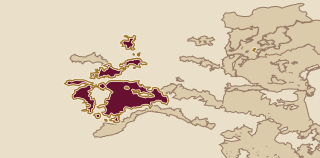
Monferrato is a large hilly wine zone in eastern Piemonte, between the Po valley to the north and the Ligurian Apennines to the south. Within it, Monferrato Casalese is the sub-zone centred on the town of Casale Monferrato. The sub-zone gives its name to the Grignolino del Monferrato Casalese DOC appellation.
Grignolino is a native Piemontese grape, long cultivated in this eastern corridor and almost nowhere else. It produces pale garnet wines with tannin and acidity well above what the colour predicts. This combination made it a local staple and a hard sell beyond the region for most of the twentieth century. The grape's natural tannin and acidity are central to Monferace, the collective Angelini joined in 2015.
The Angelini vineyards sit across the rolling limestone and clay hills of Monferrato. The Arbian wine comes specifically from the Ozzano location, where calcareous-marnose and calcareous-clay soils are split evenly at 50 percent each. The friable marine sediment and heavier clay affect root growth, water management, and fruit ripening during the growing season.
Soil And Site
The Arbian vineyard at Ozzano has equal proportions of calcareous-marnose and calcareous-clay soil. The marnose component is a softer, chalky marl that drains well and keeps vine stress moderate in dry years. The clay fraction holds moisture longer and contributes to the weight and tannic density that Grignolino can carry when the fruit is ripe. Together, the two soils allow a long growing season while retaining acidity.
The estate's 40 hectares lie across the Monferrato hills. Soil composition varies between limestone and clay from parcel to parcel. Only the Arbian vineyard has publicly documented soil data.
Story
Paolo Angelini was born in 1900 and began farming vines and producing Monferrato wines in 1922. Three generations of family management followed. Their names do not appear in the public record. Mauro joined the operation in 2004.
The estate remained a functional Monferrato producer until 2015, when Angelini Paolo joined a group of growers to co-found Monferace. The collective is dedicated to Grignolino del Monferrato Casalese made under a shared protocol. The protocol requires a minimum of 36 months ageing in French oak tonneaux and 12 months in bottle before release. This was a substantial commitment for a grape that a generation of wine buyers had treated as a local curiosity. Franco joined his brother in 2016, and an outside oenologist began working with the estate during the same period. The commercial range continued while the most intensive cellar work focused on the Arbian.
The Monferace project is not a certification or an appellation upgrade. It is a collective position that carefully farmed and long-aged Grignolino can stand beside serious reds from eastern Piemonte. Angelini Paolo applies the protocol to its best-documented vineyard.
Vineyards And Cellar
The Arbian Grignolino begins fermentation in temperature-controlled stainless steel tanks on indigenous yeasts, without added cultured strains. Maceration runs for 15 days. This period extracts the tannin and colour present in Grignolino while preserving the grape's natural acidity.
After fermentation, the wine moves into 500-litre French oak tonneaux for a minimum of 36 months. The 500-litre format limits the influence of oak and avoids the vanilla and spice associated with smaller barrels. It also allows slow oxidation and development over three years. The wine then spends 12 months in bottle before release. Total time from harvest to shelf is at minimum four years.
The wine spends a minimum of 36 months in French oak tonneaux and 12 months in bottle.
Wines
The range has two parts. The commercial tier includes Barbera d'Asti in two versions, Jenerosa and Adamant. It also includes Chardonnay under the label A te che sei, Syrah as Nesy, and Albarossa as Ecate. Technical documentation for these wines is limited.
The Arbian Grignolino del Monferrato Casalese is made under the Monferace protocol. The collective sets the ageing requirement and production standard. The wine is pale garnet in colour, which is natural for Grignolino and does not indicate a light wine. Its tannin is firm and drying, and its acidity is high. Four years in tonneaux and bottle give the texture a more integrated character. Cherry, iron, dried herbs, and a faintly bitter finish on the back palate are characteristic notes of aged Grignolino from calcareous Monferrato soils.
In The Glass
Grignolino from calcareous Monferrato typically shows high acidity, firm tannin, cherry and iron notes, and the characteristic herbal dryness of the variety.
A Bottle To Understand It
The Arbian Grignolino del Monferrato Casalese is the bottle to begin with. It follows the Monferace protocol, with high acidity, firm and drying tannin, dried cherry, iron, and herbal dryness. The wine is pale garnet, with dried cherry and iron on the nose and a long chalky finish. It spends four years from harvest to release.
Anecdote
In 2015, Mauro Angelini joined a group of Monferrato growers in agreeing to a shared production standard that required at least four years before a bottle could leave the cellar. The grape was Grignolino, a native variety that much of the Italian wine market had set aside in favour of Barbera and Nebbiolo. The Monferace collective they founded that year required 36 months in French oak tonneaux and 12 months in bottle before release. The wine would therefore reach the market after a long ageing period, at a price most buyers had not associated with Grignolino. Mauro committed the Ozzano vineyard to the protocol. Franco joined the estate the following year. The Arbian then went into tonneaux while the Angelini family waited.
Final Word
Angelini Paolo is a working Monferrato estate with a broad range of regional wines and one wine made under a separate production programme. The Arbian Grignolino is based on a native grape from a specific hill and follows a four-year production cycle. It is also the estate's contribution to Monferace's effort to establish Grignolino as a serious red from eastern Piemonte.