
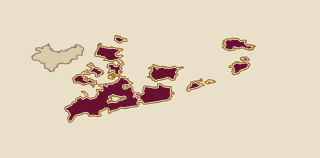
At A Glance
- **Country:** Spain
- **Region:** Catalonia
- **Appellation:** DO Penedès
- **Town:** El Vendrell, Tarragona
- **Founded:** 1990
- **Vineyard Zone:** Baix Penedès
- **Soil:** Limestone with Mediterranean influence
- **Also Produces:** Olive oils and wine vinegars (Forvm brand)
- **Distribution:** 40-plus countries
The Producer
Avgvstvs Forvm was founded in 1990 in El Vendrell, a town in the Tarragona province of southern Catalonia, within the DO Penedès appellation. The name is not a stylistic flourish. The Via Augusta, the ancient Roman road that connected the Iberian Peninsula to Italy, physically crossed the vineyard land here, and the producer took its name from that road. The spelling, the logo, the Latin register of the name: all of it anchors the estate to the road.
Alongside wine, Avgvstvs Forvm produces olive oils and wine vinegars sold under the Forvm brand. The two branches of production operate in parallel, both drawing on the same Catalan raw material. The wine portfolio distributes to more than 40 countries.
Place
El Vendrell sits in the coastal fringe of the Penedès, where the appellation meets the Mediterranean. The Baix Penedès subzone, where Avgvstvs Forvm holds its primary vineyard land, sits lower and closer to the sea than the Alta or Medio Penedès zones further inland. The influence of the Mediterranean is direct: warmer nights, moderate humidity, and a maritime buffer against the temperature extremes that the interior plateau can produce. Limestone underlies much of the subzone, contributing to drainage and to the mineral character that limestone soils typically favour in white wines.
DO Penedès is a broad appellation covering both native Catalan varieties and international grapes. The label does not demand a single grape or a single style, which gives producers significant latitude in how they build a range.
Soil And Site
The primary vineyard holdings in the Baix Penedès subzone sit on limestone soils with marked Mediterranean influence. Limestone drains well and warms quickly in spring, which pushes early vine development. In a coastal zone, it also helps retain freshness in white wines by limiting water stress and encouraging slower ripening near harvest. The combination of limestone and sea proximity is a common foundation for the lighter white styles that the Penedès has built its export reputation on.
Story
When Avgvstvs Forvm opened in 1990, the Penedès was already an established export region, shaped in large part by the industrialisation of Cava production and the arrival of international varieties in the 1970s and 1980s. El Vendrell and the Baix Penedès coastal strip were peripheral to the more prominent Alta Penedès zone around Vilafranca del Penedès, but the limestone soils and direct sea access offered a different growing argument.
The decision to name the winery after the Via Augusta placed it in deliberate conversation with the long agricultural history of the land rather than with the modern Catalan wine industry. The road had been built by Augustus to link Roman Hispania with Rome, and it ran through this territory for centuries as a trade and military artery. Anchoring a 1990 winery to a route two millennia old was a statement about continuity of place over the commercial cycles of any single decade. That orientation shaped the dual production model: wine and vinegar and olive oil made in the same place, from the same land, in the same Mediterranean agricultural tradition the Romans had organised along that road.
Vineyards And Cellar
Vineyard holdings are concentrated in the Baix Penedès on limestone soils under Mediterranean conditions. The subzone's coastal proximity moderates temperature through the growing season, supporting gradual ripening and preserving acidity in white varieties. Limestone drainage limits vigour and pushes vines to root more deeply, which tends to concentrate flavour without forcing early harvest.
Cellar and élevage details for individual wines are not available from verified sources. The estate grows both native Catalan varieties and international grapes, consistent with the broad grape permissions of DO Penedès.
Wines
The range sits within DO Penedès and draws on both native Catalan varieties and international grapes. The Baix Penedès limestone and Mediterranean climate favour white wine production, and coastal Penedès estates historically have oriented their ranges toward aromatic and lighter-bodied whites alongside sparkling wine production under DO Cava rules where applicable. Specific cuvée names, range tiers, and élevage details have not been sourced for this edition and will be added when verified.
Alongside the wine range, the Forvm brand produces wine vinegars and olive oils. These are not incidental products: the estate positions them as a parallel expression of the same Catalan agricultural land and the same Mediterranean raw material. The vinegars, made from wine produced on the estate, carry the place character of the Baix Penedès into a different category.
In The Glass
The Baix Penedès limestone and sea proximity point toward wines with clean acidity, moderate body, and the kind of freshness that coastal Mediterranean viticulture tends to produce. Limestone-grown whites in this part of Catalonia typically show bright citrus and stone fruit with a mineral edge, and they finish without the weight that heavier inland soils can introduce. Specific tasting notes for current releases are not available from verified sources; the structural picture here is drawn from the confirmed soil type, subzone climate, and appellation context.
A Bottle To Understand It
The entry-level white from the DO Penedès range is the most direct way into the estate's Baix Penedès character: limestone-grown, Mediterranean-influenced, and built around the acidity and freshness that this coastal subzone produces. Without verified cuvée names available at time of publication, look for the Avgvstvs label on DO Penedès white wine from the Baix Penedès subzone. It will show the place before it shows the cellar work, which is where this producer's argument begins.
Anecdote
The Via Augusta was not a romantic idea when Avgvstvs Forvm chose the name in 1990. The road was a physical fact. Built under Augustus to link Hispania with Rome, it ran through the vineyard territory at El Vendrell for centuries as the main artery between two continents. When the winery opened, the founders spelled the name in Latin and used the Roman lettering not as a label device but because the road had actually been there, in the ground beneath the vines. The choice placed a modern Penedès producer in deliberate conversation with an agricultural history that predated any appellation map, any European wine law, and any notion of a Catalan wine industry. The road is still there. So are the vines.
Final Word
Avgvstvs Forvm is a DO Penedès estate rooted in the Baix Penedès limestone, named after the Roman road that crossed its land, and producing wine alongside olive oil and wine vinegar under the same Catalan agricultural logic. The place argument is clear. The range detail awaits fuller sourcing.