
At A Glance
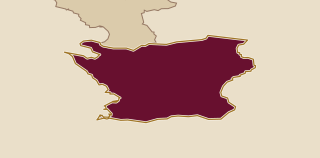
- **Location:** Bjäre Peninsula, Skåne, southern Sweden
- **Distance from sea:** approximately 800 metres
- **Farming:** Biodynamic principles, regenerative, no ploughing, organic certified 2023
- **Primary grape:** Solaris
- **Other varieties:** Pinot Noir, Chardonnay, Meunier, Gamay, Chenin Blanc (planted)
- **Wines:** Heritage, Pure, Pinot Noir, Natt Pét Nat, Solaris
- **First bottle:** Heritage 2023
The Producer
Thora Vingård farms eleven hectares on the Bjäre Peninsula, a narrow coastal spit in Skåne that juts into the Kattegat on Sweden's southwestern tip. The farm sits roughly 800 metres from the water. Romain Chichery and Emma Berto guide production. Vines went into the ground in 2014 and 2015, the first planting an experiment rather than a continuation of any regional tradition. By 2023 the estate held organic certification. In summer 2024 a farm restaurant opened, completing a ten-year arc from bare agricultural land to working wine and hospitality destination.
Solaris is the centrepiece grape, taking up roughly forty percent of plantings. Pinot Noir is established and producing. Chardonnay, Meunier, Gamay, and Chenin Blanc are in the ground but their commercial release status is not confirmed. The wines that currently reach Systembolaget and Swedish restaurants carry a consistent signature: fresh acidity, herbal lift, citrus and pear fruit, and a coastal lightness that separates them from warmer-climate versions of the same varieties.
Place
Skåne is Sweden's southernmost county and the country's most active wine region. Within it, the Bjäre Peninsula reaches into the sea on the west coast, creating a microclimate shaped by open water on three sides. The latitude here is roughly equivalent to the Scottish Borders or northern Newfoundland, so full grape ripeness is an annual negotiation rather than a given.
Coastal exposure is the site's defining advantage. Constant maritime breezes move across the vine canopy, drying leaf surfaces and grape skins after rain. That airflow reduces fungal pressure significantly, which matters in a wet northern climate where mildew and botrytis are the primary viticultural threats. At Thora, the breezes are treated as a farming tool: less copper and sulfur, less intervention, more reliance on the site itself to manage vine health. The result appears in the wines as freshness rather than weight, a profile shaped as much by the sea as by the cellar.
Soil And Site
The Bjäre Peninsula is glacially deposited terrain, with varied soils across the estate. The coastal position brings moderating sea temperatures that extend the growing season at both ends. Spring frosts are a risk, but the sea holds warmth into autumn, allowing Solaris and Pinot Noir to accumulate sugar and aromatic complexity past the point where continental inland sites would shut down. The no-plough farming approach preserves soil biology, building root competition that encourages vine depth rather than shallow surface feeding.
Story
The farm was not converted from an older wine estate. It was agricultural land that Romain and Emma chose specifically for the coastal position and the microclimate it offered. The first vines planted in 2014 and 2015 were a considered wager on a grape variety, Solaris, that most of the European wine world had little interest in at the time. Solaris is a complex hybrid, bred in Germany from multiple crossings to tolerate cold, resist fungal disease, and ripen in short seasons. Choosing it as a foundation at a new coastal Swedish farm meant accepting that the wines would need to be understood on their own terms before any reputation could follow.
Organic certification in 2023 formalised what the farming had already been doing: biodynamic principles, no ploughing, working with the coastal climate rather than against it. The restaurant opened the following summer, turning the estate from a wine-producing address into a place people could visit, eat, and connect the landscape directly to what was in the glass.
Vineyards And Cellar
The vineyard is farmed without ploughing, maintaining ground cover that builds soil organic matter and microbial activity over time. Biodynamic preparations guide seasonal applications. The coastal airflow keeps vine surfaces dry, and the farming leans on that natural advantage to reduce chemical inputs. Organic certification since 2023 documents the approach formally.
In the cellar, Heritage and Pure represent two different treatments of Solaris. Heritage is oak-aged, which adds weight, texture, and a spice note to the grape's naturally citrus and herbal character. The Pinot Noir 2022 reached enough colour concentration and tannin grip to function as a recognisable red wine, a meaningful result given the latitude. The Natt Pét Nat uses pétillant naturel method: the wine is bottled before fermentation finishes, the remaining sugar consumed in the bottle to create light natural carbonation and a slightly cloudy, lively texture.
Wines
The range is compact and built around Solaris in two forms, a Pinot Noir, and a pét nat.
Heritage 2023 is 100% Solaris at 12% alcohol, oak-aged, and organic certified. It is the most structured white in the range: pear and citrus fruit on the nose, then green apple, butter, white currant, and herbs in the mouth, with a prominent oak note that is present but not dominant. Fresh acidity runs through the mid-palate and carries the wine to a clean finish with good length.
Pure 2023 is also 100% Solaris. The profile is leaner and more mineral: citrus fruit with subtle herbal hints, a smoky mineral thread, and a balance that leans toward freshness over texture. Where Heritage is rounded by oak, Pure appears to be the cleaner, more direct expression of the grape and site.
Pinot Noir 2022 is full in colour for the latitude, with savoury and spicy notes framing cherry and raspberry fruit. The body is light, the acidity firm, the tannin dark and tight with a silky thread running through. It does not attempt Burgundian weight; it is a Nordic Pinot Noir, lean and food-oriented.
Natt Pét Nat 2023 is tart and juicy, built on lemon and lime with herbal hints, a savoury edge, and enough spice and acidity to stay lively rather than merely fizzy.
Solaris 2021 shows what the grape does with a season of bottle age: lively and focused, pear and citrus fruit, almond hints, and a fine linear shape that holds without fading.
In The Glass
Across the range, the dominant character is freshness. The Solaris whites open with citrus and pear, then move through herbal and sometimes mineral registers rather than toward tropical fruit or heavy body. Heritage adds an oak layer that rounds the texture without blunting the acid line; Pure keeps acidity forward and the fruit lean. Both wines sit at or below 12% alcohol, which means they feel precise and food-friendly rather than full or warming.
The Pinot Noir is darker in fruit than the whites suggest, with savoury spice and a tight tannin grip alongside cherry and raspberry. The silky thread in the tannin keeps it from feeling austere. The pét nat is the most immediate wine in the range: tart carbonation, herbal lift, lemon and lime fruit, and a savoury edge, sitting between a sparkling wine and a light field drink. The Solaris 2021 demonstrates that the variety can age into a finer, more focused expression, the fruit narrowing and sharpening rather than softening.
The coastal climate is visible in all of them. This is not a warm-climate wine profile; it is northern-latitude viticulture working with what the sea and the site provide.
A Bottle To Understand It
Heritage 2023 is the right first bottle. It is 100% Solaris, oak-aged, organic certified, and available at Systembolaget. Heritage 2023 is notably fresh, with notes of oak, green apples, butter, white currants, herbs, and citrus. Pear and citrus come first, then green apple and white currant, then a herbal note and a butter quality from the oak contact. The acidity is fresh and firm throughout. At 12% alcohol it is light on its feet, built for food rather than standing alone. It is the wine that carries the most information about the estate: the variety, the coastal freshness, the cellar approach, and the decision to make something complete rather than merely drinkable.
Anecdote
In 2014 Romain and Emma planted the first vines at a farm on the Bjäre Peninsula that had no winemaking history whatsoever. The variety they chose was Solaris, a modern hybrid that most wine buyers had never heard of and most wine regions had no interest in. For the first several years the estate had no restaurant, no certified label, no reputation, and grapes that the broader market considered marginal. They farmed without ploughing, used biodynamic principles, and relied on the coastal breezes to dry the vines after rain. In 2023, nine years after the first planting, organic certification arrived. The following summer a restaurant opened on the farm and guests sat down to eat food alongside wines made from vines they could see from the table. The farm that started as an experiment in whether serious wine was possible on a Swedish coastal farm now had a waiting list for tables.
Final Word
Thora Vingård is one of the clearest arguments that serious wine can come from northern latitudes if the site is chosen for its microclimate rather than its reputation. The Bjäre Peninsula and 800 metres of sea air are not concessions to geography; they are the point. Solaris, farmed without ploughing and bottled with care, delivers wines that are fresh, herbal, and distinctly coastal in a way that no southern European variety could replicate at this latitude. The range is small, the farming is committed, and the bottles carry a character specific to one place on the Swedish coast.