
Who makes it
Stolpman Vineyards began with Tom and Marilyn Stolpman’s search for limestone close to the Pacific influence in Santa Barbara County. Their Ballard Canyon property was acquired through a process that began in 1988 and concluded in 1990; planting followed in 1992, with 18 varieties going into the ground. That unusually broad planting now allows the estate to make Sangiovese, Roussanne, Syrah and white blends from one vineyard rather than treating Ballard Canyon as a one-grape address.
Peter Stolpman joined the family business in 2009 after working for a wine distributor. Under his generation, the estate has moved more of its fruit into its own bottles, with vineyard manager Ruben Solorzano overseeing farming that has been described as organic, biodynamic and largely dry-farmed. The consequence is a range built from estate fruit and varied cellar treatment, from short-aged Sangiovese to Roussanne given more time and oak.
Where it grows
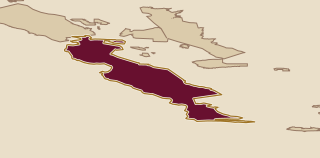
Ballard Canyon sits within the Santa Ynez Valley in Santa Barbara County. Stolpman’s site was selected for limestone-derived ground near the coast, while the vineyard’s 173 planted acres provide enough scale for several grape varieties and wine styles. That combination lets the estate make a brisk, short-aged red such as Love You Bunches alongside fuller white wine from Roussanne, instead of forcing every bottle toward one weight or flavour profile.
The vineyard combines chalky marine sedimentary rock with sand and degraded shale. Most vines are own-rooted, and young plants receive irrigation for their first five years before being weaned onto dry farming. A vine that must work through these soils without regular irrigation after establishment is part of the estate’s route to fruit with concentration, while the own-rooted material remains a direct connection between vine and ground.
How it is made
The cellar
Dry farming begins only after the five-year irrigation period, so the vineyard does not ask immature vines to survive without water. Once established, the vines are farmed with less irrigation, and the estate’s mostly own-rooted plantings carry that site expression into the fruit. Organic and biodynamic work in the vineyard is paired with native fermentation in the cellar, leaving the yeasts present on the fruit to begin the conversion from grape juice to wine.
Ageing changes with the material. Wines can spend only a few months in cellar or more than two years, depending on their power and concentration. Used wood is the usual choice; new oak is reserved for Roussanne, where it is intended to frame the grape’s naturally viscous texture. Longer-aged wines receive minimal sulfur for freshness and stability, while shorter-aged bottles can retain a more immediate fruit profile.
What they make
The range is deliberately wide. Sauvignon Blanc, Uni White Blend, Syrah, Roussanne, Chardonnay and Sangiovese each meet a different cellar schedule, so bottle choice matters as much as grape choice. Short ageing and stainless steel favour direct fruit and a lighter body; longer élevage and oak can add weight, texture and a longer finish.
Love You Bunches is the quick-moving end of the range: 100% Sangiovese, drawn primarily from Block 5 and the newer own-rooted Block 6. Whole clusters undergo native carbonic fermentation, then the wine spends two to four months in 80% stainless steel and 20% barrel. The result is a red built for fruit, freshness and a lighter texture rather than oak weight.
Wines to try
First bottle
Start with Love You Bunches Sangiovese. It is 100% Sangiovese from Blocks 5 and 6, fermented whole-cluster with native carbonic fermentation and aged for only two to four months, mostly in stainless steel. That recipe puts Ballard Canyon fruit, own-rooted vines, short élevage and minimal cellar weight in one dry, fruit-led red. Its light body and direct texture make the farming and fermentation choices easy to taste before moving to the more layered whites and longer-aged wines.