NoleaWorld of Wine

Coastal Region · South Africa

Producer profile

Lubanzi Wines

Western Cape producer of varietal Shiraz, Chenin Blanc and sparkling Cinsault rosé, using wild fermentation and minimal intervention.

Place
South Africa
Known for
Wild fermented Western Cape wines
Wine context
Chenin Blanc · Syrah / Shiraz
Editorial basis
World of Wine editorial profile · 8 sources

World of Wine editorial profile · Source list ↓

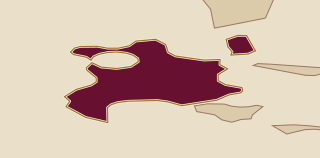
Atlas locationCoastal Region · South Africa33.93° S · 18.46° E

At A Glance

Field
Detail
Region
Western Cape, South Africa
Positioning
Swartland
Main grapes
Shiraz, Chenin Blanc and Cinsault
Styles
Varietal red, still white and sparkling rosé
Cellar approach
Wild fermentation, minimal intervention and no additives

The Producer

Lubanzi uses wild fermentation, minimal intervention and no additives in its cellar approach. The producer places its wines broadly in Swartland, with a range built around a varietal red, a still white and a sparkling rosé.

Trizanne Barnard is the winemaking lead, while Bruce Jack remains a mentor and adviser. Barnard and Jack were the winemaking partners who helped Charlie Brain and Walker Brown bring the brand to life.

Lubanzi is a Certified B Corporation and Fair For Life Fair Trade certified. It contributes one percent of annual sales to environmental causes through 1% for the Planet.

Place

The Western Cape is Lubanzi's South African home. Within that broad setting, the producer presents its wines as coming from Swartland. The Shiraz, Chenin Blanc and sparkling Cinsault rosé use Coastal Region as their regional designation.

The geographic wording therefore works at two scales. Swartland describes Lubanzi's broader positioning, while Coastal Region names the regional classification attached to the wines in this range.

Soil And Site

The Shiraz and Rosé Bubbles come from different vineyard conditions. The Shiraz is sourced from organic parcels in the Coastal Region, centred on Swartland.

Rosé Bubbles comes from dry, unirrigated bush vines on decomposed granite and shale. Dry farming leaves the vines dependent on rainfall, while decomposed granite and shale provide the stated ground beneath the Cinsault. The resulting wine is crisp, with saline minerality and balanced acidity.

Story

Charlie Brain and Walker Brown began by searching for an opportunity to make a difference in the world. In 2016, they moved to South Africa to launch the business and built the wine project around a direct social commitment.

Lubanzi partnered with the Pebbles Project, which provides health and education resources to families living and working on South African wine farms. The company pledged 50 percent of its net profits to that work. The farms behind Lubanzi collectively employ more than 100 full time workers, linking the wine supply with the communities named in the commitment.

Vineyards And Cellar

Lubanzi Shiraz is certified organic by Ecocert, and the producer says no pesticides, herbicides or fungicides are used during growing. The farming claim applies to the Shiraz parcels that supply the wine.

The cellar approach centres on wild fermentation, minimal intervention and no additives. Wild fermentation uses naturally present yeasts rather than a selected commercial culture, while minimal intervention leaves fewer cellar additions between grape and bottle.

Wines

Lubanzi Shiraz is the 2023 red. Lubanzi Chenin Blanc appears in the 2023 and 2024 vintages as a still white. Lubanzi Sparkling Cinsault Rosé is the non vintage sparkling wine.

The range has three clear forms: a varietal Shiraz, a still Chenin Blanc and a sparkling rosé made from Cinsault. The bottles move from still red to still white to sparkling wine without changing the producer's low intervention cellar approach.

In The Glass

The Shiraz brings blackberry, cherry and plum, with a medium plus body and a subtle saline finish. The fruit profile stays dark and rounded, while the saline note gives the final impression a savoury edge.

Chenin Blanc carries ripe summer peach and naartjie, followed by a straw undertone. The current description gives it a medium body. An earlier 2020 Chenin showed a medium full texture, ample acidity and a clean persistent finish.

Rosé Bubbles is dry and crisp, with wild cherry and ripe summer strawberry. It also shows berries and red apple, with a short crisp finish. The Cinsault gives the wine its red fruit character, while the sparkle keeps the finish light.

A Bottle To Understand It

Choose Lubanzi Sparkling Cinsault Rosé. It is the range's non vintage sparkling bottle, made from 35 year old dry farmed Cinsault bush vines. The grapes are gently pressed in whole bunches, fermented with native yeasts and given their sparkle with added carbon dioxide before bottling or canning.

The bottle puts Lubanzi's cellar method into its most distinctive format. It is entirely Cinsault, naturally fermented and lightly sparkling, with the bubbles created by added carbon dioxide rather than a traditional method claim.

Anecdote

In 2014, a stray dog called Lubanzi joined Charlie Brain and Walker Brown on South Africa's Wild Coast. The dog stayed with them for six days and 100 miles, then disappeared in the middle of the night before their final morning. The founders kept the name. When the wine project took shape, Lubanzi became the name on the bottles.

Final Word

Lubanzi combines a broad Swartland positioning, Western Cape sourcing, wild fermentation and a direct profit commitment to wine farm families through the Pebbles Project. Its range stays grounded in Shiraz, Chenin Blanc and sparkling Cinsault rosé.

Sources

Keep following the thread

Where to go next

mapFind Lubanzi Wines on the mapKeep the producer, its region and nearby places together.learningUnderstand Chenin BlancRead the quick library guide to Chenin Blanc, which is listed with this producer.