
NoleaWorld of Wine

Sicily · Italy

Producer profile

Gulfi

Founded in 1996 by Vito Catania in Chiaramonte Gulfi, Ragusa province, Gulfi farms 70 hectares of organically certified vineyards in Pachino using the traditional alberello method with no irrigation. Its four single-contrada Nero d'Avola crus make the clearest case in Sicily that this grape produces distinct, place-specific wines.

Place
Sicily · Italy
Known for
Single-vineyard Nero d'Avola; organic alberello farming; native yeast fermentation
Wine context
Chardonnay · Nero d'Avola
Editorial basis
World of Wine editorial profile · 4 sources

World of Wine editorial profile · Source list ↓

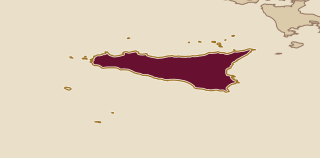
Atlas locationSicily · Italy37.07° N · 14.68° E

At A Glance

Estate: Gulfi Founded: 1996 Location: Chiaramonte Gulfi, Ragusa province, southeastern Sicily Vineyards: 70 hectares (175 acres), organically certified Core grape: Nero d'Avola Appellations: IGT Sicilia; Cerasuolo di Vittoria DOCG Farming: Alberello (head-pruned), hand harvested, no irrigation

The Producer

Gulfi came out of a chemical industry entrepreneur's bet on a grape that most of Sicily was either selling in bulk or blending away. Vito Catania founded the estate in 1996 in Chiaramonte Gulfi, a hill town above the Ragusa plain, with a thesis rather than a winemaking career: Nero d'Avola, the island's principal red grape, was not one wine but several, and the place it grew in would prove it.

He bought parcels in four named contradas around Pachino, the flat southeastern peninsula where Nero d'Avola has its deepest historical roots, and bottled each separately. Four crus from the same grape, the same estate, the same vintage, but different soils and different wines. At the time, in the late 1990s, that was not how Sicilian Nero d'Avola worked.

Catania died in 2017. The estate continues under his legacy, still farming the same parcels by the same methods, still bottling the four crus that were the original argument.

Place

Pachino sits at Sicily's southeastern tip, a flat limestone and marl peninsula where the sea is never far in any direction. The climate is hot and dry, and without irrigation, vines have no choice but to grow downward. Gulfi's alberello vines push roots into marl and limestone bedrock to find moisture.

The IGT Sicilia designation covers the four contrada crus and the white Valcanzjria. Cerasuolo di Vittoria DOCG, Sicily's only DOCG appellation, comes from the Vittoria zone within Ragusa province, where the regulations require a blend of Nero d'Avola and Frappato.

Soil And Site

The four Pachino contradas, Maccaraj, Bufaleffj, Baronj, and Sanlorè, sit on different combinations of marl and limestone. Marl holds some moisture and releases it slowly; limestone drains freely and forces roots to go deeper still. The variation between contradas is not dramatic on a map, but it is measurable in the wines: different fruit weight, different tannic grain, different length on the finish.

Alberello training, the traditional Sicilian head-pruned bush vine system, keeps the canopy low and close to the warm ground during cool nights, and spread enough to shade the fruit during the hottest part of the afternoon. High planting density concentrates the vine's energy. No irrigation is not an ideology at Gulfi; it is the method the vines were trained to before Catania bought them, and he chose to keep it.

Story

In 1996, most Nero d'Avola left Sicily as bulk wine or as a blending component destined for the north of Italy and parts of France. The grape had a reputation for colour and alcohol rather than for character. A grower who wanted to make a serious argument for it had to work against that market position without the benefit of an established critical language for single-site Sicilian reds.

Catania was not a winemaker, but he understood geology and he understood how capital could be deployed against a low-recognition opportunity. He bought the Pachino parcels, hired Salvo Foti to oversee winemaking, preserved the existing alberello vines, and committed to farming without irrigation. The four crus went to market as separate bottles, which meant critics and buyers could compare them directly. The four named parcels were bottled separately for side by side comparison.

By the time Catania died in 2017, the estate's highest-scoring contrada wine had reached 96 points, and Nero d'Avola had a body of single-site evidence behind it.

Vineyards And Cellar

Alberello vines at Gulfi are farmed without irrigation across all 70 hectares. Hand harvesting allows parcel-by-parcel selection rather than machine averaging across a contrada. Each cru is vinified separately from picking through bottling, which is the only way the contrada differences can survive into the glass.

Fermentation uses native yeasts in stainless steel tanks.

Valcanzjria, the white wine, follows a different path: native yeast fermentation in stainless steel, then eight months on fine lees before bottling. The lees contact adds body and a subtle creaminess without altering the wine's essentially mineral and acid-driven character.

Wines

The four Nero d'Avola crus are the estate's core, each labelled with the contrada name: NeroMaccarj (Maccaraj contrada), NeroBufaleffj (Bufaleffj contrada), NeroBaronj (Baronj contrada), and NeroSanloré (Sanlorè contrada). All four are IGT Sicilia, all four from Pachino, all four fermented with native yeast in stainless steel tanks. The differences between them come from soil and microclimate rather than from cellar intervention.

NeroBufaleffj shows the darker end of the range: dark chocolate, baked black plum, cherry stone, blueberry, and almond essence in successive layers. NeroSanloré moves toward fresh red and dark fruit together, with dried citrus peel, wild herbs, and balsamic lift. Where Bufaleffj is dense and inward, Sanloré has more air around the fruit.

Cerasuolo di Vittoria DOCG is a blend of Nero d'Avola with Frappato, the lighter local red grape from the Vittoria zone. The Frappato contribution brings floral lift and a cooler red-fruit register that Nero d'Avola alone does not produce.

Valcanzjria IGT Sicilia Bianco blends Carricante, the principal white grape of Mount Etna, with Chardonnay and a small proportion of Albanello, a lesser-known native Sicilian variety. The blend is fermented with native yeasts in stainless steel and aged on fine lees for eight months.

In The Glass

NeroBufaleffj opens with a dense, dark aromatic register: dark chocolate and baked black plum first, then cherry stone and blueberry underneath, with almond essence on the back end. In the mouth the tannins are firm and grainy. The finish is long and dry.

NeroSanloré is lighter on its feet. Fresh red fruit and dark fruit rise together from the glass, with dried citrus peel and wild herbs threading through, and a balsamic note that appears late. The acidity is more pronounced than in Bufaleffj, and the tannins have more give.

Valcanzjria is a wine of preserved lemon, wild thyme, chamomile tea, and wet stone. Eight months on lees give it a soft mid-palate weight, but the acid line from Carricante and the mineral character from the stainless steel keep the finish dry and nervy. It is the kind of white wine that cuts through food rather than sitting alongside it.

A Bottle To Understand It

NeroSanloré is the right first bottle. It is Gulfi's highest-scoring cru, 96 points from Jacky Blisson on the 2017, and it shows what the estate's method produces at its most expressive: fresh red and dark fruit from Nero d'Avola grown on Pachino limestone, dried citrus peel and wild herbs, balsamic lift, and a finish that is long and dry without being heavy. The acidity is more open than Bufaleffj. Buy it with four or five years in the cellar if possible; it will gain complexity without losing its current freshness.

Anecdote

Vito Catania arrived in Pachino in 1996 with capital, a thesis about Nero d'Avola, and no winemaking background. He had spent his professional life in the chemical industry, but he knew the countryside around Chiaramonte Gulfi from his family and he had a conviction that the Pachino peninsula's alberello vines were producing something that bulk contracts and northern blending houses were erasing. He bought four separate contradas, hired Salvo Foti to direct the winemaking, and announced that he would bottle each parcel independently. Four named crus from one estate in one vintage: at the time, in a market that priced Nero d'Avola by degree and colour rather than by site, that was an argument without an obvious buyer. He made it anyway. The unusual planting survived, and the wines still come from four parcels bottled separately.

Final Word

Gulfi's case for single-vineyard Nero d'Avola was built without the support of an established critical framework for Sicilian reds. Four named contrada crus now give buyers a direct way to compare what limestone does in Sanlorè against what marl does in Bufaleffj, and to taste the difference that matters. Start with NeroSanloré.

Sources

Keep following the thread

Where to go next

placeRead the Sicily guideSee Gulfi in the wider setting of Sicily.mapFind Gulfi on the mapKeep the producer, its region and nearby places together.learningUnderstand Nero d'AvolaRead the quick library guide to Nero d'Avola, which is listed with this producer.