NoleaWorld of Wine

Styria · Austria

Producer profile

Familienweingut Tement

South Styrian family estate making Sauvignon Blanc and Morillon across regional, village and single vineyard wines.

Place
Austria
Known for
South Styrian Sauvignon Blanc and Morillon
Wine context
Sauvignon Blanc
Editorial basis
World of Wine editorial profile · 5 sources

World of Wine editorial profile · Source list ↓

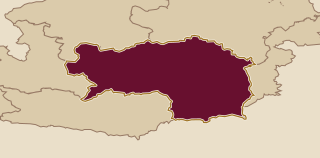
Atlas locationStyria · Austria46.69° N · 15.61° E

At A Glance

Field
Detail
Region
South Styria, Austria
Base
Ehrenhausen
Main grapes
Sauvignon Blanc and Morillon
Range
Regional, village and single vineyard wines
Signature wine
Kalk & Kreide, regional Südsteiermark Sauvignon Blanc
Farming
Organic certification for the 2018 vintage, Demeter membership since 2022

The Producer

Manfred and Heidi Tement work with sons Armin and Stefan and daughter in law Monika. The range covers regional, village and single vineyard wines from South Styria, with Zieregg planted to Sauvignon Blanc and Morillon. The estate's wines move from broad regional blends to bottles tied to named places.

The family works with hand harvested grapes, spontaneous fermentation and maturation in barrels and tanks selected for the site. That combination keeps the range close to vineyard names, grape varieties and cellar time.

Place

Three South Styrian villages shape the address of the wines: Ehrenhausen, Gamlitz and Kitzeck-Sausal. Each village supplies a different geographic frame for the labels, while the range also reaches named vineyard wines.

Zieregg is the most famous South Styrian site associated with Tement. Both Sauvignon Blanc and Morillon are planted there, placing the two varieties together in the estate's best known vineyard setting.

Soil And Site

Kalk & Kreide names the main terroir of its regional Sauvignon Blanc as limestone and clay. Limestone drains readily, while clay holds moisture, giving the two soils different physical roles in the vineyard. The wine is described as mineral and direct, with its name recording the ground beneath the blend.

Story

Armin began following organic agriculture after joining the estate. He converted eighty hectares over the next ten years, and the 2018 vintage received organic certification. The family has belonged to the Demeter association since 2022 and is also a member of the Respekt Gruppe.

Organic viticulture excludes synthetic treatments as part of its farming method. Here, the change covered the estate's vineyard work over a defined period and led to certification for a specific vintage.

Vineyards And Cellar

The grapes are harvested by hand at the right time, fermented spontaneously and individually vinified and matured in barrels and tanks matched to the site. Spontaneous fermentation uses naturally occurring yeasts instead of an added commercial culture, which can leave more variation between lots.

Single vineyard wines mature in large neutral oak barrels for eighteen to twenty four months and are bottled without filtration. Neutral oak contributes less oak flavour than new barrels, while extended maturation allows texture to build. Sulfur is withheld during vinification and ageing, then a small amount is added one month before bottling.

Wines

The range rises from regional wines through village wines to single vineyard bottlings. Regional wines sit at the entry level, village wines represent the terroir of their village, and single vineyard wines occupy the top level.

Kalk & Kreide is the flagship regional Südsteiermark Sauvignon Blanc, made from fruit gathered across fifty sites. It ferments spontaneously with indigenous yeasts in stainless steel and spends six months on its lees before release. Among the named wines, the 2023 Morillon Muschelkalk adds a vintage specific expression to the range.

In The Glass

Kalk & Kreide opens with citrus, yellow fruit, elderflower and blackcurrant. Its finish is mineral and direct, with the lees period adding time and texture without obscuring the fruit.

The 2023 Morillon Muschelkalk is juicy and mineral, with pear, meadow herbs, orange zest, white fruit and fresh apple. It finishes with persistence and has the capacity to develop with age.

A Bottle To Understand It

Open with Zieregg XT 2018. The wine remained in the barrel and was bottled after more than seventy eight months on lees in large casks. Lees ageing keeps wine in contact with spent yeast, often adding a fuller texture and savoury detail while softening the edges of long cellar time. This bottle puts extended cask ageing at the centre of the experience.

Anecdote

In 1976, Manfred Tement took over his father's wine growing business after his father's early death. The young Manfred was left with a small family holding, three hectares to the left and right of the house. The family winery and the vines beside the home became his immediate responsibility. His first holding was measured in one date, one house and three hectares of vineyard.

Final Word

Familienweingut Tement links South Styrian village names with Sauvignon Blanc and Morillon, while its cellar moves from spontaneous fermentation to extended lees ageing in large casks.

Sources

Keep following the thread

Where to go next

mapFind Familienweingut Tement on the mapKeep the producer, its region and nearby places together.learningUnderstand Sauvignon BlancRead the quick library guide to Sauvignon Blanc, which is listed with this producer.