Who makes it
Philippe Collin left Champagne, where his family had made wine for generations, and established Domaine Collin in Limoux. Vineyard land there costs a fraction of Champagne land, while the microclimate suits white and sparkling wine production.
The domaine planted Chardonnay, Pinot Noir and Chenin Blanc instead of the regional Mauzac variety. Chenin Blanc helps balance the wine, and Collin prioritised quality over bulk production.
Where it grows
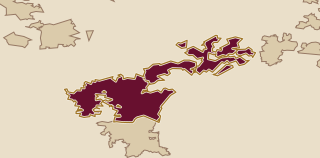
Limoux lies in the eastern foothills of the Pyrenees and is the coolest area in the Languedoc. The region sits inland from the Mediterranean, with a microclimate suited to white and sparkling wine. Cooler growing conditions can help sparkling base wines retain acidity as the grapes ripen.
What they make
The two named wines divide the range by colour and style. Crémant de Limoux Prestige Rosé is the rosé bottling, while Domaine Collin Cuvée Tradition Brut is the Brut bottling. Crémant de Limoux requires a minimum of 12 months ageing on lees before disgorgement, exceeding the nine month European Union minimum for Crémant.
Lees ageing keeps sparkling wine in contact with spent yeast before disgorgement, a process that can add a rounder texture and bready notes. Crémant de Limoux Prestige Rosé has a rosé appearance, and its tasting notes emphasise wild strawberry.